Abstract
The production and leaf quality of Telfairia occidentalis in Cameroon are gravely threatened by leaf spot disease. A field study was conducted in July 2019 and 2020 to determine the influence of tillage systems and sowing dates on the incidence of Telfairia occidentalis leaf spot caused by Phoma sorghina. A randomized block design with three replications and four planting dates was used. The soil physicochemical properties were also determined. Data for disease incidence were registered once every two weeks and submitted to generalized linear model for statistical analysis. The means were separated by Duncan's multiple range test at a 95% confidence interval. Calculations for disease incidence and statistical analysis were conducted using the Microsoft Excel program and SPSS version 23, respectively. Statistical analysis revealed that the zero tilled field generally registered a lower leaf spot disease incidence than the tilled field, which was highly significant (p ≤ 0.05). In addition, the second sowing date in the zero tilled field proved to be better in terms of low disease incidence than other sowing dates employed in the study. Therefore, to minimize the devastating effects of leaf spot disease, zero tillage coupled with the second sowing date could be exploited.
Abstract from the paper’s OpenAlex record; open copy licensed cc-by. Read at the source ↗
The text the model read, with the source record’s inline markup (italics, sub- and superscripts) rendered and its character entities decoded; quote offsets refer to the raw text.
Claims 3
Claim · model-written summary
Zero tillage lowered leaf spot incidence relative to tilled fields.
- Taxon
- Telfairia occidentalis
 Telfairia occidentalist0
- Treatment
- zero tilled fielde0
- Interactor
- Phoma sorghina
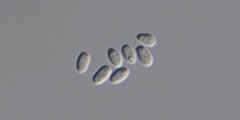 Epicoccum sorghinumt0pathogen
- Outcome
- leaf spot disease incidencee0
- Direction
- lowere0
- Comparator
- tilled fielde0
Organisms pictured · Representative pictures of the matched species, not figures from the paper.

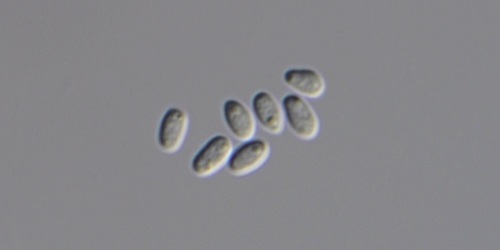
Verbatim
e0“the zero tilled field generally registered a lower leaf spot disease incidence than the tilled field, which was highly significant (p ≤ 0.05)”
t0“Telfairia occidentalis caused by Phoma sorghina”
Claim · model-written summary
The second sowing date in zero tillage had lower incidence than other dates.
- Taxon
- Telfairia occidentalisTelfairia occidentalist0
- Treatment
- second sowing date in the zero tilled fielde0
- Interactor
- Phoma sorghinaEpicoccum sorghinumt0pathogen
- Outcome
- disease incidencee0
- Direction
- lowe0
- Comparator
- other sowing datese0
Organisms pictured · Representative pictures of the matched species, not figures from the paper.
Verbatim
e0“the second sowing date in the zero tilled field proved to be better in terms of low disease incidence than other sowing dates employed in the study”
t0“Telfairia occidentalis caused by Phoma sorghina”
Claim · model-written summary
The authors recommend zero tillage with the second sowing date to minimize leaf spot.
- Taxon
- Telfairia occidentalisTelfairia occidentalist0
- Interactor
- Phoma sorghinaEpicoccum sorghinumt0pathogen
- Outcome
- zero tillage coupled with the second sowing date could be exploitede0
Organisms pictured · Representative pictures of the matched species, not figures from the paper.
Verbatim
e0“to minimize the devastating effects of leaf spot disease, zero tillage coupled with the second sowing date could be exploited”
t0“Telfairia occidentalis caused by Phoma sorghina”
The same questions in other papers
sowing time · Epicoccum sorghinum · Telfairia occidentalisResults agree
1 paper in the same direction as this paper
- positive
Claims are grouped by organism, treatment and what was measured or targeted. A paper counts as positive when any of its claims in the group is positive.