Abstract
Microbes residing in the internal tissues of a plant are called endophytes, and are known for producing phytochemicals such as taxol, podophyllotoxin, azadirachtin and vinca alkaloids. In this study, out of five isolates from Salacia species, two fungi Penicillium capsulatum and Aspergillus fumigatus have been evaluated and confirmed by polymerase chain reaction (PCR) amplification for their endophytic action to produce mangiferin. Mangiferin has been reported to possess protective properties, including antioxidant, antidiabetic and immunomodulatory. It has been reported that the content of mangiferin is 7-9% in Mangifera indica , and is also present in other plants like Swertia chirata , Salacia chinensis , and Hypericum aucheri . Therefore, an attempt was made to explore the biotechnological approach and regulation studies to increase the production of mangiferin in S. chinensis and S. oblonga . Endophytes were isolated, screened, and analyzed, to evaluate the mangiferin in fungal extracts in comparison with crude plant extracts. An HPLC analysis was used to determine the mangiferin content present in the fungal extract of S. chinensis stem (74.74 g/mL), followed by fungi extracts of S. oblonga root (33.75 g/mL) and S. chinensis root (30.50 g/mL), compared with the plant extracts. These results were confirmed by FTIR analyses.
Abstract from the paper’s OpenAlex record; open copy licensed cc-by-nc-nd. Read at the source ↗
The text the model read, with the source record’s inline markup (italics, sub- and superscripts) rendered and its character entities decoded; quote offsets refer to the raw text.
Claims 5
Claim · model-written summary
Penicillium capsulatum was confirmed as a mangiferin-producing endophyte from Salacia.
- Interactor
- Penicillium capsulatumPenicillium capsulatume0symbiont
- Outcome
- endophytic action to produce mangiferine0
 Salacia
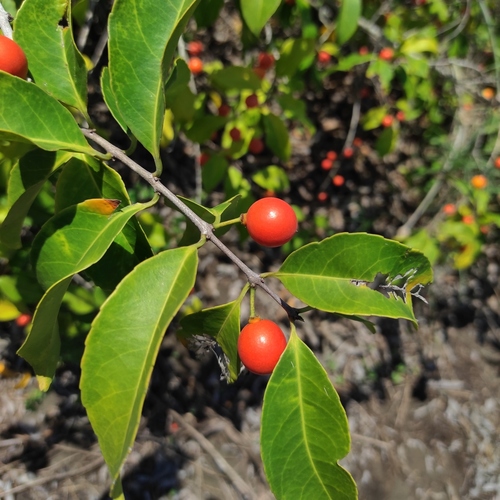
Organisms pictured · Representative pictures of the matched species, not figures from the paper.
Verbatim
e0“two fungi Penicillium capsulatum and Aspergillus fumigatus have been evaluated and confirmed by polymerase chain reaction (PCR) amplification for their endophytic action to produce mangiferin.”
e1“Salacia species”
Claim · model-written summary
Aspergillus fumigatus was confirmed as a mangiferin-producing endophyte from Salacia.
- Interactor
- Aspergillus fumigatus
 Aspergillus fumigatuse0symbiont
- Outcome
- endophytic action to produce mangiferine0
Organisms pictured · Representative pictures of the matched species, not figures from the paper.

Verbatim
e0“two fungi Penicillium capsulatum and Aspergillus fumigatus have been evaluated and confirmed by polymerase chain reaction (PCR) amplification for their endophytic action to produce mangiferin.”
e1“Salacia species”
Claim · model-written summary
Fungal extract from S. chinensis stem contained 74.74 g/mL mangiferin.
Verbatim
e0“mangiferin content present in the fungal extract of S. chinensis stem (74.74 g/mL)”
Claim · model-written summary
Fungal extract from S. oblonga root contained 33.75 g/mL mangiferin.
- Taxon
- S. oblonga
 Salacia oblongae0
- Organ / stage
- roote0
- Outcome
- mangiferine1
- Value
- 33.75 g/mLe0
Organisms pictured · Representative pictures of the matched species, not figures from the paper.

Verbatim
e0“fungi extracts of S. oblonga root (33.75 g/mL)”
e1“mangiferin content present in the fungal extract”
Claim · model-written summary
Fungal extract from S. chinensis root contained 30.50 g/mL mangiferin.
Verbatim
e0“S. chinensis root (30.50 g/mL)”
e1“mangiferin content present in the fungal extract”