Abstract
Abstract Fruit fly pestiferous species within the genus Anastrepha Schiner (Diptera: Tephritidae) affect fruit growing in northeastern Mexico, particularly citrus and mango production. Little is known about the population fluctuation of these pests in protected natural areas adjacent to agricultural environments. This study aimed to compare and analyse the temporal profiles of adult populations of Anastrepha pest species inhabiting agricultural zones and a protected natural area. Six years of adult capture data of Anastrepha ludens (Loew), A. obliqua (Macquart), A. striata Schiner and A. serpentina (Wiedemann) were compared and analysed between commercial orchards and fruit tree areas located in the buffer zone of the biosphere reserve “El Cielo”. The analyses were carried out for each of two triennial periods (2008–2010 and 2019–2021). Temporal patterns of the pest populations were characterized, and generalized linear mixed models were used for data analysis. All locations registered the four species, although Anastrepha ludens and A. obliqua represented the highest number of adult captures. Populations of pest species of Anastrepha showed similar fluctuation patterns throughout the year regardless of the location. However, significant differences in the population size were noted between the “El Cielo” reserve and commercial areas. The “El Cielo” reserve and its surroundings captured the highest population levels of the four species. Persistent populations of A. striata and A. serpentina were related to the area under ecological protection. The “El Cielo” reserve is a shelter for the pest species of Anastrepha , which are mainly linked to backyard hosts. We discuss the importance of these findings in the context of an Area‐Wide Integrated Pest Management approach and of studying fruit flies' quarantine pests in Mexico's neotropical limits. Practical implications in designing specific phytosanitary measures to suppress or control pest populations are addressed.
Abstract from the paper’s OpenAlex record, shown for indexing and research. Copyright remains with the authors or the publisher. Read at the source ↗
The text the model read, with the source record’s inline markup (italics, sub- and superscripts) rendered and its character entities decoded; quote offsets refer to the raw text.
Claims 6
Claim · model-written summary
Anastrepha pest populations showed similar seasonal fluctuation patterns regardless of location.
- Taxon
- citrus and mango
 Citrus
 Mangifera indicae0
- Interactor
- Anastrepha
 Anastrephae1pest
- Outcome
- fluctuation patternse1
- Direction
- no_changeinferrede1
Organisms pictured · Representative pictures of the matched species, not figures from the paper.


Verbatim
e0“particularly citrus and mango production”
e1“Populations of pest species of Anastrepha showed similar fluctuation patterns throughout the year regardless of the location”
Claim · model-written summary
Adult Anastrepha population sizes differed significantly between the reserve and commercial areas.
- Taxon
- citrus and mangoCitrusMangifera indicae0
- Outcome
- population sizee2
- Comparator
- commercial arease2
Not reportedDirection
Organisms pictured · Representative pictures of the matched species, not figures from the paper.
Verbatim
e0“particularly citrus and mango production”
e2“significant differences in the population size were noted between the “El Cielo” reserve and commercial areas”
Claim · model-written summary
The reserve and its surroundings captured the highest population levels of the four Anastrepha species.
- Taxon
- citrus and mangoCitrusMangifera indicae0
- Outcome
- population levelse3
- Direction
- higheste3
- Setting
- and its surroundingse3
Organisms pictured · Representative pictures of the matched species, not figures from the paper.
Verbatim
e0“particularly citrus and mango production”
e3“The “El Cielo” reserve and its surroundings captured the highest population levels of the four species”
Claim · model-written summary
Persistent populations of A. striata and A. serpentina were related to the area under ecological protection.
- Taxon
- citrus and mangoCitrusMangifera indicae0
- Interactor
- A. striata
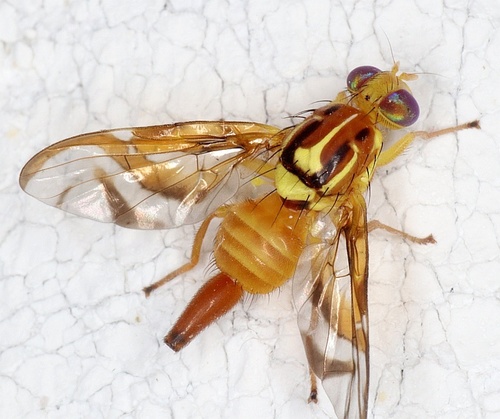
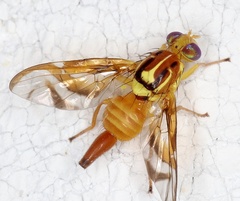 Anastrepha striatae4pest
- Second interactor
- A. serpentina
 Anastrepha serpentinae4pest
- Outcome
- Persistent populationse4
- Setting
- area under ecological protectione4
Not reportedDirection
Organisms pictured · Representative pictures of the matched species, not figures from the paper.

Verbatim
e0“particularly citrus and mango production”
e4“Persistent populations of A. striata and A. serpentina were related to the area under ecological protection”
Claim · model-written summary
The El Cielo reserve is a shelter for Anastrepha pest species mainly linked to backyard hosts.
- Taxon
- citrus and mangoCitrusMangifera indicae0
- Interactor
- AnastrephaAnastrephae5pest
- Outcome
- shelter for the pest speciese5
Organisms pictured · Representative pictures of the matched species, not figures from the paper.
Verbatim
e0“particularly citrus and mango production”
e5“is a shelter for the pest species of Anastrepha”
Claim · model-written summary
Anastrepha ludens and A. obliqua represented the highest number of adult captures across the locations.
- Taxon
- citrus and mangoCitrusMangifera indicae0
- Interactor
- Anastrepha ludens
 Anastrepha ludense6pest
- Second interactor
- A. obliqua
 Anastrepha obliquae6pest
- Outcome
- adult capturese6
- Direction
- higheste6
Organisms pictured · Representative pictures of the matched species, not figures from the paper.


Verbatim
e0“particularly citrus and mango production”
e6“All locations registered the four species, although Anastrepha ludens and A. obliqua represented the highest number of adult captures”