Abstract
Introduction. In the North Caucasus Cuscuta campestris Yunck. is widespread, which parasitizes crops, vegetable gardens, and flower beds. The main classes of biologically active substances of parasites of the genus Cuscuta L. are polyphenolic compounds. The purpose of this work was to study some secondary metabolites of C. campestris stems collected from different host plants. Material and methods. Objects of study: stems of C. campestris collected in the village. Novkus-Artesian of the Neftekumsky district of the Stavro-pol Territory with Alhagi pseudalhagi (M.Bieb.) Desv., Beta vulgaris L., Leucanthemum vulgare Lam. The determination of the total content of antioxi-dants in the analyzed extracts was carried out using a TsvetYauza-01-AA device with amperometric detection. Determination of the total content of phenolic compounds using the Folin-Ciocalteu reagent was carried out by the spectrophotometric method on an SF-102 spectrophotometer. Results. In the extracts studied, the Shinoda test using magnesium showed a red color due to the formation of anthocyanidins, and a yellow-green color due to the reaction with iron (III) salts. The maximum content of the sum of phenolic compounds and the sum of flavonoids is observed in the extract from the stems of C. campestris, collected from A. pseudalhagi, during extraction with 70% ethyl alcohol and amounts to 10,18±0,47% and 5,71±0,25%, respectively. When determining the total content of antioxidants, the optimal extractant is purified water: the maximum content in the aqueous extract obtained from the stems of C. campestris collected from A. pseudalhagi is, in terms of quercetin and gallic acid, 2,02±0,08 mg/g, 1,31±0,05 mg/g, respectively. Conclusions. In the analyzed extracts, patterns were revealed between the nature of the extractant, the total content of polyphenolic compounds and host plants. It was found that the extracts obtained by extraction with 70% ethyl alcohol from the stems of C. campestris collected from A. pseudalhagi exhibited the maximum total content of polyphenolic compounds and flavonoids. Comparable results were obtained when determining the total content of antioxidants and flavonoids in extracts from the stems of C. campestris collected from B. vulgaris and L. vulgare
Abstract from the paper’s OpenAlex record, shown for indexing and research. Copyright remains with the authors or the publisher. Read at the source ↗
The text the model read, with the source record’s inline markup (italics, sub- and superscripts) rendered and its character entities decoded; quote offsets refer to the raw text.
Claims 9
Claim · model-written summary
The Shinoda test of Cuscuta extracts produced red color attributed to anthocyanidins.
- Taxon
- Cuscuta campestris
 Cuscuta campestrist0
- Outcome
- red color due to the formation of anthocyanidinse0
Not reportedOrgan / stageDirection
Organisms pictured · Representative pictures of the matched species, not figures from the paper.

Verbatim
e0“the Shinoda test using magnesium showed a red color due to the formation of anthocyanidins”
t0“CUSCUTA CAMPESTRIS”
Claim · model-written summary
Iron(III) salts produced yellow-green color in Cuscuta extracts.
- Taxon
- Cuscuta campestrisCuscuta campestrist0
- Outcome
- yellow-green colore0
Not reportedDirection
Organisms pictured · Representative pictures of the matched species, not figures from the paper.
Verbatim
e0“a yellow-green color due to the reaction with iron (III) salts.”
t0“CUSCUTA CAMPESTRIS”
Claim · model-written summary
Phenolic compounds peaked at 10,18±0,47% in stems collected from A. pseudalhagi and extracted with 70% ethyl alcohol.
- Taxon
- C. campestrisCuscuta campestrise0
- Organ / stage
- stemse0
- Treatment
- 70% ethyl alcohole0
- Interactor
- A. pseudalhagi
 Alhagi maurorume0host
- Outcome
- content of the sum of phenolic compoundse0
- Direction
- maximume0
- Value
- 10,18±0,47%e0
Organisms pictured · Representative pictures of the matched species, not figures from the paper.

Verbatim
e0“The maximum content of the sum of phenolic compounds and the sum of flavonoids is observed in the extract from the stems of C. campestris, collected from A. pseudalhagi, during extraction with 70% ethyl alcohol and amounts to 10,18±0,47% and 5,71±0,25%, respectively.”
Claim · model-written summary
Flavonoids peaked at 5,71±0,25% in stems collected from A. pseudalhagi and extracted with 70% ethyl alcohol.
- Taxon
- C. campestrisCuscuta campestrise0
- Organ / stage
- stemse0
- Treatment
- 70% ethyl alcohole0
- Interactor
- A. pseudalhagiAlhagi maurorume0host
- Outcome
- sum of flavonoidse0
- Direction
- maximume0
- Value
- 5,71±0,25%e0
Organisms pictured · Representative pictures of the matched species, not figures from the paper.
Verbatim
e0“The maximum content of the sum of phenolic compounds and the sum of flavonoids is observed in the extract from the stems of C. campestris, collected from A. pseudalhagi, during extraction with 70% ethyl alcohol and amounts to 10,18±0,47% and 5,71±0,25%, respectively.”
Claim · model-written summary
Aqueous extracts of stems from A. pseudalhagi had maximum antioxidant content of 2,02±0,08 mg/g in quercetin terms.
- Taxon
- C. campestrisCuscuta campestrise0
- Organ / stage
- stemse0
- Treatment
- aqueous extracte0
- Interactor
- A. pseudalhagiAlhagi maurorume0host
- Outcome
- contente0
- Direction
- maximume0
- Value
- 2,02±0,08 mg/ge0
- Qualifier
- quercetine0
Organisms pictured · Representative pictures of the matched species, not figures from the paper.
Verbatim
e0“the maximum content in the aqueous extract obtained from the stems of C. campestris collected from A. pseudalhagi is, in terms of quercetin and gallic acid, 2,02±0,08 mg/g, 1,31±0,05 mg/g, respectively.”
Claim · model-written summary
Aqueous extracts of stems from A. pseudalhagi had maximum antioxidant content of 1,31±0,05 mg/g in gallic acid terms.
- Taxon
- C. campestrisCuscuta campestrise0
- Organ / stage
- stemse0
- Treatment
- aqueous extracte0
- Interactor
- A. pseudalhagiAlhagi maurorume0host
- Outcome
- contente0
- Direction
- maximume0
- Value
- 1,31±0,05 mg/ge0
- Qualifier
- gallic acide0
Organisms pictured · Representative pictures of the matched species, not figures from the paper.
Verbatim
e0“the maximum content in the aqueous extract obtained from the stems of C. campestris collected from A. pseudalhagi is, in terms of quercetin and gallic acid, 2,02±0,08 mg/g, 1,31±0,05 mg/g, respectively.”
Claim · model-written summary
Extractant and host plant were related to total polyphenolic content.
- Taxon
- Cuscuta campestrisCuscuta campestrist0
- Treatment
- nature of the extractante0
- Outcome
- total content of polyphenolic compoundse0
Not reportedDirection
Organisms pictured · Representative pictures of the matched species, not figures from the paper.
Verbatim
e0“patterns were revealed between the nature of the extractant, the total content of polyphenolic compounds and host plants.”
t0“CUSCUTA CAMPESTRIS”
Claim · model-written summary
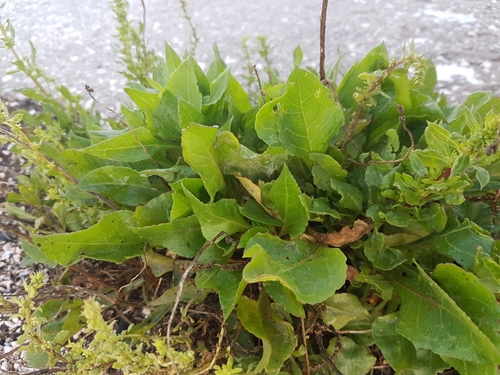
Cuscuta stems from B. vulgaris gave comparable antioxidant and flavonoid results.
- Taxon
- C. campestrisCuscuta campestrise0
- Organ / stage
- stemse0
- Interactor
- B. vulgaris
 Beta vulgarise0host
- Outcome
- total content of antioxidants and flavonoidse0
- Direction
- Comparablee0
Organisms pictured · Representative pictures of the matched species, not figures from the paper.
Verbatim
e0“Comparable results were obtained when determining the total content of antioxidants and flavonoids in extracts from the stems of C. campestris collected from B. vulgaris and L. vulgare”
Claim · model-written summary
Cuscuta stems from L. vulgare gave comparable antioxidant and flavonoid results.
- Taxon
- C. campestrisCuscuta campestrise0
- Organ / stage
- stemse0
- Interactor
- L. vulgare
 Leucanthemum vulgaree0host
- Outcome
- total content of antioxidants and flavonoidse0
- Direction
- Comparablee0
Organisms pictured · Representative pictures of the matched species, not figures from the paper.

Verbatim
e0“Comparable results were obtained when determining the total content of antioxidants and flavonoids in extracts from the stems of C. campestris collected from B. vulgaris and L. vulgare”