Abstract
The experiment was conducted in Rabi 2023 at Organic Research Farm, under Department of Entomology, Institute of Agricultural Sciences, Bundelkhand University, Jhansi to evaluate the efficacy of bio-pesticides and botanicals against the infestation of diamondback moth (Plutella xylostella L.) in cauliflower. Nine treatments included control (Untreted) were used in 9 plots with 3 replications, all the treatments were sprayed in three times and data collected at 3 days, 7 days and 14 days after applications. The investigation resulted all the treatments were found significantly effective over control. The minimum larval population of DBM was recorded under Bacillus thuringiensis @ 1.5 kg/hac as per with Beauveria bassiana @ 1.5 kg/hac and Neem oil 2% and Metarhizium anisopliae@ 1.5 kg/hac also give similar result as neem oil. The highest crop yield and C:B ratio was obtained under Bacillus thuringiensis @ 1.5 kg/hac (210.89 and 1:3.94) as per with Beauveria bassiana @ 1.5 kg/hac (190.65 and 1:3.48).
Abstract from the paper’s OpenAlex record, shown for indexing and research. Copyright remains with the authors or the publisher. Read at the source ↗
The text the model read, with the source record’s inline markup (italics, sub- and superscripts) rendered and its character entities decoded; quote offsets refer to the raw text.
Claims 9
Claim · model-written summary
All tested treatments significantly controlled diamondback moth relative to control.
- Taxon
- cauliflower
 Brassica oleracea var. botrytise1
- Treatment
- all the treatmentse0
- Interactor
- diamondback moth
 Plutella xylostellae1pest
- Outcome
- effectivee0
- Direction
- effectivee0
- Comparator
- controle0
Organisms pictured · Representative pictures of the matched species, not figures from the paper.


Verbatim
e0“all the treatments were found significantly effective over control”
e1“The experiment was conducted in Rabi 2023 at Organic Research Farm, under Department of Entomology, Institute of Agricultural Sciences, Bundelkhand University, Jhansi to evaluate the efficacy of bio-pesticides and botanicals against the infestation of diamondback moth (Plutella xylostella L.) in cauliflower”
Claim · model-written summary
Bacillus thuringiensis treatment gave the minimum moth larval population.
- Taxon
- cauliflowerBrassica oleracea var. botrytise1
- Treatment
- Bacillus thuringiensis @ 1.5 kg/hace0
- Interactor
- DBMe0pest
- Second interactor
- Bacillus thuringiensis
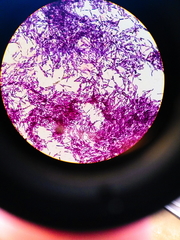 Bacillus thuringiensise0biocontrol_agent
- Outcome
- larval population of DBMe0
- Direction
- minimume0
Not reportedComparator
Organisms pictured · Representative pictures of the matched species, not figures from the paper.
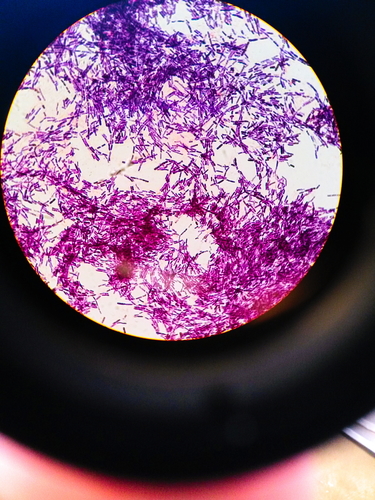
Verbatim
e0“The minimum larval population of DBM was recorded under Bacillus thuringiensis @ 1.5 kg/hac as per with Beauveria bassiana @ 1.5 kg/hac and Neem oil 2% and Metarhizium anisopliae@ 1.5 kg/hac also give similar result as neem oil”
e1“The experiment was conducted in Rabi 2023 at Organic Research Farm, under Department of Entomology, Institute of Agricultural Sciences, Bundelkhand University, Jhansi to evaluate the efficacy of bio-pesticides and botanicals against the infestation of diamondback moth (Plutella xylostella L.) in cauliflower”
Claim · model-written summary
Beauveria bassiana gave larval control comparable to Bacillus thuringiensis.
- Taxon
- cauliflowerBrassica oleracea var. botrytise2
- Treatment
- Beauveria bassiana @ 1.5 kg/hace0
- Interactor
- DBMe1pest
- Second interactor
- Beauveria bassiana
 Beauveria bassianae0biocontrol_agent
- Outcome
- larval population of DBMe1
- Direction
- as per withe0
- Comparator
- Bacillus thuringiensis @ 1.5 kg/hace0
Organisms pictured · Representative pictures of the matched species, not figures from the paper.

Verbatim
e0“Bacillus thuringiensis @ 1.5 kg/hac as per with Beauveria bassiana @ 1.5 kg/hac”
e1“The minimum larval population of DBM was recorded under Bacillus thuringiensis @ 1.5 kg/hac as per with Beauveria bassiana @ 1.5 kg/hac and Neem oil 2% and Metarhizium anisopliae@ 1.5 kg/hac also give similar result as neem oil”
e2“cauliflower”
Claim · model-written summary
Neem oil gave larval control comparable to Bacillus thuringiensis.
- Taxon
- cauliflowerBrassica oleracea var. botrytise2
- Treatment
- Neem oil 2%e0
- Interactor
- DBMe1pest
- Outcome
- larval population of DBMe1
- Direction
- as per withe0
- Comparator
- Bacillus thuringiensis @ 1.5 kg/hace0
Organisms pictured · Representative pictures of the matched species, not figures from the paper.
Verbatim
e0“Bacillus thuringiensis @ 1.5 kg/hac as per with Beauveria bassiana @ 1.5 kg/hac and Neem oil 2%”
e1“The minimum larval population of DBM was recorded under Bacillus thuringiensis @ 1.5 kg/hac as per with Beauveria bassiana @ 1.5 kg/hac and Neem oil 2% and Metarhizium anisopliae@ 1.5 kg/hac also give similar result as neem oil”
e2“cauliflower”
Claim · model-written summary
Metarhizium anisopliae gave a result similar to neem oil.
- Taxon
- cauliflowerBrassica oleracea var. botrytise2
- Treatment
- Metarhizium anisopliae@ 1.5 kg/hace0
- Interactor
- DBMe1pest
- Second interactor
- Metarhizium anisopliae
 Metarhizium anisopliaee0biocontrol_agent
- Outcome
- similar resulte0
- Direction
- similare0
- Comparator
- neem oile0
Organisms pictured · Representative pictures of the matched species, not figures from the paper.

Verbatim
e0“Metarhizium anisopliae@ 1.5 kg/hac also give similar result as neem oil”
e1“The minimum larval population of DBM was recorded under Bacillus thuringiensis @ 1.5 kg/hac as per with Beauveria bassiana @ 1.5 kg/hac and Neem oil 2% and Metarhizium anisopliae@ 1.5 kg/hac also give similar result as neem oil”
e2“cauliflower”
Claim · model-written summary
Bacillus thuringiensis gave the highest cauliflower yield, 210.89.
- Taxon
- cauliflowerBrassica oleracea var. botrytise2
- Treatment
- Bacillus thuringiensis @ 1.5 kg/hace0
- Interactor
- Bacillus thuringiensisBacillus thuringiensise0biocontrol_agent
- Outcome
- crop yielde0
- Direction
- higheste0
- Value
- 210.89e0
Not reportedComparator
Organisms pictured · Representative pictures of the matched species, not figures from the paper.
Verbatim
e0“The highest crop yield and C:B ratio was obtained under Bacillus thuringiensis @ 1.5 kg/hac (210.89 and 1:3.94)”
e2“cauliflower”
Claim · model-written summary
Bacillus thuringiensis gave the highest C:B ratio, 1:3.94.
- Taxon
- cauliflowerBrassica oleracea var. botrytise2
- Treatment
- Bacillus thuringiensis @ 1.5 kg/hace0
- Interactor
- Bacillus thuringiensisBacillus thuringiensise0biocontrol_agent
- Outcome
- C:B ratioe0
- Direction
- higheste0
- Value
- 1:3.94e0
Not reportedComparator
Organisms pictured · Representative pictures of the matched species, not figures from the paper.
Verbatim
e0“The highest crop yield and C:B ratio was obtained under Bacillus thuringiensis @ 1.5 kg/hac (210.89 and 1:3.94)”
e2“cauliflower”
Claim · model-written summary
Beauveria bassiana produced crop yield of 190.65.
- Taxon
- cauliflowerBrassica oleracea var. botrytise2
- Treatment
- Beauveria bassiana @ 1.5 kg/hace0
- Interactor
- Beauveria bassianaBeauveria bassianae0biocontrol_agent
- Outcome
- crop yielde1
- Value
- 190.65e0
Not reportedComparatorDirection
Organisms pictured · Representative pictures of the matched species, not figures from the paper.
Verbatim
e0“Beauveria bassiana @ 1.5 kg/hac (190.65 and 1:3.48)”
e1“The highest crop yield and C:B ratio was obtained under Bacillus thuringiensis @ 1.5 kg/hac (210.89 and 1:3.94) as per with Beauveria bassiana @ 1.5 kg/hac (190.65 and 1:3.48)”
e2“cauliflower”
Claim · model-written summary
Beauveria bassiana produced a C:B ratio of 1:3.48.
- Taxon
- cauliflowerBrassica oleracea var. botrytise2
- Treatment
- Beauveria bassiana @ 1.5 kg/hace0
- Interactor
- Beauveria bassianaBeauveria bassianae0biocontrol_agent
- Outcome
- C:B ratioe1
- Value
- 1:3.48e0
Not reportedComparatorDirection
Organisms pictured · Representative pictures of the matched species, not figures from the paper.
Verbatim
e0“Beauveria bassiana @ 1.5 kg/hac (190.65 and 1:3.48)”
e1“The highest crop yield and C:B ratio was obtained under Bacillus thuringiensis @ 1.5 kg/hac (210.89 and 1:3.94) as per with Beauveria bassiana @ 1.5 kg/hac (190.65 and 1:3.48)”
e2“cauliflower”
The same questions in other papers
Bacillus thuringiensis · yield · Brassica oleracea (wild cabbage)Positive and negative results
3 papers in the same direction as this paper · 1 in the opposite direction
- no effect
- positive
- positive
1 paper more in this group
See all 5 papers →Beauveria bassiana · pest · Brassica oleracea (wild cabbage)Positive and negative results
5 papers in the same direction as this paper · 2 in the opposite direction
- no effect
- negative
- positive
4 papers more in this group
See all 8 papers →Bacillus thuringiensis · pest · Brassica oleracea (wild cabbage)Results agree
4 papers in the same direction as this paper
- positive
- positive
- positive
1 paper more in this group
See all 5 papers →Beauveria bassiana · yield · Brassica oleracea (wild cabbage)Results agree
4 papers in the same direction as this paper
- positive
- positive
- positive
1 paper more in this group
See all 5 papers →botanical · pest · Brassica oleracea (wild cabbage)Positive and negative results
64 papers in the same direction as this paper · 13 in the opposite direction
- no effect
- negative
- no effect
74 papers more in this group
See all 78 papers →Claims are grouped by organism, treatment and what was measured or targeted. A paper counts as positive when any of its claims in the group is positive.