Abstract
Hevea brasiliensis is a forest species with potential for commercial planting for both latex and timber production at the end of the latex production cycle. This study aimed to determine the genetic variability of growth traits and wood properties in a 33-year-old clonal plantation of H. brasiliensis in the region of Selvíria, state of Mato Grosso do Sul. Significant differences were detected among the clones for DBH and total tree height. For the physical properties of the wood, only volumetric shrinkage showed a significant difference between clones; however, for all anatomical dimensions and mechanical properties, significant differences were found. Clone IAN717 stood out for the highest growth, while RRIM600 had the lowest growth. In terms of wood properties, clone RRIM600 exhibited highest mechanical resistance, while GT1 showed the lowest resistance. Most wood properties varied in the pith-to-bark direction, with the lowest values found in the pith region and the highest in the bark region, except for vessel frequency, where the opposite trend occurred. The highest heritability coefficients were observed for DBH, volumetric shrinkage in the bark region, vessel element diameter in the intermediate region, and vessel frequency in the bark region. The genetic correlation coefficient was high, positive, and significant between traits such as shear strength x modulus of rupture, modulus of elasticity x modulus of rupture, and volumetric shrinkage x modulus of rupture, indicating that selection for one trait may result in indirect gains in another.
Abstract from the paper’s OpenAlex record; open copy licensed cc-by-nc. Read at the source ↗
The text the model read, with the source record’s inline markup (italics, sub- and superscripts) rendered and its character entities decoded; quote offsets refer to the raw text.
Claims 13
Claim · model-written summary
Clones differed significantly in DBH and total tree height.
- Taxon
- Hevea brasiliensis
 Hevea brasiliensist0
- Outcome
- DBH and total tree heighte0
- Comparator
- clonese0
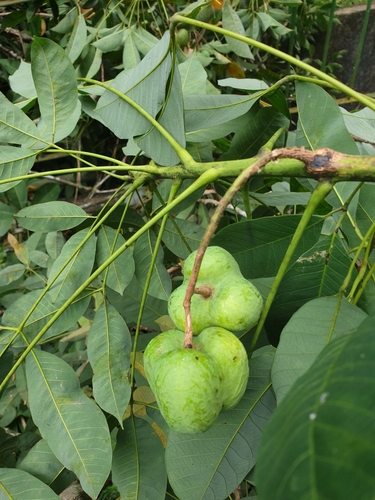
Organisms pictured · Representative pictures of the matched species, not figures from the paper.
Verbatim
e0“Significant differences were detected among the clones for DBH and total tree height”
t0“Hevea brasiliensis”
Claim · model-written summary
Among wood physical properties, only volumetric shrinkage differed significantly between clones.
- Taxon
- Hevea brasiliensisHevea brasiliensist0
- Outcome
- volumetric shrinkagee0
- Comparator
- clonese0
Organisms pictured · Representative pictures of the matched species, not figures from the paper.
Verbatim
e0“only volumetric shrinkage showed a significant difference between clones”
t0“Hevea brasiliensis”
Claim · model-written summary
All anatomical dimensions and mechanical properties differed significantly among clones.
- Taxon
- Hevea brasiliensisHevea brasiliensist0
- Outcome
- anatomical dimensions and mechanical propertiese0
Organisms pictured · Representative pictures of the matched species, not figures from the paper.
Verbatim
e0“for all anatomical dimensions and mechanical properties, significant differences were found”
t0“Hevea brasiliensis”
Claim · model-written summary
IAN717 had the highest growth.
- Taxon
- Hevea brasiliensisHevea brasiliensist0
- Material
- IAN717e0
- Outcome
- growthe0
- Direction
- higheste0
Organisms pictured · Representative pictures of the matched species, not figures from the paper.
Verbatim
e0“Clone IAN717 stood out for the highest growth”
t0“Hevea brasiliensis”
Claim · model-written summary
RRIM600 had the lowest growth.
- Taxon
- Hevea brasiliensisHevea brasiliensist0
- Material
- RRIM600e0
- Outcome
- growthe0
- Direction
- loweste0
Organisms pictured · Representative pictures of the matched species, not figures from the paper.
Verbatim
e0“RRIM600 had the lowest growth”
t0“Hevea brasiliensis”
Claim · model-written summary
RRIM600 had the highest mechanical resistance.
- Taxon
- Hevea brasiliensisHevea brasiliensist0
- Material
- RRIM600e0
- Outcome
- mechanical resistancee0
- Direction
- higheste0
Organisms pictured · Representative pictures of the matched species, not figures from the paper.
Verbatim
e0“clone RRIM600 exhibited highest mechanical resistance”
t0“Hevea brasiliensis”
Claim · model-written summary
GT1 had the lowest mechanical resistance.
- Taxon
- Hevea brasiliensisHevea brasiliensist0
- Material
- GT1e0
- Outcome
- resistancee0
- Direction
- loweste0
Organisms pictured · Representative pictures of the matched species, not figures from the paper.
Verbatim
e0“GT1 showed the lowest resistance”
t0“Hevea brasiliensis”
Claim · model-written summary
Most wood properties rose from pith to bark.
- Taxon
- Hevea brasiliensisHevea brasiliensist0
- Organ / stage
- bark regione0
- Outcome
- wood propertiese0
- Direction
- higheste0
- Comparator
- pith regione0
Organisms pictured · Representative pictures of the matched species, not figures from the paper.
Verbatim
e0“Most wood properties varied in the pith-to-bark direction, with the lowest values found in the pith region and the highest in the bark region”
t0“Hevea brasiliensis”
Claim · model-written summary
Vessel frequency showed the opposite pith-to-bark trend.
- Taxon
- Hevea brasiliensisHevea brasiliensist0
- Outcome
- vessel frequencye0
Not reportedOrgan / stageDirection
Organisms pictured · Representative pictures of the matched species, not figures from the paper.
Verbatim
e0“except for vessel frequency, where the opposite trend occurred”
t0“Hevea brasiliensis”
Claim · model-written summary
DBH, bark volumetric shrinkage, intermediate vessel element diameter and bark vessel frequency had the highest heritabilities.
- Taxon
- Hevea brasiliensisHevea brasiliensist0
- Outcome
- heritability coefficientse0
- Direction
- higheste0
Organisms pictured · Representative pictures of the matched species, not figures from the paper.
Verbatim
e0“The highest heritability coefficients were observed for DBH, volumetric shrinkage in the bark region, vessel element diameter in the intermediate region, and vessel frequency in the bark region”
t0“Hevea brasiliensis”
Claim · model-written summary
Shear strength and modulus of rupture had a high positive significant genetic correlation.
- Taxon
- Hevea brasiliensisHevea brasiliensist0
- Outcome
- genetic correlation coefficiente0
- Direction
- positivee0
- Comparator
- shear strength x modulus of rupturee0
Organisms pictured · Representative pictures of the matched species, not figures from the paper.
Verbatim
e0“The genetic correlation coefficient was high, positive, and significant between traits such as shear strength x modulus of rupture”
t0“Hevea brasiliensis”
Claim · model-written summary
Modulus of elasticity and modulus of rupture had a high positive significant genetic correlation.
- Taxon
- Hevea brasiliensisHevea brasiliensist0
- Outcome
- genetic correlation coefficiente0
- Direction
- positivee0
- Comparator
- modulus of elasticity x modulus of rupturee0
Organisms pictured · Representative pictures of the matched species, not figures from the paper.
Verbatim
e0“The genetic correlation coefficient was high, positive, and significant between traits such as shear strength x modulus of rupture, modulus of elasticity x modulus of rupture”
t0“Hevea brasiliensis”
Claim · model-written summary
Volumetric shrinkage and modulus of rupture had a high positive significant genetic correlation.
- Taxon
- Hevea brasiliensisHevea brasiliensist0
- Outcome
- genetic correlation coefficiente0
- Direction
- positivee0
- Comparator
- volumetric shrinkage x modulus of rupturee0
Organisms pictured · Representative pictures of the matched species, not figures from the paper.
Verbatim
e0“The genetic correlation coefficient was high, positive, and significant between traits such as shear strength x modulus of rupture, modulus of elasticity x modulus of rupture, and volumetric shrinkage x modulus of rupture”
t0“Hevea brasiliensis”