Claim · model-written summary
Clones differed significantly in DBH and total tree height.
- Taxon
- Hevea brasiliensis
 Hevea brasiliensist0
- Outcome
- DBH and total tree heighte0
- Comparator
- clonese0
Not reportedMaterialGeneCompoundOrgan / stageInteractorInteractor roleSecond interactorSecond interactor roleTreatmentSettingDirectionValueQualifier
Organisms pictured · Representative pictures of the matched species, not figures from the paper.
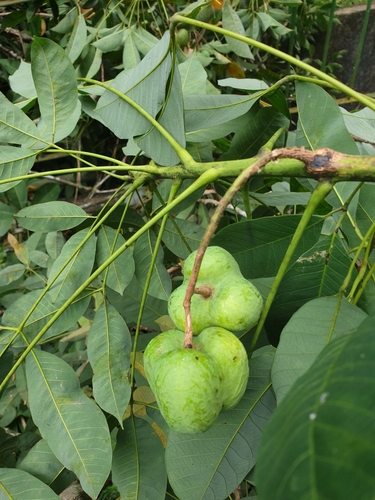
Verbatim
e0“Significant differences were detected among the clones for DBH and total tree height”
t0“Hevea brasiliensis”
Title
Israel Luiz de Lima; Maurício Ranzini; Eduardo Luiz Longui; et al. Revista do Instituto Florestal 2024. doi:10.24278/rif.2024.36e947
Other claims from this paper (12)
- Observation Among wood physical properties, only volumetric shrinkage differed significantly between clones.
- Observation All anatomical dimensions and mechanical properties differed significantly among clones.
- Observation IAN717 had the highest growth.
- Observation RRIM600 had the lowest growth.
- Observation RRIM600 had the highest mechanical resistance.
- Observation GT1 had the lowest mechanical resistance.
- Association Most wood properties rose from pith to bark.
- Association Vessel frequency showed the opposite pith-to-bark trend.
- Observation DBH, bark volumetric shrinkage, intermediate vessel element diameter and bark vessel frequency had the highest heritabilities.
- Association Shear strength and modulus of rupture had a high positive significant genetic correlation.
- Association Modulus of elasticity and modulus of rupture had a high positive significant genetic correlation.
- Association Volumetric shrinkage and modulus of rupture had a high positive significant genetic correlation.