Abstract
Tomato cultivation in Burkina Faso and elsewhere constitutes a source of income for farmers. Tomato is a very important fruit for a good complete diet, unfortunately low productivity is caused by various factors including climate change, fungal plant diseases linked to pathogens and spread by insect pests. Every year farmers suffer huge losses due to the tomato yellow virus (begomovirus), which is transmitted by insect vectors Bemisia Tabaci. However, we analyze these insect management problems using mathematical models. In this paper we developed a mathematical model of tomato yellow leaf curve virus (TYLCV) disease in the tomato plantation with the growth rate of insects vectors following the logistic function, taking into account the two latent stages of the vegetative phase and the generative phase of tomato plants. We determined the value of the basic reproduction number \(\mathcal{R}_0\) of the model from the dominant eigenvalue of the next generation matrix. In practice the basic reproduction number represent the number of new cases generated by an infectious individual during its infection phase . But in theory we use the basic reproduction number to analyze the stability of the equilibrium states of the model. This parameter is used to evaluated the speed of spread of the virus in the population. The results illustrates that when \(\mathcal{R}_0 < 1\), the disease-free equilibrium point is asymptotically globally stable and the model has an endemic equilibrium point which is asymptotically globally stable when \(\mathcal{R}_0 >1\). We have also provided numerical simulation examples describing the population of the model that was developed. The numerical simulation results illustrate that for a use of Verticillium lecanii at a dose greater than \(10\%\) the population of tomato plants latent, infected in the vegetative and in the generative phase will experience extinction, just like the susceptible and infected population of Bemisia Tabaci. In the last part of our work, we also calculated the sensitivity indices of certain parameters that are very sensitive to the variation in the value of the basic reproduction number. These findings provide a scientific basis for optimizing biocontrol strategies in tomato farming.
Abstract from the paper’s OpenAlex record, shown for indexing and research. Copyright remains with the authors or the publisher. Read at the source ↗
The text the model read, with the source record’s inline markup (italics, sub- and superscripts) rendered and its character entities decoded; quote offsets refer to the raw text.
Claims 10
Claim · model-written summary
A tomato disease model incorporates logistic insect-vector growth and latent vegetative and generative plant stages.
- Taxon
- tomato
 Solanum lycopersicume0
- Interactor
- tomato yellow leaf curve viruse0pathogen
- Outcome
- mathematical modele0
- Qualifier
- two latent stages of the vegetative phase and the generative phase of tomato plantse0
Not reportedComparator
Organisms pictured · Representative pictures of the matched species, not figures from the paper.

Verbatim
e0“In this paper we developed a mathematical model of tomato yellow leaf curve virus (TYLCV) disease in the tomato plantation with the growth rate of insects vectors following the logistic function, taking into account the two latent stages of the vegetative phase and the generative phase of tomato plants.”
Claim · model-written summary
The model basic reproduction number was determined from the dominant eigenvalue of the next-generation matrix.
- Taxon
- tomatoSolanum lycopersicumt0
- Outcome
- basic reproduction numbere0
- Qualifier
- dominant eigenvalue of the next generation matrixe0
Not reportedComparator
Organisms pictured · Representative pictures of the matched species, not figures from the paper.
Verbatim
e0“We determined the value of the basic reproduction number \(\mathcal{R}_0\) of the model from the dominant eigenvalue of the next generation matrix.”
t0“tomato”
Claim · model-written summary
The disease-free equilibrium is asymptotically globally stable when the basic reproduction number is below one.
- Taxon
- tomatoSolanum lycopersicumt0
- Outcome
- disease-free equilibrium point is asymptotically globally stablee0
- Qualifier
- when \(\mathcal{R}_0 < 1\)e0
Not reportedDirection
Organisms pictured · Representative pictures of the matched species, not figures from the paper.
Verbatim
e0“The results illustrates that when \(\mathcal{R}_0 < 1\), the disease-free equilibrium point is asymptotically globally stable”
t0“tomato”
Claim · model-written summary
The model has an asymptotically globally stable endemic equilibrium when the basic reproduction number exceeds one.
- Taxon
- tomatoSolanum lycopersicumt0
- Outcome
- endemic equilibrium point which is asymptotically globally stablee0
- Qualifier
- when \(\mathcal{R}_0 >1\)e0
Not reportedDirection
Organisms pictured · Representative pictures of the matched species, not figures from the paper.
Verbatim
e0“the model has an endemic equilibrium point which is asymptotically globally stable when \(\mathcal{R}_0 >1\).”
t0“tomato”
Claim · model-written summary
Simulated Verticillium lecanii use above 10% leads to extinction of latent tomato populations.
- Taxon
- tomatoSolanum lycopersicume0
- Treatment
- use of Verticillium lecanii at a dose greater than \(10\%\)e0
- Interactor
- Verticillium lecanii
 Akanthomyces lecaniie0biocontrol_agent
- Outcome
- population of tomato plants latente0
- Direction
- extinctione0
Not reportedComparator
Organisms pictured · Representative pictures of the matched species, not figures from the paper.
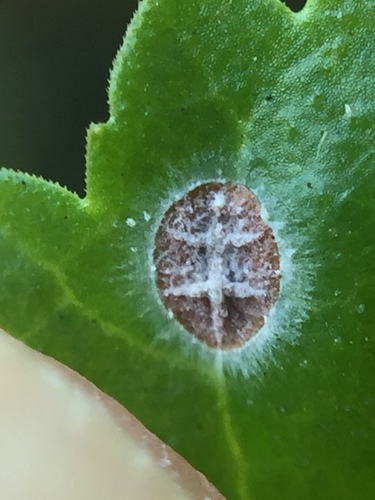
Verbatim
e0“The numerical simulation results illustrate that for a use of Verticillium lecanii at a dose greater than \(10\%\) the population of tomato plants latent, infected in the vegetative and in the generative phase will experience extinction, just like the susceptible and infected population of Bemisia Tabaci.”
Claim · model-written summary
Simulated Verticillium lecanii use above 10% leads to extinction of infected tomato populations in the vegetative phase.
- Taxon
- tomatoSolanum lycopersicume0
- Organ / stage
- vegetativee0
- Treatment
- use of Verticillium lecanii at a dose greater than \(10\%\)e0
- Interactor
- Verticillium lecaniiAkanthomyces lecaniie0biocontrol_agent
- Outcome
- infected in the vegetativee0
- Direction
- extinctione0
Not reportedComparator
Organisms pictured · Representative pictures of the matched species, not figures from the paper.
Verbatim
e0“The numerical simulation results illustrate that for a use of Verticillium lecanii at a dose greater than \(10\%\) the population of tomato plants latent, infected in the vegetative and in the generative phase will experience extinction, just like the susceptible and infected population of Bemisia Tabaci.”
Claim · model-written summary
Simulated Verticillium lecanii use above 10% leads to extinction of infected tomato populations in the generative phase.
- Taxon
- tomatoSolanum lycopersicume0
- Organ / stage
- generative phasee0
- Treatment
- use of Verticillium lecanii at a dose greater than \(10\%\)e0
- Interactor
- Verticillium lecaniiAkanthomyces lecaniie0biocontrol_agent
- Outcome
- generative phasee0
- Direction
- extinctione0
Not reportedComparator
Organisms pictured · Representative pictures of the matched species, not figures from the paper.
Verbatim
e0“The numerical simulation results illustrate that for a use of Verticillium lecanii at a dose greater than \(10\%\) the population of tomato plants latent, infected in the vegetative and in the generative phase will experience extinction, just like the susceptible and infected population of Bemisia Tabaci.”
Claim · model-written summary
Simulated Verticillium lecanii use above 10% leads to extinction of susceptible Bemisia Tabaci populations.
- Taxon
- Bemisia Tabaci
 Bemisia tabacie0
- Treatment
- use of Verticillium lecanii at a dose greater than \(10\%\)e0
- Interactor
- Bemisia TabaciBemisia tabacie0pest
- Second interactor
- Verticillium lecaniiAkanthomyces lecaniie0biocontrol_agent
- Outcome
- susceptiblee0
- Direction
- extinctione0
Not reportedComparator
Organisms pictured · Representative pictures of the matched species, not figures from the paper.

Verbatim
e0“The numerical simulation results illustrate that for a use of Verticillium lecanii at a dose greater than \(10\%\) the population of tomato plants latent, infected in the vegetative and in the generative phase will experience extinction, just like the susceptible and infected population of Bemisia Tabaci.”
Claim · model-written summary
Simulated Verticillium lecanii use above 10% leads to extinction of infected Bemisia Tabaci populations.
- Taxon
- Bemisia TabaciBemisia tabacie0
- Treatment
- use of Verticillium lecanii at a dose greater than \(10\%\)e0
- Interactor
- Bemisia TabaciBemisia tabacie0pest
- Second interactor
- Verticillium lecaniiAkanthomyces lecaniie0biocontrol_agent
- Outcome
- infected population of Bemisia Tabacie0
- Direction
- extinctione0
Not reportedComparator
Organisms pictured · Representative pictures of the matched species, not figures from the paper.
Verbatim
e0“The numerical simulation results illustrate that for a use of Verticillium lecanii at a dose greater than \(10\%\) the population of tomato plants latent, infected in the vegetative and in the generative phase will experience extinction, just like the susceptible and infected population of Bemisia Tabaci.”
Claim · model-written summary
Sensitivity indices were calculated for parameters highly sensitive to changes in the basic reproduction number.
- Taxon
- tomatoSolanum lycopersicumt0
- Outcome
- sensitivity indicese0
- Qualifier
- certain parameters that are very sensitive to the variation in the value of the basic reproduction numbere0
Not reportedComparator
Organisms pictured · Representative pictures of the matched species, not figures from the paper.
Verbatim
e0“we also calculated the sensitivity indices of certain parameters that are very sensitive to the variation in the value of the basic reproduction number.”
t0“tomato”
The same questions in other papers
Akanthomyces lecanii · pest · Solanum lycopersicum (tomato)Results agree
2 papers in the same direction as this paper
- positive
- positive
Claims are grouped by organism, treatment and what was measured or targeted. A paper counts as positive when any of its claims in the group is positive.