Abstract
Whitefly the tiny homopteran is now emerging as the most destructive pest in several crops. In cotton and tomato it is now being identified as the most destructive insect causing heavy loss of yield. Field experiment was set to evaluate some biopesticides against whitefly in cotton and tomato. Among the different biopesticides evaluated Beauveria bassiana (66.11% and 63.24% reduction of population over control in cotton and tomato, respectively) and Verticillium lecanii (64.33% and 61.27% reduction of population over control in cotton and tomato, respectively) was considered as the best against whitefly, while, Metarhizium anisopliae, neemazal and karanja oil were moderately effective against whitefly population. Beauveria bassiana recorded maximum yield both in case of cotton and tomato (334.33 kg/ha and 19.5 t/ha respectively).
Abstract from the paper’s OpenAlex record, shown for indexing and research. Copyright remains with the authors or the publisher. Read at the source ↗
The text the model read, with the source record’s inline markup (italics, sub- and superscripts) rendered and its character entities decoded; quote offsets refer to the raw text.
Claims 9
Claim · model-written summary
Beauveria bassiana reduced whitefly population in cotton by 66.11% relative to control.
- Taxon
- cotton
 Gossypium hirsutume0
- Treatment
- Beauveria bassianae0
- Interactor
- whiteflye1pest
- Second interactor
- Beauveria bassiana
 Beauveria bassianae0biocontrol_agent
- Outcome
- populatione0
- Direction
- reductione0
- Value
- 66.11%e0
- Comparator
- controle0
Organisms pictured · Representative pictures of the matched species, not figures from the paper.


Verbatim
e0“Beauveria bassiana (66.11% and 63.24% reduction of population over control in cotton and tomato, respectively)”
e1“against whitefly in cotton and tomato”
Claim · model-written summary
Beauveria bassiana reduced whitefly population in tomato by 63.24% relative to control.
- Taxon
- tomato
 Solanum lycopersicume0
- Treatment
- Beauveria bassianae0
- Interactor
- whiteflye1pest
- Second interactor
- Beauveria bassianaBeauveria bassianae0biocontrol_agent
- Outcome
- populatione0
- Direction
- reductione0
- Value
- 63.24%e0
- Comparator
- controle0
Organisms pictured · Representative pictures of the matched species, not figures from the paper.

Verbatim
e0“Beauveria bassiana (66.11% and 63.24% reduction of population over control in cotton and tomato, respectively)”
e1“against whitefly in cotton and tomato”
Claim · model-written summary
Verticillium lecanii reduced whitefly population in cotton by 64.33% relative to control.
- Taxon
- cottonGossypium hirsutume0
- Treatment
- Verticillium lecaniie0
- Interactor
- whiteflye1pest
- Second interactor
- Verticillium lecanii
 Akanthomyces lecaniie0biocontrol_agent
- Outcome
- populatione0
- Direction
- reductione0
- Value
- 64.33%e0
- Comparator
- controle0
Organisms pictured · Representative pictures of the matched species, not figures from the paper.
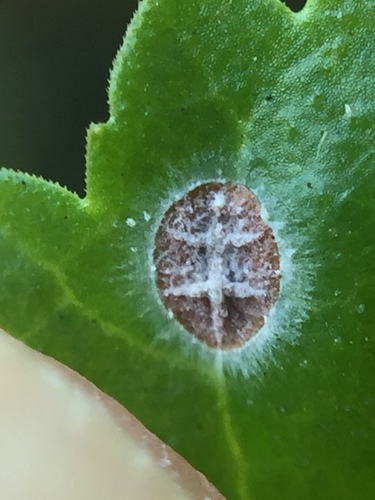
Verbatim
e0“Verticillium lecanii (64.33% and 61.27% reduction of population over control in cotton and tomato, respectively)”
e1“against whitefly in cotton and tomato”
Claim · model-written summary
Verticillium lecanii reduced whitefly population in tomato by 61.27% relative to control.
- Taxon
- tomatoSolanum lycopersicume0
- Treatment
- Verticillium lecaniie0
- Interactor
- whiteflye1pest
- Second interactor
- Verticillium lecaniiAkanthomyces lecaniie0biocontrol_agent
- Outcome
- populatione0
- Direction
- reductione0
- Value
- 61.27%e0
- Comparator
- controle0
Organisms pictured · Representative pictures of the matched species, not figures from the paper.
Verbatim
e0“Verticillium lecanii (64.33% and 61.27% reduction of population over control in cotton and tomato, respectively)”
e1“against whitefly in cotton and tomato”
Claim · model-written summary
Metarhizium anisopliae was moderately effective against whitefly.
- Taxon
- cotton and tomatoGossypium hirsutumSolanum lycopersicume1
- Treatment
- Metarhizium anisopliaee0
- Interactor
- whiteflye0pest
- Second interactor
- Metarhizium anisopliae
 Metarhizium anisopliaee0biocontrol_agent
- Outcome
- whitefly populatione0
- Direction
- moderately effectivee0
Not reportedComparator
Organisms pictured · Representative pictures of the matched species, not figures from the paper.

Verbatim
e0“Metarhizium anisopliae, neemazal and karanja oil were moderately effective against whitefly population.”
e1“whitefly in cotton and tomato”
Claim · model-written summary
Neemazal was moderately effective against whitefly.
- Taxon
- cotton and tomatoGossypium hirsutumSolanum lycopersicume1
- Treatment
- neemazale0
- Interactor
- whiteflye0pest
- Outcome
- whitefly populatione0
- Direction
- moderately effectivee0
Not reportedComparator
Organisms pictured · Representative pictures of the matched species, not figures from the paper.
Verbatim
e0“Metarhizium anisopliae, neemazal and karanja oil were moderately effective against whitefly population.”
e1“whitefly in cotton and tomato”
Claim · model-written summary
Karanja oil was moderately effective against whitefly.
- Taxon
- cotton and tomatoGossypium hirsutumSolanum lycopersicume1
- Treatment
- karanja oile0
- Interactor
- whiteflye0pest
- Outcome
- whitefly populatione0
- Direction
- moderately effectivee0
Not reportedComparator
Organisms pictured · Representative pictures of the matched species, not figures from the paper.
Verbatim
e0“Metarhizium anisopliae, neemazal and karanja oil were moderately effective against whitefly population.”
e1“whitefly in cotton and tomato”
Claim · model-written summary
Beauveria bassiana yielded the maximum cotton yield of 334.33 kg/ha.
- Taxon
- cottonGossypium hirsutume0
- Treatment
- Beauveria bassianae0
- Interactor
- Beauveria bassianaBeauveria bassianae0biocontrol_agent
- Outcome
- yielde0
- Direction
- maximume0
- Value
- 334.33 kg/hae0
Not reportedComparator
Organisms pictured · Representative pictures of the matched species, not figures from the paper.
Verbatim
e0“Beauveria bassiana recorded maximum yield both in case of cotton and tomato (334.33 kg/ha and 19.5 t/ha respectively).”
Claim · model-written summary
Beauveria bassiana yielded the maximum tomato yield of 19.5 t/ha.
- Taxon
- tomatoSolanum lycopersicume0
- Treatment
- Beauveria bassianae0
- Interactor
- Beauveria bassianaBeauveria bassianae0biocontrol_agent
- Outcome
- yielde0
- Direction
- maximume0
- Value
- 19.5 t/hae0
Not reportedComparator
Organisms pictured · Representative pictures of the matched species, not figures from the paper.
Verbatim
e0“Beauveria bassiana recorded maximum yield both in case of cotton and tomato (334.33 kg/ha and 19.5 t/ha respectively).”
The same questions in other papers
Beauveria bassiana · pest · Solanum lycopersicum (tomato)Positive and negative results
7 papers in the same direction as this paper · 1 in the opposite direction
- negative
- positive
- positive
5 papers more in this group
See all 9 papers →Metarhizium anisopliae · pest · Solanum lycopersicum (tomato)Results agree
1 paper in the same direction as this paper
- positive
Metarhizium anisopliae · pest · Gossypium hirsutum (cotton)Results agree
2 papers in the same direction as this paper
- positive
- positive
Akanthomyces lecanii · pest · Solanum lycopersicum (tomato)Results agree
2 papers in the same direction as this paper
- positive
- positive
Beauveria bassiana · yield · Solanum lycopersicum (tomato)Results agree
3 papers in the same direction as this paper
- positive
- positive
- positive
Beauveria bassiana · pest · Gossypium hirsutum (cotton)Results agree
3 papers in the same direction as this paper
- positive
- positive
- positive
Akanthomyces lecanii · pest · Gossypium hirsutum (cotton)Results agree
5 papers in the same direction as this paper
- positive
- positive
- positive
2 papers more in this group
See all 6 papers →Claims are grouped by organism, treatment and what was measured or targeted. A paper counts as positive when any of its claims in the group is positive.