Abstract
A field experiment was conducted during 2018-19 at the Agricultural Research Farm of Prayagraj College of Agriculture, Sam Higginbottpm, University of Agriculture, Technology and Sciences” Prayagraj. Synthetic insecticides and Bio pesticides reduced pod borer damage significantly. The results on the percent infestation of pod borer on mean (7th and 14th) days after spraying revealed that all the treatments were significantly superior over control (8.13) per cent infestation. Among the various treatments, least number of larvae (0.35 larvae/plant) was observed at 14 days spray in Cypermethrin. The lowest percent infestation (10.02%) of pod borer was recorded in Cypermethrin followed by Beauveria bassiana (12.92%) which proved to ne next best effective treatment in evaluating the least fruit damage The highest fruit yield (146.81 q/ha) was recorded with the treatment Cypermethrin which was significantly higher than other treatments. However, Beauveria bassiana recorded second highest fruit yield (142.58 q/ha) which proved to be second best and effective treatments. The lowest yield of 107.25 q/ha was found in Sixer but higher than control (75.07 q/ha). The maximum B:C ratio was found in the treatment of Cypermethrin (1: 2.51) followed by Beauveria bassiana (1:2.43) and Verticillium lecanii (1:2.22). The other treatments was profitable over control.
Abstract from the paper’s OpenAlex record, shown for indexing and research. Copyright remains with the authors or the publisher. Read at the source ↗
The text the model read, with the source record’s inline markup (italics, sub- and superscripts) rendered and its character entities decoded; quote offsets refer to the raw text.
Claims 12
Claim · model-written summary
Synthetic insecticides and bio pesticides significantly reduced pod borer damage on tomato.
- Taxon
- tomato
 Solanum lycopersicumt0
- Treatment
- Synthetic insecticides and Bio pesticidese0
- Interactor
- pod borere0pest
- Outcome
- pod borer damagee0
- Direction
- reducede0
Not reportedComparator
Organisms pictured · Representative pictures of the matched species, not figures from the paper.

Verbatim
t0“tomato, Lycopersicon esculentum Miller”
e0“Synthetic insecticides and Bio pesticides reduced pod borer damage significantly”
Claim · model-written summary
All treatments were significantly superior to control (8.13 per cent infestation) in pod borer infestation.
- Taxon
- tomatoSolanum lycopersicumt0
- Treatment
- all the treatmentse0
- Interactor
- pod borere0pest
- Outcome
- per cent infestatione0
- Direction
- superiore0
- Qualifier
- 8.13e0
- Comparator
- controle0
Organisms pictured · Representative pictures of the matched species, not figures from the paper.
Verbatim
t0“tomato, Lycopersicon esculentum Miller”
e0“The results on the percent infestation of pod borer on mean (7th and 14th) days after spraying revealed that all the treatments were significantly superior over control (8.13) per cent infestation”
Claim · model-written summary
The fewest larvae (0.35 larvae per plant) were observed 14 days after spraying Cypermethrin.
- Taxon
- tomatoSolanum lycopersicumt0
- Treatment
- Cypermethrine0
- Interactor
- larvaee0pest
- Outcome
- number of larvaee0
- Direction
- leaste0
- Value
- 0.35 larvae/plante0
- Qualifier
- 14 days spraye0
Not reportedComparator
Organisms pictured · Representative pictures of the matched species, not figures from the paper.
Verbatim
t0“tomato, Lycopersicon esculentum Miller”
e0“least number of larvae (0.35 larvae/plant) was observed at 14 days spray in Cypermethrin”
Claim · model-written summary
The lowest pod borer infestation (10.02%) was recorded in Cypermethrin.
- Taxon
- tomatoSolanum lycopersicumt0
- Treatment
- Cypermethrine0
- Interactor
- pod borere0pest
- Outcome
- percent infestatione0
- Direction
- loweste0
- Value
- 10.02%e0
Not reportedComparator
Organisms pictured · Representative pictures of the matched species, not figures from the paper.
Verbatim
t0“tomato, Lycopersicon esculentum Miller”
e0“The lowest percent infestation (10.02%) of pod borer was recorded in Cypermethrin followed by Beauveria bassiana (12.92%)”
Claim · model-written summary
Beauveria bassiana gave the next lowest pod borer infestation (12.92%) and was the next best effective treatment.
- Taxon
- tomatoSolanum lycopersicumt0
- Treatment
- Beauveria bassianae0
- Interactor
- pod borere0pest
- Second interactor
- Beauveria bassiana
 Beauveria bassianae0biocontrol_agent
- Outcome
- percent infestatione0
- Direction
- loweste0
- Value
- 12.92%e0
Not reportedComparator
Organisms pictured · Representative pictures of the matched species, not figures from the paper.

Verbatim
t0“tomato, Lycopersicon esculentum Miller”
e0“The lowest percent infestation (10.02%) of pod borer was recorded in Cypermethrin followed by Beauveria bassiana (12.92%)”
Claim · model-written summary
The highest fruit yield (146.81 q/ha) was recorded with Cypermethrin, significantly higher than other treatments.
- Taxon
- tomatoSolanum lycopersicumt0
- Treatment
- Cypermethrine0
- Outcome
- fruit yielde0
- Direction
- highere0
- Value
- 146.81 q/hae0
- Comparator
- other treatmentse0
Organisms pictured · Representative pictures of the matched species, not figures from the paper.
Verbatim
t0“tomato, Lycopersicon esculentum Miller”
e0“The highest fruit yield (146.81 q/ha) was recorded with the treatment Cypermethrin which was significantly higher than other treatments”
Claim · model-written summary
Beauveria bassiana recorded the second highest fruit yield (142.58 q/ha).
- Taxon
- tomatoSolanum lycopersicumt0
- Treatment
- Beauveria bassianae0
- Second interactor
- Beauveria bassianaBeauveria bassianae0biocontrol_agent
- Outcome
- fruit yielde0
- Direction
- second higheste0
- Value
- 142.58 q/hae0
Not reportedComparator
Organisms pictured · Representative pictures of the matched species, not figures from the paper.
Verbatim
t0“tomato, Lycopersicon esculentum Miller”
e0“Beauveria bassiana recorded second highest fruit yield (142.58 q/ha)”
Claim · model-written summary
The lowest yield (107.25 q/ha) was found in Sixer but was higher than control (75.07 q/ha).
- Taxon
- tomatoSolanum lycopersicumt0
- Treatment
- Sixere0
- Outcome
- yielde0
- Direction
- highere0
- Value
- 107.25 q/hae0
- Qualifier
- 75.07 q/hae0
- Comparator
- controle0
Organisms pictured · Representative pictures of the matched species, not figures from the paper.
Verbatim
t0“tomato, Lycopersicon esculentum Miller”
e0“The lowest yield of 107.25 q/ha was found in Sixer but higher than control (75.07 q/ha)”
Claim · model-written summary
The maximum B:C ratio (1:2.51) was found with Cypermethrin.
- Taxon
- tomatoSolanum lycopersicumt0
- Treatment
- Cypermethrine0
- Outcome
- B:C ratioe0
- Direction
- maximume0
- Value
- 1: 2.51e0
Not reportedComparator
Organisms pictured · Representative pictures of the matched species, not figures from the paper.
Verbatim
t0“tomato, Lycopersicon esculentum Miller”
e0“The maximum B:C ratio was found in the treatment of Cypermethrin (1: 2.51) followed by Beauveria bassiana (1:2.43) and Verticillium lecanii (1:2.22)”
Claim · model-written summary
Beauveria bassiana followed with a B:C ratio of 1:2.43.
- Taxon
- tomatoSolanum lycopersicumt0
- Treatment
- Beauveria bassianae0
- Second interactor
- Beauveria bassianaBeauveria bassianae0biocontrol_agent
- Outcome
- B:C ratioe0
- Direction
- followede0
- Value
- 1:2.43e0
Not reportedComparator
Organisms pictured · Representative pictures of the matched species, not figures from the paper.
Verbatim
t0“tomato, Lycopersicon esculentum Miller”
e0“The maximum B:C ratio was found in the treatment of Cypermethrin (1: 2.51) followed by Beauveria bassiana (1:2.43) and Verticillium lecanii (1:2.22)”
Claim · model-written summary
Verticillium lecanii followed with a B:C ratio of 1:2.22.
- Taxon
- tomatoSolanum lycopersicumt0
- Treatment
- Verticillium lecaniie0
- Second interactor
- Verticillium lecanii
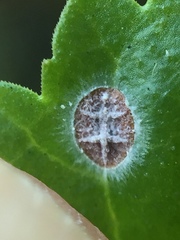 Akanthomyces lecaniie0biocontrol_agent
- Outcome
- B:C ratioe0
- Direction
- followede0
- Value
- 1:2.22e0
Not reportedComparator
Organisms pictured · Representative pictures of the matched species, not figures from the paper.
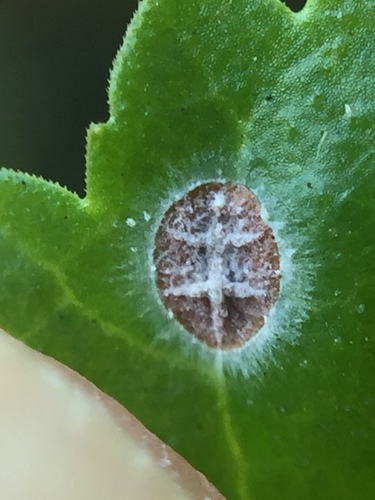
Verbatim
t0“tomato, Lycopersicon esculentum Miller”
e0“The maximum B:C ratio was found in the treatment of Cypermethrin (1: 2.51) followed by Beauveria bassiana (1:2.43) and Verticillium lecanii (1:2.22)”
Claim · model-written summary
The other treatments were profitable over control.
- Taxon
- tomatoSolanum lycopersicumt0
- Treatment
- other treatmentse0
- Outcome
- profitablee0
- Direction
- profitablee0
- Comparator
- controle0
Organisms pictured · Representative pictures of the matched species, not figures from the paper.
Verbatim
t0“tomato, Lycopersicon esculentum Miller”
e0“The other treatments was profitable over control”
The same questions in other papers
cypermethrin · pest · Solanum lycopersicum (tomato)Positive and negative results
2 papers in the same direction as this paper · 1 in the opposite direction
- negative
- positive
- positive
Beauveria bassiana · pest · Solanum lycopersicum (tomato)Positive and negative results
7 papers in the same direction as this paper · 1 in the opposite direction
- negative
- positive
- positive
5 papers more in this group
See all 9 papers →cypermethrin · yield · Solanum lycopersicum (tomato)Results agree
3 papers in the same direction as this paper
- positive
- positive
- positive
Beauveria bassiana · yield · Solanum lycopersicum (tomato)Results agree
3 papers in the same direction as this paper
- positive
- positive
- positive
insecticide · pest · Solanum lycopersicum (tomato)Positive and negative results
35 papers in the same direction as this paper · 9 in the opposite direction
- no effect
- negative
- no effect
41 papers more in this group
See all 45 papers →Claims are grouped by organism, treatment and what was measured or targeted. A paper counts as positive when any of its claims in the group is positive.