Abstract
The present study evaluated the greenhouse efficacy of microbial consortia comprising actinobacteria, Pseudomonas spp. and arbuscular mycorrhizal fungi (AMF) against the major sucking pest complex of chilli (Capsicum annuum L.), including thrips (Scirtothrips dorsalis), aphids (Aphis gossypii), and whiteflies (Bemisia tabaci). The experiment was conducted in a completely randomized design with twelve treatments, including individual and combined microbial formulations and a chemical check (Diafenthiuron 50% WP). Insects were artificially introduced, and pest counts were recorded at 30, 60, and 90 days after transplanting. Among all treatments, the microbial consortium T5 (DBT 64 + AUDT 502 + AUDP 279) consistently showed the highest suppression of all three pest species—reducing thrips, whiteflies, and aphids by 56.96%, 64.55%, and 48.78%, respectively. This efficacy is attributed to synergistic effects enhancing induced systemic resistance (ISR) and secondary metabolite production. While the insecticide achieved maximum suppression, microbial treatments offered comparable results with long-term ecological benefits. Lecanicillium lecanii also showed promising biocontrol potential under controlled conditions. The findings demonstrate that microbial consortia are effective, eco-friendly alternatives for managing sucking pests in chilli and hold strong potential for integration into sustainable pest management frameworks.
Abstract from the paper’s OpenAlex record, shown for indexing and research. Copyright remains with the authors or the publisher. Read at the source ↗
The text the model read, with the source record’s inline markup (italics, sub- and superscripts) rendered and its character entities decoded; quote offsets refer to the raw text.
Claims 5
Claim · model-written summary
T5 reduced thrips by 56.96%.
- Taxon
- chilli (Capsicum annuum L.)
 Capsicum annuume1
- Treatment
- microbial consortium T5 (DBT 64 + AUDT 502 + AUDP 279)e0
- Interactor
- Scirtothrips dorsalis
 Scirtothrips dorsalise1pest
- Outcome
- thripse0
- Direction
- reducinge0
- Value
- 56.96%e0
Not reportedComparator
Organisms pictured · Representative pictures of the matched species, not figures from the paper.


Verbatim
e0“microbial consortium T5 (DBT 64 + AUDT 502 + AUDP 279) consistently showed the highest suppression of all three pest species—reducing thrips, whiteflies, and aphids by 56.96%, 64.55%, and 48.78%, respectively”
e1“pest complex of chilli (Capsicum annuum L.), including thrips (Scirtothrips dorsalis), aphids (Aphis gossypii), and whiteflies (Bemisia tabaci)”
Claim · model-written summary
T5 reduced whiteflies by 64.55%.
- Taxon
- chilli (Capsicum annuum L.)Capsicum annuume1
- Treatment
- microbial consortium T5 (DBT 64 + AUDT 502 + AUDP 279)e0
- Interactor
- Bemisia tabaci
 Bemisia tabacie1pest
- Outcome
- whitefliese0
- Direction
- reducinge0
- Value
- 64.55%e0
Not reportedComparator
Organisms pictured · Representative pictures of the matched species, not figures from the paper.

Verbatim
e0“microbial consortium T5 (DBT 64 + AUDT 502 + AUDP 279) consistently showed the highest suppression of all three pest species—reducing thrips, whiteflies, and aphids by 56.96%, 64.55%, and 48.78%, respectively”
e1“pest complex of chilli (Capsicum annuum L.), including thrips (Scirtothrips dorsalis), aphids (Aphis gossypii), and whiteflies (Bemisia tabaci)”
Claim · model-written summary
T5 reduced aphids by 48.78%.
- Taxon
- chilli (Capsicum annuum L.)Capsicum annuume1
- Treatment
- microbial consortium T5 (DBT 64 + AUDT 502 + AUDP 279)e0
- Interactor
- Aphis gossypii
 Aphis gossypiie1pest
- Outcome
- aphidse0
- Direction
- reducinge0
- Value
- 48.78%e0
Not reportedComparator
Organisms pictured · Representative pictures of the matched species, not figures from the paper.

Verbatim
e0“microbial consortium T5 (DBT 64 + AUDT 502 + AUDP 279) consistently showed the highest suppression of all three pest species—reducing thrips, whiteflies, and aphids by 56.96%, 64.55%, and 48.78%, respectively”
e1“pest complex of chilli (Capsicum annuum L.), including thrips (Scirtothrips dorsalis), aphids (Aphis gossypii), and whiteflies (Bemisia tabaci)”
Claim · model-written summary
The insecticide achieved maximum pest suppression.
- Taxon
- chilli (Capsicum annuum L.)Capsicum annuume2
- Treatment
- Diafenthiuron 50% WPe1
- Outcome
- suppressione0
- Direction
- maximume0
- Comparator
- microbial treatmentse0
Organisms pictured · Representative pictures of the matched species, not figures from the paper.
Verbatim
e0“While the insecticide achieved maximum suppression, microbial treatments offered comparable results with long-term ecological benefits.”
e1“chemical check (Diafenthiuron 50% WP)”
e2“sucking pest complex of chilli (Capsicum annuum L.)”
Claim · model-written summary
Lecanicillium lecanii showed promising biocontrol potential under controlled conditions.
- Taxon
- chilli (Capsicum annuum L.)Capsicum annuume1
- Interactor
- Lecanicillium lecanii
 Akanthomyces lecaniie0biocontrol_agent
- Outcome
- promising biocontrol potentiale0
- Setting
- controlled conditionse0
Organisms pictured · Representative pictures of the matched species, not figures from the paper.
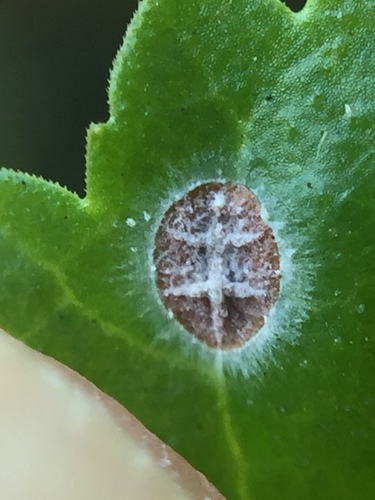
Verbatim
e0“Lecanicillium lecanii also showed promising biocontrol potential under controlled conditions.”
e1“sucking pest complex of chilli (Capsicum annuum L.)”
The same questions in other papers
inoculation · Bemisia tabaci · Capsicum annuum (sweet pepper)Results agree
1 paper in the same direction as this paper
- positive
Claims are grouped by organism, treatment and what was measured or targeted. A paper counts as positive when any of its claims in the group is positive.