Abstract
This field- and laboratory-based study conducted in East Gojjam, North Central Ethiopia, aimed to evaluate the nutrient composition and decomposition rates of leaf litter from three indigenous tree species namely Cordia africana, Croton macrostachyus, and Hagenia abyssinica for their potential role in agroforestry systems. Fifteen leaf samples per species, grown under similar soil, topographic, and age conditions, were collected for analysis. For the decomposition experiment, 36 litterbags containing 10 g of oven-dried leaf litter each were placed on the soil surface in randomized plots. Leaf litter samples were analyzed for total nitrogen (N), phosphorus (P), potassium (K), carbon (C), lignin, and polyphenols using standard protocols, including micro-Kjeldahl digestion, wet acid digestion, flame photometry, dry combustion, and spectrophotometry. Results showed that C. macrostachyus had significantly higher potassium content (8.45 mg/g) compared to C. africana (6.23 mg/g) and H. abyssinica (4.06 mg/g). Both C. macrostachyus and H. abyssinica contained higher nitrogen (15.3 and 15.6 mg/g, respectively) and phosphorus (1.08 and 1.21 mg/g) but lower carbon levels (429 and 428 mg/g) than C. africana (12.2 mg/g N, 1.17 mg/g P, 435 mg/g C). Conversely, C. africana exhibited significantly higher C:N ratio (36), lignin (25.5%), lignin/N (20.9), polyphenol (5.7%), polyphenol/N (4.6), and (lignin + polyphenol)/N ratios (25.6) compared to the other species. Decomposition rates differed markedly, with H. abyssinica litter losing approximately 50% of its mass within 2–3 months, C. macrostachyus within 3–4 months, while C. africana required 7–8 months to reach similar mass loss. Nutrient half-lives also varied: phosphorus half-life was 2–3 months for H. abyssinica and C. macrostachyus, but 6–7 months for C. africana; carbon and nitrogen half-lives were 2–3 months for H. abyssinica, 3–4 months for C. macrostachyus, and 7–9 months for C. africana. Potassium showed the fastest turnover with half-lives of 1–2 months for H. abyssinica and C. macrostachyus, and 2–3 months for C. africana. These results suggest that integrating all three species into agroforestry systems in East Gojjam can enhance soil fertility and crop productivity: C. africana contributes to long-term soil cover and stability, while H. abyssinica and C. macrostachyus provide rapid nutrient cycling.
Abstract from the paper’s OpenAlex record, shown for indexing and research. Copyright remains with the authors or the publisher. Read at the source ↗
The text the model read, with the source record’s inline markup (italics, sub- and superscripts) rendered and its character entities decoded; quote offsets refer to the raw text.
Claims 20
Claim · model-written summary
C. macrostachyus litter potassium was higher than in the other two species.
- Taxon
- C. macrostachyus
 Croton macrostachyuse0
- Outcome
- potassium contente0
- Direction
- highere0
- Value
- 8.45 mg/ge0
- Comparator
- C. africanae0
Not reportedOrgan / stage
Organisms pictured · Representative pictures of the matched species, not figures from the paper.

Verbatim
e0“C. macrostachyus had significantly higher potassium content (8.45 mg/g) compared to C. africana (6.23 mg/g) and H. abyssinica (4.06 mg/g)”
Claim · model-written summary
C. macrostachyus litter nitrogen was higher than C. africana.
- Taxon
- C. macrostachyusCroton macrostachyuse0
- Outcome
- nitrogene0
- Direction
- highere0
- Value
- 15.3e0
- Comparator
- C. africanae0
Organisms pictured · Representative pictures of the matched species, not figures from the paper.
Verbatim
e0“Both C. macrostachyus and H. abyssinica contained higher nitrogen (15.3 and 15.6 mg/g, respectively) and phosphorus (1.08 and 1.21 mg/g) but lower carbon levels (429 and 428 mg/g) than C. africana (12.2 mg/g N, 1.17 mg/g P, 435 mg/g C)”
Claim · model-written summary
H. abyssinica litter nitrogen was higher than C. africana.
- Taxon
- H. abyssinica
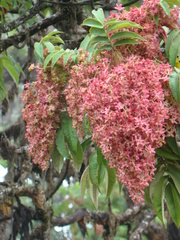 Hagenia abyssinicae0
- Outcome
- nitrogene0
- Direction
- highere0
- Value
- 15.6 mg/ge0
- Comparator
- C. africanae0
Organisms pictured · Representative pictures of the matched species, not figures from the paper.
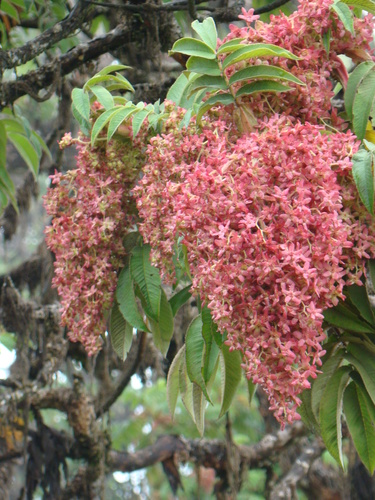
Verbatim
e0“Both C. macrostachyus and H. abyssinica contained higher nitrogen (15.3 and 15.6 mg/g, respectively) and phosphorus (1.08 and 1.21 mg/g) but lower carbon levels (429 and 428 mg/g) than C. africana (12.2 mg/g N, 1.17 mg/g P, 435 mg/g C)”
Claim · model-written summary
C. macrostachyus litter phosphorus was reported as higher than C. africana.
- Taxon
- C. macrostachyusCroton macrostachyuse0
- Outcome
- phosphoruse0
- Direction
- highere0
- Value
- 1.08e0
- Comparator
- C. africanae0
Organisms pictured · Representative pictures of the matched species, not figures from the paper.
Verbatim
e0“Both C. macrostachyus and H. abyssinica contained higher nitrogen (15.3 and 15.6 mg/g, respectively) and phosphorus (1.08 and 1.21 mg/g) but lower carbon levels (429 and 428 mg/g) than C. africana (12.2 mg/g N, 1.17 mg/g P, 435 mg/g C)”
Claim · model-written summary
H. abyssinica litter phosphorus was higher than C. africana.
- Taxon
- H. abyssinicaHagenia abyssinicae0
- Outcome
- phosphoruse0
- Direction
- highere0
- Value
- 1.21 mg/ge0
- Comparator
- C. africanae0
Organisms pictured · Representative pictures of the matched species, not figures from the paper.
Verbatim
e0“Both C. macrostachyus and H. abyssinica contained higher nitrogen (15.3 and 15.6 mg/g, respectively) and phosphorus (1.08 and 1.21 mg/g) but lower carbon levels (429 and 428 mg/g) than C. africana (12.2 mg/g N, 1.17 mg/g P, 435 mg/g C)”
Claim · model-written summary
C. macrostachyus litter carbon was lower than C. africana.
- Taxon
- C. macrostachyusCroton macrostachyuse0
- Outcome
- carbon levelse0
- Direction
- lowere0
- Value
- 429e0
- Comparator
- C. africanae0
Organisms pictured · Representative pictures of the matched species, not figures from the paper.
Verbatim
e0“Both C. macrostachyus and H. abyssinica contained higher nitrogen (15.3 and 15.6 mg/g, respectively) and phosphorus (1.08 and 1.21 mg/g) but lower carbon levels (429 and 428 mg/g) than C. africana (12.2 mg/g N, 1.17 mg/g P, 435 mg/g C)”
Claim · model-written summary
H. abyssinica litter carbon was lower than C. africana.
- Taxon
- H. abyssinicaHagenia abyssinicae0
- Outcome
- carbon levelse0
- Direction
- lowere0
- Value
- 428 mg/ge0
- Comparator
- C. africanae0
Organisms pictured · Representative pictures of the matched species, not figures from the paper.
Verbatim
e0“Both C. macrostachyus and H. abyssinica contained higher nitrogen (15.3 and 15.6 mg/g, respectively) and phosphorus (1.08 and 1.21 mg/g) but lower carbon levels (429 and 428 mg/g) than C. africana (12.2 mg/g N, 1.17 mg/g P, 435 mg/g C)”
Claim · model-written summary
C. africana had a higher C:N ratio than the other species.
- Taxon
- C. africana
 Cordia africanae0
- Outcome
- C:N ratioe0
- Direction
- highere0
- Value
- 36e0
- Comparator
- other speciese0
Organisms pictured · Representative pictures of the matched species, not figures from the paper.

Verbatim
e0“C. africana exhibited significantly higher C:N ratio (36), lignin (25.5%), lignin/N (20.9), polyphenol (5.7%), polyphenol/N (4.6), and (lignin + polyphenol)/N ratios (25.6) compared to the other species”
Claim · model-written summary
C. africana litter lignin was higher than in the other species.
- Taxon
- C. africanaCordia africanae0
- Outcome
- lignine0
- Direction
- highere0
- Value
- 25.5%e0
- Comparator
- other speciese0
Organisms pictured · Representative pictures of the matched species, not figures from the paper.
Verbatim
e0“C. africana exhibited significantly higher C:N ratio (36), lignin (25.5%), lignin/N (20.9), polyphenol (5.7%), polyphenol/N (4.6), and (lignin + polyphenol)/N ratios (25.6) compared to the other species”
Claim · model-written summary
C. africana litter lignin to nitrogen ratio was higher than in the other species.
- Taxon
- C. africanaCordia africanae0
- Outcome
- lignin/Ne0
- Direction
- highere0
- Value
- 20.9e0
- Comparator
- other speciese0
Organisms pictured · Representative pictures of the matched species, not figures from the paper.
Verbatim
e0“C. africana exhibited significantly higher C:N ratio (36), lignin (25.5%), lignin/N (20.9), polyphenol (5.7%), polyphenol/N (4.6), and (lignin + polyphenol)/N ratios (25.6) compared to the other species”
Claim · model-written summary
C. africana litter polyphenol was higher than in the other species.
- Taxon
- C. africanaCordia africanae0
- Outcome
- polyphenole0
- Direction
- highere0
- Value
- 5.7%e0
- Comparator
- other speciese0
Organisms pictured · Representative pictures of the matched species, not figures from the paper.
Verbatim
e0“C. africana exhibited significantly higher C:N ratio (36), lignin (25.5%), lignin/N (20.9), polyphenol (5.7%), polyphenol/N (4.6), and (lignin + polyphenol)/N ratios (25.6) compared to the other species”
Claim · model-written summary
C. africana litter polyphenol to nitrogen ratio was higher than in the other species.
- Taxon
- C. africanaCordia africanae0
- Outcome
- polyphenol/Ne0
- Direction
- highere0
- Value
- 4.6e0
- Comparator
- other speciese0
Organisms pictured · Representative pictures of the matched species, not figures from the paper.
Verbatim
e0“C. africana exhibited significantly higher C:N ratio (36), lignin (25.5%), lignin/N (20.9), polyphenol (5.7%), polyphenol/N (4.6), and (lignin + polyphenol)/N ratios (25.6) compared to the other species”
Claim · model-written summary
C. africana litter combined lignin and polyphenol to nitrogen ratio was higher than in the other species.
- Taxon
- C. africanaCordia africanae0
- Outcome
- (lignin + polyphenol)/N ratiose0
- Direction
- highere0
- Value
- 25.6e0
- Comparator
- other speciese0
Organisms pictured · Representative pictures of the matched species, not figures from the paper.
Verbatim
e0“C. africana exhibited significantly higher C:N ratio (36), lignin (25.5%), lignin/N (20.9), polyphenol (5.7%), polyphenol/N (4.6), and (lignin + polyphenol)/N ratios (25.6) compared to the other species”
Claim · model-written summary
H. abyssinica litter lost about half its mass within two to three months.
- Taxon
- H. abyssinicaHagenia abyssinicae0
- Outcome
- masse0
- Direction
- losinge0
- Value
- approximately 50%e0
- Qualifier
- within 2–3 monthse0
Organisms pictured · Representative pictures of the matched species, not figures from the paper.
Verbatim
e0“H. abyssinica litter losing approximately 50% of its mass within 2–3 months”
Claim · model-written summary
C. macrostachyus litter lost about half its mass within three to four months.
- Taxon
- C. macrostachyusCroton macrostachyuse0
- Outcome
- litter losing approximately 50% of its masse1
- Direction
- losinge1
- Value
- 3–4 monthse0
Organisms pictured · Representative pictures of the matched species, not figures from the paper.
Verbatim
e0“C. macrostachyus within 3–4 months”
e1“litter losing approximately 50% of its mass”
e2“Croton macrostachyus”
Claim · model-written summary
C. africana litter took seven to eight months to lose about half its mass.
- Taxon
- C. africanaCordia africanae0
- Outcome
- mass losse0
- Value
- 7–8 monthse0
Not reportedDirection
Organisms pictured · Representative pictures of the matched species, not figures from the paper.
Verbatim
e0“C. africana required 7–8 months to reach similar mass loss”
Claim · model-written summary
Phosphorus half life was two to three months in H. abyssinica and C. macrostachyus litter.
- Taxon
- H. abyssinica and C. macrostachyusHagenia abyssinicaCroton macrostachyuse0
- Outcome
- phosphorus half-lifee0
- Value
- 2–3 monthse0
Organisms pictured · Representative pictures of the matched species, not figures from the paper.
Verbatim
e0“phosphorus half-life was 2–3 months for H. abyssinica and C. macrostachyus”
Claim · model-written summary
Phosphorus half life in C. africana litter was six to seven months.
- Taxon
- C. africanaCordia africanae0
- Outcome
- phosphorus half-lifee1
- Value
- 6–7 monthse0
Organisms pictured · Representative pictures of the matched species, not figures from the paper.
Verbatim
e0“but 6–7 months for C. africana”
e1“phosphorus half-life”
Claim · model-written summary
Carbon and nitrogen half lives were two to three months for H. abyssinica, three to four for C. macrostachyus, and seven to nine for C. africana.
- Taxon
- H. abyssinicaHagenia abyssinicae0
- Outcome
- carbon and nitrogen half-livese0
- Value
- 2–3 monthse0
Organisms pictured · Representative pictures of the matched species, not figures from the paper.
Verbatim
e0“carbon and nitrogen half-lives were 2–3 months for H. abyssinica, 3–4 months for C. macrostachyus, and 7–9 months for C. africana”
Claim · model-written summary
Potassium turned over fastest, with one to two month half lives in H. abyssinica and C. macrostachyus and two to three in C. africana.
- Taxon
- H. abyssinica and C. macrostachyusHagenia abyssinicaCroton macrostachyuse0
- Outcome
- Potassium showed the fastest turnovere0
- Direction
- fasteste0
- Value
- 1–2 monthse0
Organisms pictured · Representative pictures of the matched species, not figures from the paper.
Verbatim
e0“Potassium showed the fastest turnover with half-lives of 1–2 months for H. abyssinica and C. macrostachyus, and 2–3 months for C. africana”