Abstract
Plant-derived natural products contain bioactive compounds. One notable example is Argemone mexicana L. (Papaveraceae), a weed native to Mexico that shows significant potential as a pest control agent. This study evaluated the larvicidal activity of aqueous extracts obtained from different plant parts of A. mexicana against the mosquito larvae of Culex quinquefasciatus (Say) (Diptera: Culicidae). The results revealed a clear dose-response relationship, indicating that higher concentrations led to increased larval mortality. In the first five days, the aqueous seed extract showed significant larvicidal efficacy. Probit regression analysis of the observed larval mortality during this period confirmed favorable toxicity, with a measured lethal concentration (LC₅₀) of 11.56 %. This indicates that only small amounts of the extract are required to induce 50 % larval mortality. Although the lethal concentration at 90 % (LC₉₀) was higher at 42.99 %, these values remain adequate for practical applications, particularly considering the product’s natural origin. During the same period, the flower extract also exhibited larvicidal effects, although with lower potency. Higher concentrations of the flower extract maintained significant mortality throughout the first five days. The root extract exhibited intermediate toxicity, with mortality levels proportional to concentration and sustained over time. In contrast, the stem and leaf extracts displayed limited larvicidal activity, even at elevated concentrations. At the end of the experiment (17-days), the extracts demonstrated significant toxicity, with mortality rates exceeding 70 % in all plant parts at the highest concentration tested (100 %). The highest mortality was observed for stem extracts, followed by leaf, and flower. The Relative Growth Index (RGI) confirmed the inhibitory effect of the extracts on larval development, with values below 0.6 in most treatments indicating a moderate response. The seed and root extracts caused the most significant disruption to larval growth. These findings suggest that A. mexicana could serve as a valuable botanical resource for disrupting the life cycle of C. quinquefasciatus and reducing its population. We need further research to optimize formulations and assess their applicability in sustainable vector control strategies because larvicidal efficacy varies depending on the plant part used.
Abstract from the paper’s OpenAlex record; open copy licensed cc-by. Read at the source ↗
The text the model read, with the source record’s inline markup (italics, sub- and superscripts) rendered and its character entities decoded; quote offsets refer to the raw text.
Claims 11
Claim · model-written summary
The aqueous seed extract of Argemone mexicana showed significant larvicidal efficacy during the first five days.
- Taxon
- A. mexicana
 Argemone mexicanae0
- Treatment
- aqueous seed extracte1
- Interactor
- Culex quinquefasciatus
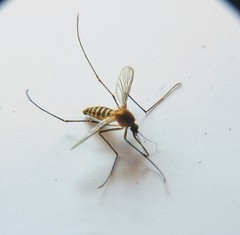 Culex quinquefasciatuse0pest
- Outcome
- larvicidal efficacye1
- Direction
- significante1
Not reportedComparator
Organisms pictured · Representative pictures of the matched species, not figures from the paper.


Verbatim
e0“This study evaluated the larvicidal activity of aqueous extracts obtained from different plant parts of A. mexicana against the mosquito larvae of Culex quinquefasciatus (Say)”
e1“In the first five days, the aqueous seed extract showed significant larvicidal efficacy”
Claim · model-written summary
Lethal concentration for 50% larval mortality of the seed extract was 11.56 %.
- Taxon
- A. mexicanaArgemone mexicanae0
- Interactor
- Culex quinquefasciatusCulex quinquefasciatuse0pest
- Outcome
- lethal concentratione2
- Value
- 11.56 %e2
Organisms pictured · Representative pictures of the matched species, not figures from the paper.
Verbatim
e0“This study evaluated the larvicidal activity of aqueous extracts obtained from different plant parts of A. mexicana against the mosquito larvae of Culex quinquefasciatus (Say)”
e2“with a measured lethal concentration (LC₅₀) of 11.56 %”
Claim · model-written summary
Lethal concentration at 90% larval mortality was higher, at 42.99 %.
- Taxon
- A. mexicanaArgemone mexicanae0
- Interactor
- Culex quinquefasciatusCulex quinquefasciatuse0pest
- Outcome
- lethal concentration at 90 %e3
- Direction
- highere3
- Value
- 42.99 %e3
Organisms pictured · Representative pictures of the matched species, not figures from the paper.
Verbatim
e0“This study evaluated the larvicidal activity of aqueous extracts obtained from different plant parts of A. mexicana against the mosquito larvae of Culex quinquefasciatus (Say)”
e3“Although the lethal concentration at 90 % (LC₉₀) was higher at 42.99 %”
Claim · model-written summary
The flower extract showed larvicidal effects, with lower potency than the seed extract.
- Taxon
- A. mexicanaArgemone mexicanae0
- Treatment
- flower extracte4
- Interactor
- Culex quinquefasciatusCulex quinquefasciatuse0pest
- Outcome
- larvicidal effectse4
- Direction
- lower potencye4
Not reportedComparator
Organisms pictured · Representative pictures of the matched species, not figures from the paper.
Verbatim
e0“This study evaluated the larvicidal activity of aqueous extracts obtained from different plant parts of A. mexicana against the mosquito larvae of Culex quinquefasciatus (Say)”
e4“During the same period, the flower extract also exhibited larvicidal effects, although with lower potency”
Claim · model-written summary
The root extract showed intermediate toxicity with mortality proportional to concentration.
- Taxon
- A. mexicanaArgemone mexicanae0
- Treatment
- root extracte5
- Interactor
- Culex quinquefasciatusCulex quinquefasciatuse0pest
- Outcome
- toxicitye5
- Direction
- intermediatee5
Not reportedComparator
Organisms pictured · Representative pictures of the matched species, not figures from the paper.
Verbatim
e0“This study evaluated the larvicidal activity of aqueous extracts obtained from different plant parts of A. mexicana against the mosquito larvae of Culex quinquefasciatus (Say)”
e5“The root extract exhibited intermediate toxicity, with mortality levels proportional to concentration and sustained over time”
Claim · model-written summary
The stem and leaf extracts showed limited larvicidal activity, even at elevated concentrations.
- Taxon
- A. mexicanaArgemone mexicanae0
- Treatment
- stem and leaf extractse6
- Interactor
- Culex quinquefasciatusCulex quinquefasciatuse0pest
- Outcome
- larvicidal activitye6
- Direction
- limitede6
Not reportedComparator
Organisms pictured · Representative pictures of the matched species, not figures from the paper.
Verbatim
e0“This study evaluated the larvicidal activity of aqueous extracts obtained from different plant parts of A. mexicana against the mosquito larvae of Culex quinquefasciatus (Say)”
e6“In contrast, the stem and leaf extracts displayed limited larvicidal activity, even at elevated concentrations”
Claim · model-written summary
At 17 days, extracts at the highest concentration tested (100 %) caused mortality exceeding 70 % in all plant parts.
- Taxon
- A. mexicanaArgemone mexicanae0
- Treatment
- highest concentration tested (100 %)e7
- Interactor
- Culex quinquefasciatusCulex quinquefasciatuse0pest
- Outcome
- mortality ratese7
- Direction
- exceedinge7
- Value
- exceeding 70 %e7
Not reportedComparator
Organisms pictured · Representative pictures of the matched species, not figures from the paper.
Verbatim
e0“This study evaluated the larvicidal activity of aqueous extracts obtained from different plant parts of A. mexicana against the mosquito larvae of Culex quinquefasciatus (Say)”
e7“the extracts demonstrated significant toxicity, with mortality rates exceeding 70 % in all plant parts at the highest concentration tested (100 %)”
Claim · model-written summary
Stem extracts gave the highest mortality, followed by leaf and flower extracts.
- Taxon
- A. mexicanaArgemone mexicanae0
- Treatment
- stem extractse1
- Interactor
- Culex quinquefasciatusCulex quinquefasciatuse0pest
- Outcome
- mortalitye1
- Direction
- higheste1
- Comparator
- leaf, and flowere1
Organisms pictured · Representative pictures of the matched species, not figures from the paper.
Verbatim
e0“This study evaluated the larvicidal activity of aqueous extracts obtained from different plant parts of A. mexicana against the mosquito larvae of Culex quinquefasciatus (Say)”
e1“The highest mortality was observed for stem extracts, followed by leaf, and flower”
Claim · model-written summary
Relative Growth Index values were below 0.6 in most treatments, indicating a moderate inhibitory effect on larval development.
- Taxon
- A. mexicanaArgemone mexicanae0
- Outcome
- Relative Growth Index (RGI)e2
- Direction
- belowe2
- Value
- below 0.6e2
- Qualifier
- indicating a moderate responsee2
Organisms pictured · Representative pictures of the matched species, not figures from the paper.
Verbatim
e0“This study evaluated the larvicidal activity of aqueous extracts obtained from different plant parts of A. mexicana against the mosquito larvae of Culex quinquefasciatus (Say)”
e2“The Relative Growth Index (RGI) confirmed the inhibitory effect of the extracts on larval development, with values below 0.6 in most treatments indicating a moderate response”
Claim · model-written summary
Seed and root extracts caused the most significant disruption to larval growth.
- Taxon
- A. mexicanaArgemone mexicanae0
- Treatment
- seed and root extractse3
- Interactor
- Culex quinquefasciatusCulex quinquefasciatuse0pest
- Outcome
- larval growthe3
- Direction
- disruptione3
Not reportedComparator
Organisms pictured · Representative pictures of the matched species, not figures from the paper.
Verbatim
e0“This study evaluated the larvicidal activity of aqueous extracts obtained from different plant parts of A. mexicana against the mosquito larvae of Culex quinquefasciatus (Say)”
e3“The seed and root extracts caused the most significant disruption to larval growth”
Claim · model-written summary
A. mexicana could serve as a botanical resource for reducing the population of Culex quinquefasciatus.
- Taxon
- A. mexicanaArgemone mexicanae0
- Outcome
- reducing its populatione4
Organisms pictured · Representative pictures of the matched species, not figures from the paper.
Verbatim
e0“This study evaluated the larvicidal activity of aqueous extracts obtained from different plant parts of A. mexicana against the mosquito larvae of Culex quinquefasciatus (Say)”
e4“These findings suggest that A. mexicana could serve as a valuable botanical resource for disrupting the life cycle of C. quinquefasciatus and reducing its population”