Claim · model-written summary
The root extract showed intermediate toxicity with mortality proportional to concentration.
- Taxon
- A. mexicana
 Argemone mexicanae0
- Treatment
- root extracte5
- Interactor
- Culex quinquefasciatus
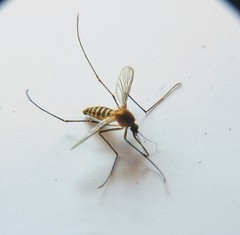 Culex quinquefasciatuse0pest
- Outcome
- toxicitye5
- Direction
- intermediatee5
Not reportedMaterialGeneCompoundOrgan / stageSecond interactorSecond interactor roleComparatorSettingValueQualifier
Organisms pictured · Representative pictures of the matched species, not figures from the paper.


Verbatim
e0“This study evaluated the larvicidal activity of aqueous extracts obtained from different plant parts of A. mexicana against the mosquito larvae of Culex quinquefasciatus (Say)”
e5“The root extract exhibited intermediate toxicity, with mortality levels proportional to concentration and sustained over time”
Title
Carlos GRANADOS-ECHEGOYEN; Beatriz RODRÍGUEZ-VÉLEZ; Juan M. PEÑALOZA-RAMÍREZ; et al. Revista de la Sociedad Entomológica Argentina 2025. doi:10.25085/rsea.840307
Other claims from this paper (10)
- Intervention effect The aqueous seed extract of Argemone mexicana showed significant larvicidal efficacy during the first five days.
- Observation Lethal concentration for 50% larval mortality of the seed extract was 11.56 %.
- Observation Lethal concentration at 90% larval mortality was higher, at 42.99 %.
- Intervention effect The flower extract showed larvicidal effects, with lower potency than the seed extract.
- Intervention effect The stem and leaf extracts showed limited larvicidal activity, even at elevated concentrations.
- Intervention effect At 17 days, extracts at the highest concentration tested (100 %) caused mortality exceeding 70 % in all plant parts.
- Intervention effect Stem extracts gave the highest mortality, followed by leaf and flower extracts.
- Observation Relative Growth Index values were below 0.6 in most treatments, indicating a moderate inhibitory effect on larval development.
- Intervention effect Seed and root extracts caused the most significant disruption to larval growth.
- Recommendation A. mexicana could serve as a botanical resource for reducing the population of Culex quinquefasciatus.