Abstract
ABSTRACT Tomato is a staple crop and an excellent model to study host-microbiota interactions in the plant food chain. In this study, we describe a “lab-in-the-field” approach to investigate the microbiota of field-grown tomato plants. High-throughput amplicon sequencing revealed a three-microhabitat partition, phyllosphere, rhizosphere, and root interior, differentiating host-associated communities from the environmental microbiota. An individual bacterium, classified as Acinetobacter sp., emerged as a dominant member of the microbiota at the plant-soil continuum. To gain insights into the functional significance of this enrichment, we subjected rhizosphere specimens to shotgun metagenomics. Similar to the amplicon sequencing survey, a “microhabitat effect,” defined by a set of rhizosphere-enriched functions, was identified. Mobilization of mineral nutrients, as well as adaptation to salinity and polymicrobial communities, including antimicrobial resistance genes (ARGs), emerged as a functional requirement sustaining metagenomic diversification. A metagenome-assembled genome representative of Acinetobacter calcoaceticus was retrieved, and metagenomic reads associated with this species identified a functional specialization for plant-growth promotion traits, such as phosphate solubilization, siderophore production, and reactive oxygen species detoxification, which were similarly represented in a tomato genotype-independent fashion. Our results revealed that the enrichment of a beneficial bacterium capable of alleviating plant abiotic stresses appears decoupled from ARGs facilitating microbiota persistence at the root-soil interface. IMPORTANCE Tomatoes are at center stage in global food security due to their high nutritional value, widespread cultivation, and versatility. Tomatoes provide essential vitamins and minerals, contribute to diverse diets, and support farmer livelihoods, making them a cornerstone of sustainable food systems. Beyond direct dietary benefits, the intricate relationship between tomatoes, their associated microbiota, and antimicrobial resistance gene (ARG) is increasingly recognized. Tomato plants host diverse microbial communities in association with their organs, which influence plant health and productivity. Crop management impacts the composition and function of these communities, contributing to the prevalence of ARGs in the soil and on the plants themselves. These genes can potentially transfer to human pathogens, posing a food safety and public health risk. Understanding these complex interactions is critical for developing sustainable agricultural practices capable of mitigating the impact of climatic modifications and the global threat of antimicrobial resistance.
Abstract from the paper’s OpenAlex record; open copy licensed cc-by. Read at the source ↗
The text the model read, with the source record’s inline markup (italics, sub- and superscripts) rendered and its character entities decoded; quote offsets refer to the raw text.
Claims 7
Claim · model-written summary
Amplicon sequencing revealed a three-microhabitat partition of the field-grown tomato microbiota: phyllosphere, rhizosphere and root interior.
- Taxon
- Tomato
 Solanum lycopersicume0
- Outcome
- three-microhabitat partitione2
- Setting
- field-growne1
Organisms pictured · Representative pictures of the matched species, not figures from the paper.

Verbatim
e0“Tomato is a staple crop”
e1“investigate the microbiota of field-grown tomato plants”
e2“High-throughput amplicon sequencing revealed a three-microhabitat partition, phyllosphere, rhizosphere, and root interior, differentiating host-associated communities from the environmental microbiota”
Claim · model-written summary
Acinetobacter sp. emerged as a dominant member of the tomato microbiota at the plant-soil continuum.
- Taxon
- TomatoSolanum lycopersicume0
- Interactor
- Acinetobacter sp.
 Acinetobactere3symbiont
- Outcome
- dominant member of the microbiotae3
Organisms pictured · Representative pictures of the matched species, not figures from the paper.

Verbatim
e0“Tomato is a staple crop”
e3“An individual bacterium, classified as Acinetobacter sp., emerged as a dominant member of the microbiota at the plant-soil continuum”
Claim · model-written summary
Shotgun metagenomics identified a microhabitat effect defined by rhizosphere-enriched functions.
- Taxon
- TomatoSolanum lycopersicume0
- Organ / stage
- rhizospheree4
- Outcome
- rhizosphere-enriched functionse4
Organisms pictured · Representative pictures of the matched species, not figures from the paper.
Verbatim
e0“Tomato is a staple crop”
e4“defined by a set of rhizosphere-enriched functions, was identified”
Claim · model-written summary
Mobilization of mineral nutrients, adaptation to salinity and polymicrobial communities emerged as functional requirements of the rhizosphere metagenome.
- Taxon
- TomatoSolanum lycopersicume0
- Outcome
- functional requiremente5
- Qualifier
- adaptation to salinity and polymicrobial communitiese5
Organisms pictured · Representative pictures of the matched species, not figures from the paper.
Verbatim
e0“Tomato is a staple crop”
e5“Mobilization of mineral nutrients, as well as adaptation to salinity and polymicrobial communities, including antimicrobial resistance genes (ARGs), emerged as a functional requirement sustaining metagenomic diversification”
Claim · model-written summary
An Acinetobacter calcoaceticus genome showed functional specialization for plant-growth promotion traits.
- Taxon
- TomatoSolanum lycopersicume0
- Interactor
- Acinetobacter calcoaceticus
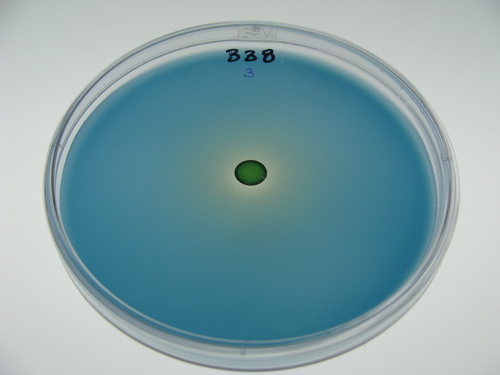
 Acinetobacter calcoaceticuse6symbiont
- Outcome
- functional specialization for plant-growth promotion traitse6
- Qualifier
- phosphate solubilization, siderophore production, and reactive oxygen species detoxificatione6
Organisms pictured · Representative pictures of the matched species, not figures from the paper.
Verbatim
e0“Tomato is a staple crop”
e6“A metagenome-assembled genome representative of Acinetobacter calcoaceticus was retrieved, and metagenomic reads associated with this species identified a functional specialization for plant-growth promotion traits, such as phosphate solubilization, siderophore production, and reactive oxygen species detoxification”
Claim · model-written summary
The plant-growth promotion traits were similarly represented in a tomato genotype-independent fashion.
- Taxon
- TomatoSolanum lycopersicume0
- Interactor
- Acinetobacter calcoaceticusAcinetobacter calcoaceticuse6symbiont
- Outcome
- plant-growth promotion traitse6
- Qualifier
- genotype-independente7
Organisms pictured · Representative pictures of the matched species, not figures from the paper.
Verbatim
e0“Tomato is a staple crop”
e6“A metagenome-assembled genome representative of Acinetobacter calcoaceticus was retrieved, and metagenomic reads associated with this species identified a functional specialization for plant-growth promotion traits, such as phosphate solubilization, siderophore production, and reactive oxygen species detoxification”
e7“which were similarly represented in a tomato genotype-independent fashion”
Claim · model-written summary
Enrichment of a beneficial bacterium capable of alleviating abiotic stress appears decoupled from antimicrobial resistance genes at the root-soil interface.
- Taxon
- TomatoSolanum lycopersicume0
- Organ / stage
- root-soil interfacee1
- Outcome
- enrichment of a beneficial bacteriume1
- Direction
- decouplede1
Organisms pictured · Representative pictures of the matched species, not figures from the paper.
Verbatim
e0“Tomato is a staple crop”
e1“the enrichment of a beneficial bacterium capable of alleviating plant abiotic stresses appears decoupled from ARGs facilitating microbiota persistence at the root-soil interface”