Abstract
Beet curly top virus (BCTV) has emerged as a major threat to hemp production in the western United States. Despite this concern, little is known about BCTV biology in hemp. This study investigated the incidence and genetic variability of BCTV strains, as well as the impact of BCTV infection on cannabinoid profiles, potential for seed transmission, and vector survival on hemp. Field surveys across five states revealed four distinct BCTV strains, with BCTV-CO and BCTV-Wor being the most prevalent. In addition, BCTV-PeCT was detected for the first time in hemp samples from Oregon, Colorado, and New Mexico, whereas BCTV-PeYD was detected exclusively in New Mexico. Genetic analysis showed high nucleotide diversity and widespread recombination among hemp-associated BCTV strains, consistent with active genetic exchange in BCTV. Furthermore, BCTV was detected in surface-disinfected seeds (77% in the Elite genotype, 18% in the 791 genotype) and in a small number of seedlings in grow-out experiments (0.98% in Elite, 0.87% in 791). Additional seed dissection experiments in Elite revealed BCTV presence in 41% of embryos, 72% of endosperm, and 5% of seed coats, demonstrating potential for seed transmission in hemp rather than surface contamination. BCTV infection reduced cannabinoid levels in one hemp genotype but not in another, indicating genotype-specific effects of BCTV on cannabinoid production. Finally, beet leafhoppers, the exclusive vector of BCTV, were unable to survive on hemp beyond 7 days, indicating that the insect cannot complete its life cycle on hemp. These findings provide a foundational understanding of BCTV evolutionary dynamics and host interactions in hemp, with implications for disease management. [Formula: see text] Copyright © 2026 The Author(s). This is an open access article distributed under the CC BY 4.0 International license.
Abstract from the paper’s OpenAlex record, shown for indexing and research. Copyright remains with the authors or the publisher. Read at the source ↗
The text the model read, with the source record’s inline markup (italics, sub- and superscripts) rendered and its character entities decoded; quote offsets refer to the raw text.
Claims 18
Claim · model-written summary
Field surveys found four distinct BCTV strains.
- Taxon
- hemp
 Cannabis sativa subsp. sativat0
- Interactor
- BCTV
 Beet curly top viruse0pathogent0
- Outcome
- distinct BCTV strainse0
- Value
- foure0
Organisms pictured · Representative pictures of the matched species, not figures from the paper.


Verbatim
e0“Field surveys across five states revealed four distinct BCTV strains”
t0“Beet Curly Top Virus Genetic Diversity, Impact on Cannabinoids, Potential Seed Transmission, and Vector Biology in Hemp”
Claim · model-written summary
BCTV-CO and BCTV-Wor were most prevalent.
- Taxon
- hempCannabis sativa subsp. sativat0
- Outcome
- BCTV-CO and BCTV-Wore0
- Direction
- most prevalente0
Organisms pictured · Representative pictures of the matched species, not figures from the paper.
Verbatim
e0“BCTV-CO and BCTV-Wor being the most prevalent”
t0“Beet Curly Top Virus Genetic Diversity, Impact on Cannabinoids, Potential Seed Transmission, and Vector Biology in Hemp”
Claim · model-written summary
BCTV-PeCT was detected for the first time in hemp from Oregon, Colorado, and New Mexico.
- Taxon
- hempCannabis sativa subsp. sativae0
- Outcome
- BCTV-PeCT was detectede0
- Setting
- Oregon, Colorado, and New Mexicoe0
Organisms pictured · Representative pictures of the matched species, not figures from the paper.
Verbatim
e0“BCTV-PeCT was detected for the first time in hemp samples from Oregon, Colorado, and New Mexico”
t0“Beet Curly Top Virus”
Claim · model-written summary
BCTV-PeYD was detected only in New Mexico.
- Taxon
- HempCannabis sativa subsp. sativat0
- Outcome
- BCTV-PeYD was detectede0
- Setting
- New Mexicoe0
Organisms pictured · Representative pictures of the matched species, not figures from the paper.
Verbatim
e0“BCTV-PeYD was detected exclusively in New Mexico”
t0“Hemp”
Claim · model-written summary
Hemp associated BCTV strains had high nucleotide diversity.
- Taxon
- hempCannabis sativa subsp. sativae0
- Interactor
- BCTVBeet curly top viruse0pathogent0
- Outcome
- nucleotide diversitye0
- Direction
- highe0
Organisms pictured · Representative pictures of the matched species, not figures from the paper.
Verbatim
e0“Genetic analysis showed high nucleotide diversity and widespread recombination among hemp-associated BCTV strains”
t0“Beet Curly Top Virus”
Claim · model-written summary
Hemp associated BCTV strains showed widespread recombination.
- Taxon
- hempCannabis sativa subsp. sativae0
- Interactor
- BCTVBeet curly top viruse0pathogent0
- Outcome
- recombinatione0
- Direction
- widespreade0
Organisms pictured · Representative pictures of the matched species, not figures from the paper.
Verbatim
e0“Genetic analysis showed high nucleotide diversity and widespread recombination among hemp-associated BCTV strains”
t0“Beet Curly Top Virus”
Claim · model-written summary
BCTV was found in 77% of disinfected Elite seeds.
- Taxon
- hempCannabis sativa subsp. sativat0
- Material
- Elitee0
- Organ / stage
- surface-disinfected seedse0
- Interactor
- BCTVBeet curly top viruse0pathogent0
- Outcome
- BCTV was detectede0
- Value
- 77%e0
Organisms pictured · Representative pictures of the matched species, not figures from the paper.
Verbatim
e0“BCTV was detected in surface-disinfected seeds (77% in the Elite genotype, 18% in the 791 genotype)”
t0“Beet Curly Top Virus Genetic Diversity, Impact on Cannabinoids, Potential Seed Transmission, and Vector Biology in Hemp”
Claim · model-written summary
BCTV was found in 18% of disinfected 791 seeds.
- Taxon
- hempCannabis sativa subsp. sativat0
- Material
- 791e0
- Organ / stage
- surface-disinfected seedse0
- Interactor
- BCTVBeet curly top viruse0pathogent0
- Outcome
- BCTV was detectede0
- Value
- 18%e0
Organisms pictured · Representative pictures of the matched species, not figures from the paper.
Verbatim
e0“BCTV was detected in surface-disinfected seeds (77% in the Elite genotype, 18% in the 791 genotype)”
t0“Beet Curly Top Virus Genetic Diversity, Impact on Cannabinoids, Potential Seed Transmission, and Vector Biology in Hemp”
Claim · model-written summary
BCTV was detected in 0.98% of Elite seedlings.
- Taxon
- hempCannabis sativa subsp. sativat0
- Material
- Elitee0
- Organ / stage
- seedlingse0
- Interactor
- Beet Curly Top VirusBeet curly top virust0pathogen
- Outcome
- Beet Curly Top Virust0
- Value
- 0.98%e0
Organisms pictured · Representative pictures of the matched species, not figures from the paper.
Verbatim
e0“in a small number of seedlings in grow-out experiments (0.98% in Elite, 0.87% in 791)”
t0“Beet Curly Top Virus Genetic Diversity, Impact on Cannabinoids, Potential Seed Transmission, and Vector Biology in Hemp”
Claim · model-written summary
BCTV was detected in 0.87% of 791 seedlings.
- Taxon
- hempCannabis sativa subsp. sativat0
- Material
- 791e0
- Organ / stage
- seedlingse0
- Interactor
- Beet Curly Top VirusBeet curly top virust0pathogen
- Outcome
- Beet Curly Top Virust0
- Value
- 0.87%e0
Organisms pictured · Representative pictures of the matched species, not figures from the paper.
Verbatim
e0“in a small number of seedlings in grow-out experiments (0.98% in Elite, 0.87% in 791)”
t0“Beet Curly Top Virus Genetic Diversity, Impact on Cannabinoids, Potential Seed Transmission, and Vector Biology in Hemp”
Claim · model-written summary
Elite embryos had BCTV in 41% of samples.
- Taxon
- hempCannabis sativa subsp. sativat0
- Material
- Elitee0
- Organ / stage
- embryose0
- Interactor
- BCTVBeet curly top viruse0pathogent0
- Outcome
- BCTV presencee0
- Value
- 41%e0
Organisms pictured · Representative pictures of the matched species, not figures from the paper.
Verbatim
e0“Additional seed dissection experiments in Elite revealed BCTV presence in 41% of embryos, 72% of endosperm, and 5% of seed coats”
t0“Beet Curly Top Virus Genetic Diversity, Impact on Cannabinoids, Potential Seed Transmission, and Vector Biology in Hemp”
Claim · model-written summary
Elite endosperm had BCTV in 72% of samples.
- Taxon
- hempCannabis sativa subsp. sativat0
- Material
- Elitee0
- Organ / stage
- endosperme0
- Interactor
- BCTVBeet curly top viruse0pathogent0
- Outcome
- BCTV presencee0
- Value
- 72%e0
Organisms pictured · Representative pictures of the matched species, not figures from the paper.
Verbatim
e0“Additional seed dissection experiments in Elite revealed BCTV presence in 41% of embryos, 72% of endosperm, and 5% of seed coats”
t0“Beet Curly Top Virus Genetic Diversity, Impact on Cannabinoids, Potential Seed Transmission, and Vector Biology in Hemp”
Claim · model-written summary
Elite seed coats had BCTV in 5% of samples.
- Taxon
- hempCannabis sativa subsp. sativat0
- Material
- Elitee0
- Organ / stage
- seed coatse0
- Interactor
- BCTVBeet curly top viruse0pathogent0
- Outcome
- BCTV presencee0
- Value
- 5%e0
Organisms pictured · Representative pictures of the matched species, not figures from the paper.
Verbatim
e0“Additional seed dissection experiments in Elite revealed BCTV presence in 41% of embryos, 72% of endosperm, and 5% of seed coats”
t0“Beet Curly Top Virus Genetic Diversity, Impact on Cannabinoids, Potential Seed Transmission, and Vector Biology in Hemp”
Claim · model-written summary
The authors interpret seed detections as potential BCTV seed transmission.
- Taxon
- hempCannabis sativa subsp. sativae0
- Interactor
- Beet Curly Top VirusBeet curly top virust0pathogen
- Outcome
- seed transmissione0
Not reportedDirection
Organisms pictured · Representative pictures of the matched species, not figures from the paper.
Verbatim
e0“demonstrating potential for seed transmission in hemp rather than surface contamination”
t0“Beet Curly Top Virus”
Claim · model-written summary
BCTV infection reduced cannabinoid levels in one hemp genotype.
- Taxon
- hempCannabis sativa subsp. sativae0
- Treatment
- BCTV infectione0
- Interactor
- BCTVBeet curly top viruse0pathogent0
- Outcome
- cannabinoid levelse0
- Direction
- reducede0
Not reportedComparator
Organisms pictured · Representative pictures of the matched species, not figures from the paper.
Verbatim
e0“BCTV infection reduced cannabinoid levels in one hemp genotype but not in another”
t0“Beet Curly Top Virus”
Claim · model-written summary
BCTV infection did not reduce cannabinoid levels in another genotype.
- Taxon
- hempCannabis sativa subsp. sativae0
- Treatment
- BCTV infectione0
- Interactor
- BCTVBeet curly top viruse0pathogent0
- Outcome
- cannabinoid levelse0
- Direction
- not in anothere0
Not reportedComparator
Organisms pictured · Representative pictures of the matched species, not figures from the paper.
Verbatim
e0“BCTV infection reduced cannabinoid levels in one hemp genotype but not in another”
t0“Beet Curly Top Virus”
Claim · model-written summary
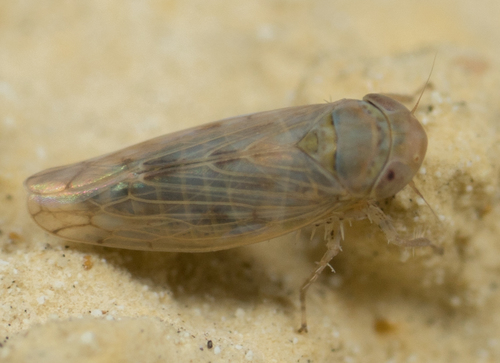
Beet leafhoppers could not survive on hemp beyond seven days.
- Taxon
- hempCannabis sativa subsp. sativae0
- Interactor
- beet leafhoppers
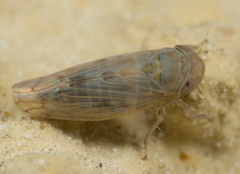 Neoaliturus tenelluse0pest
- Outcome
- were unable to survivee0
- Value
- 7 dayse0
Organisms pictured · Representative pictures of the matched species, not figures from the paper.
Verbatim
e0“beet leafhoppers, the exclusive vector of BCTV, were unable to survive on hemp beyond 7 days”
t0“Beet Curly Top Virus”
Claim · model-written summary
The authors infer beet leafhoppers cannot complete their life cycle on hemp.
- Taxon
- hempCannabis sativa subsp. sativae0
- Outcome
- cannot complete its life cyclee0
Not reportedInteractorInteractor role
Organisms pictured · Representative pictures of the matched species, not figures from the paper.
Verbatim
e0“the insect cannot complete its life cycle on hemp”
t0“Beet Curly Top Virus Genetic Diversity, Impact on Cannabinoids, Potential Seed Transmission, and Vector Biology in Hemp”