Abstract
Introduction: Chaenomeles sinensis and C. speciosa are two closely related plant species. The confusion or adulteration between the two species is a common occurrence in the herbal market. Method: A specific TLC method was established to distinguish C. speciosa from C. sinensis. Furthermore, a new UPLC-Orbitrap-MS/MS method was developed for their classification. This method entailed analyzing massive MS data from Chaenomeles species, which were processed using a self-designed VBA program. The classification was facilitated by three chemometric approaches. Results: 3-O-Acetylursolic acid was discovered, separated, and identified from C. speciosa as the unique chemical marker. A TLC identification test was thus established to discriminate between these two species using this marker. All three chemometric models demonstrated robust classification of 20 Chaenomeles samples. Subsequent structural profiling of chemical compositions in Chaenomeles species was accomplished. Discussion: Most of the identified compounds included triterpenoids, with nine compounds common to both species. TLC and UPLC-MS/MS methods were established for differentiating C. speciosa from C. sinensis. Conclusion: The present study also introduces an integrated analytical workflow that merges rapid TLC prescreening with high-resolution UPLC-MS/MS fingerprinting and chemometric modelling, enabling unequivocal discrimination of phylogenetically proximate plant species.
Abstract from the paper’s OpenAlex record, shown for indexing and research. Copyright remains with the authors or the publisher. Read at the source ↗
The text the model read, with the source record’s inline markup (italics, sub- and superscripts) rendered and its character entities decoded; quote offsets refer to the raw text.
Claims 5
Claim · model-written summary
3-O-Acetylursolic acid was identified as a unique chemical marker of C. speciosa.
- Taxon
- C. speciosa
 Chaenomeles speciosae0
- Outcome
- 3-O-Acetylursolic acide0
- Qualifier
- unique chemical markere0
Organisms pictured · Representative pictures of the matched species, not figures from the paper.

Verbatim
e0“3-O-Acetylursolic acid was discovered, separated, and identified from C. speciosa as the unique chemical marker.”
Claim · model-written summary
A TLC test distinguished the two Chaenomeles species using the marker.
- Taxon
- Chaenomeles sinensis
 Pseudocydonia sinensist0
- Outcome
- discriminate between these two speciese0
- Comparator
- these two speciese0
Organisms pictured · Representative pictures of the matched species, not figures from the paper.
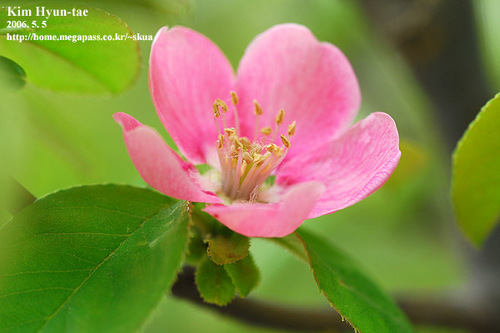
Verbatim
e0“A TLC identification test was thus established to discriminate between these two species using this marker.”
t0“Chaenomeles sinensis and Chaenomeles speciosa”
Claim · model-written summary
Three chemometric models robustly classified 20 Chaenomeles samples.
- Taxon
- Chaenomeles
 Chaenomelese0
- Outcome
- robust classificatione0
- Value
- 20 Chaenomeles samplese0
Organisms pictured · Representative pictures of the matched species, not figures from the paper.

Verbatim
e0“All three chemometric models demonstrated robust classification of 20 Chaenomeles samples.”
Claim · model-written summary
Chemical profiling found triterpenoids among most identified compounds.
- Taxon
- ChaenomelesChaenomelest0
- Outcome
- triterpenoidse0
Organisms pictured · Representative pictures of the matched species, not figures from the paper.
Verbatim
e0“Most of the identified compounds included triterpenoids”
t0“Chaenomeles sinensis and Chaenomeles speciosa”
Claim · model-written summary
Nine identified compounds were common to both species.
- Taxon
- ChaenomelesChaenomelest0
- Outcome
- compounds common to both speciese0
- Value
- ninee0
Organisms pictured · Representative pictures of the matched species, not figures from the paper.
Verbatim
e0“nine compounds common to both species”
t0“Chaenomeles sinensis and Chaenomeles speciosa”