Abstract
ABSTRACT Cratoxylum formosum (Jack) Benth. & Hook.f. ex Dyer is a medicinal plant widely distributed in Southeast Asia. This study presents the first investigation of the essential oil from leaves of C. formosum collected in Vietnam, focusing on its chemical composition, antimicrobial activity, and mosquito larvicidal potential. Gas chromatography–flame ionization detection (GC–FID)/mass spectrometry (MS) analysis identified 35 compounds in the essential oil, with ( E )‐caryophyllene (39.30%), α‐humulene (12.90%), and ( E )‐β‐ocimene (11.85%) as the major constituents. The essential oil exhibited notable antimicrobial activity against Staphylococcus aureus , Enterococcus faecalis , Bacillus cereus , Pseudomonas aeruginosa , and Candida albicans , with minimum inhibitory concentration (MIC) values ranging from 16 to 64 µg/mL and IC 50 values between 7.55 and 20.56 µg/mL. Larvicidal assays demonstrated strong activity against Aedes aegypti , Aedes albopictus , and Culex quinquefasciatus , with LC 50 values ranging from 44.27 to 77.71 µg/mL and LC 90 values from 57.74 to 102.61 µg/mL after 24 and 48 h of exposure. These findings suggest that C. formosum essential oil is a promising natural source of antimicrobial and mosquito control agents.
Abstract from the paper’s OpenAlex record, shown for indexing and research. Copyright remains with the authors or the publisher. Read at the source ↗
The text the model read, with the source record’s inline markup (italics, sub- and superscripts) rendered and its character entities decoded; quote offsets refer to the raw text.
Claims 9
Claim · model-written summary
GC-MS analysis identified 35 compounds in the leaf essential oil of Cratoxylum formosum collected in Vietnam.
- Taxon
- Cratoxylum formosum
 Cratoxylum formosume0
- Organ / stage
- leavese2
- Outcome
- compoundse1
- Value
- 35 compoundse1
- Setting
- Vietname2
Organisms pictured · Representative pictures of the matched species, not figures from the paper.

Verbatim
e0“Cratoxylum formosum (Jack) Benth. & Hook.f. ex Dyer is a medicinal plant”
e1“analysis identified 35 compounds in the essential oil”
e2“essential oil from leaves of C. formosum collected in Vietnam”
Claim · model-written summary
Caryophyllene was a major constituent of the essential oil at 39.30%.
- Taxon
- Cratoxylum formosumCratoxylum formosume0
- Outcome
- caryophyllenee3
- Value
- 39.30%e3
Organisms pictured · Representative pictures of the matched species, not figures from the paper.
Verbatim
e0“Cratoxylum formosum (Jack) Benth. & Hook.f. ex Dyer is a medicinal plant”
e3“caryophyllene (39.30%)”
Claim · model-written summary
Alpha-humulene was a major constituent of the essential oil at 12.90%.
- Taxon
- Cratoxylum formosumCratoxylum formosume0
- Outcome
- humulenee4
- Value
- 12.90%e4
Organisms pictured · Representative pictures of the matched species, not figures from the paper.
Verbatim
e0“Cratoxylum formosum (Jack) Benth. & Hook.f. ex Dyer is a medicinal plant”
e4“humulene (12.90%)”
Claim · model-written summary
Beta-ocimene was a major constituent of the essential oil at 11.85%.
- Taxon
- Cratoxylum formosumCratoxylum formosume0
- Outcome
- ocimenee5
- Value
- 11.85%e5
Organisms pictured · Representative pictures of the matched species, not figures from the paper.
Verbatim
e0“Cratoxylum formosum (Jack) Benth. & Hook.f. ex Dyer is a medicinal plant”
e5“ocimene (11.85%)”
Claim · model-written summary
The essential oil showed antimicrobial activity with minimum inhibitory concentration values of 16 to 64 µg/mL.
- Taxon
- Cratoxylum formosumCratoxylum formosume0
- Outcome
- minimum inhibitory concentration (MIC) valuese6
- Value
- 16 to 64 µg/mLe6
Organisms pictured · Representative pictures of the matched species, not figures from the paper.
Verbatim
e0“Cratoxylum formosum (Jack) Benth. & Hook.f. ex Dyer is a medicinal plant”
e6“with minimum inhibitory concentration (MIC) values ranging from 16 to 64 µg/mL”
Claim · model-written summary
The essential oil had IC50 values between 7.55 and 20.56 µg/mL against the tested microbes.
- Taxon
- Cratoxylum formosumCratoxylum formosume0
- Outcome
- IC 50 valuese7
- Value
- 7.55 and 20.56 µg/mLe7
Organisms pictured · Representative pictures of the matched species, not figures from the paper.
Verbatim
e0“Cratoxylum formosum (Jack) Benth. & Hook.f. ex Dyer is a medicinal plant”
e7“IC 50 values between 7.55 and 20.56 µg/mL”
Claim · model-written summary
The essential oil showed strong larvicidal activity against Aedes aegypti, Aedes albopictus and Culex quinquefasciatus.
- Taxon
- Cratoxylum formosumCratoxylum formosume0
- Interactor
- Aedes aegypti
 Aedes aegyptie1pest
- Second interactor
- Culex quinquefasciatus
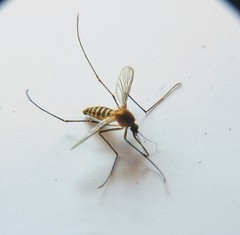 Culex quinquefasciatuse1pest
- Outcome
- strong activitye1
- Qualifier
- Aedes albopictuse1
Organisms pictured · Representative pictures of the matched species, not figures from the paper.


Verbatim
e0“Cratoxylum formosum (Jack) Benth. & Hook.f. ex Dyer is a medicinal plant”
e1“Larvicidal assays demonstrated strong activity against Aedes aegypti , Aedes albopictus , and Culex quinquefasciatus”
Claim · model-written summary
LC50 values of the essential oil against mosquito larvae ranged from 44.27 to 77.71 µg/mL after 24 and 48 h of exposure.
- Taxon
- Cratoxylum formosumCratoxylum formosume0
- Interactor
- Aedes aegyptiAedes aegyptie1pest
- Second interactor
- Culex quinquefasciatusCulex quinquefasciatuse1pest
- Outcome
- LC 50 valuese2
- Value
- 44.27 to 77.71 µg/mLe2
- Qualifier
- after 24 and 48 h of exposuree3
Organisms pictured · Representative pictures of the matched species, not figures from the paper.
Verbatim
e0“Cratoxylum formosum (Jack) Benth. & Hook.f. ex Dyer is a medicinal plant”
e1“Larvicidal assays demonstrated strong activity against Aedes aegypti , Aedes albopictus , and Culex quinquefasciatus”
e2“LC 50 values ranging from 44.27 to 77.71 µg/mL”
e3“after 24 and 48 h of exposure”
Claim · model-written summary
LC90 values of the essential oil against mosquito larvae ranged from 57.74 to 102.61 µg/mL after 24 and 48 h of exposure.
- Taxon
- Cratoxylum formosumCratoxylum formosume0
- Interactor
- Aedes aegyptiAedes aegyptie1pest
- Outcome
- LC 90 valuese2
- Value
- 57.74 to 102.61 µg/mLe2
- Qualifier
- after 24 and 48 h of exposuree3
Organisms pictured · Representative pictures of the matched species, not figures from the paper.
Verbatim
e0“Cratoxylum formosum (Jack) Benth. & Hook.f. ex Dyer is a medicinal plant”
e1“Larvicidal assays demonstrated strong activity against Aedes aegypti , Aedes albopictus , and Culex quinquefasciatus”
e2“LC 90 values from 57.74 to 102.61 µg/mL”
e3“after 24 and 48 h of exposure”