Abstract
This study evaluated the insecticidal potential of essential oils (EOs) obtained from Origanum onites, Lavandula angustifolia, and Foeniculum vulgare against Agonoscena pistaciae. The phytochemical content of the essential oils was determined by GC-MS. Furthermore, molecular docking analyses were performed to theoretically investigate the inhibitory properties of the dominant compounds against the detoxification enzymes glutathione S-transferase (GST) and cytochrome P450. In the GC-MS analysis, the dominant components were identified as follows: O. onites (60.51% carvacrol, 9.73% linalool, and 7.53% cis-cymene); L. angustifolia (25.44% linalyl acetate, 23.47% linalool, and 7.37% cis-cymene); and F. vulgare (49.41% anethol, 14.62% p-anisaldehyde, and 9.35% estragol). As a result of molecular docking, carvacrol showed the strongest binding affinity to both enzymes, surpassing the reference inhibitors metronidazole and coniferil ferulate, achieving docking scores of -5.40 kcal/mol and -5.70 kcal/mol, respectively. Visualization of molecular interactions revealed strong hydrogen bonds and hydrophobic contacts between carvacrol and the enzyme active sites. Biological analyses confirmed that carvacrol-rich O. onites EOs caused significantly higher mortality rates in A. pistaciae larvae compared to other applications and controls. These results demonstrate that carvacrol derived from O. onites is a promising natural insecticide targeting detoxification enzymes in pests and offering a sustainable alternative to synthetic pesticides.
Abstract from the paper’s OpenAlex record, shown for indexing and research. Copyright remains with the authors or the publisher. Read at the source ↗
The text the model read, with the source record’s inline markup (italics, sub- and superscripts) rendered and its character entities decoded; quote offsets refer to the raw text.
Claims 13
Claim · model-written summary
Carvacrol made up 60.51% of the Origanum onites essential oil.
- Taxon
- O. onites
 Origanum onitese1
- Outcome
- carvacrole1
- Value
- 60.51%e1
Organisms pictured · Representative pictures of the matched species, not figures from the paper.

Verbatim
e1“O. onites (60.51% carvacrol, 9.73% linalool, and 7.53% cis-cymene)”
Claim · model-written summary
Linalool made up 9.73% of the Origanum onites essential oil.
- Taxon
- O. onitesOriganum onitese1
- Outcome
- linaloole1
- Value
- 9.73%e1
Organisms pictured · Representative pictures of the matched species, not figures from the paper.
Verbatim
e1“O. onites (60.51% carvacrol, 9.73% linalool, and 7.53% cis-cymene)”
Claim · model-written summary
cis-Cymene made up 7.53% of the Origanum onites essential oil.
- Taxon
- O. onitesOriganum onitese1
- Outcome
- cis-cymenee1
- Value
- 7.53%e1
Organisms pictured · Representative pictures of the matched species, not figures from the paper.
Verbatim
e1“O. onites (60.51% carvacrol, 9.73% linalool, and 7.53% cis-cymene)”
Claim · model-written summary
Linalyl acetate made up 25.44% of the Lavandula angustifolia essential oil.
- Taxon
- L. angustifolia
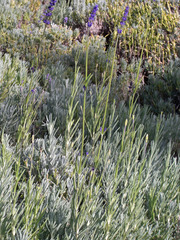 Lavandula angustifoliae1
- Outcome
- linalyl acetatee1
- Value
- 25.44%e1
Organisms pictured · Representative pictures of the matched species, not figures from the paper.
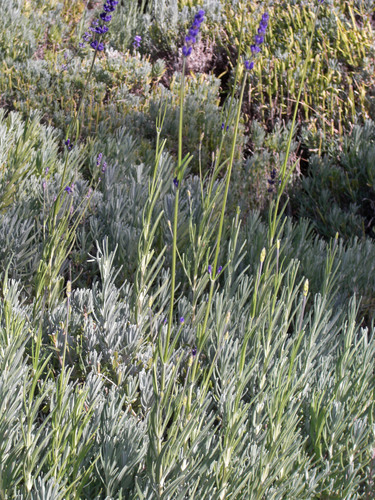
Verbatim
e1“L. angustifolia (25.44% linalyl acetate, 23.47% linalool, and 7.37% cis-cymene)”
Claim · model-written summary
Linalool made up 23.47% of the Lavandula angustifolia essential oil.
- Taxon
- L. angustifoliaLavandula angustifoliae1
- Outcome
- linaloole1
- Value
- 23.47%e1
Organisms pictured · Representative pictures of the matched species, not figures from the paper.
Verbatim
e1“L. angustifolia (25.44% linalyl acetate, 23.47% linalool, and 7.37% cis-cymene)”
Claim · model-written summary
cis-Cymene made up 7.37% of the Lavandula angustifolia essential oil.
- Taxon
- L. angustifoliaLavandula angustifoliae1
- Outcome
- cis-cymenee1
- Value
- 7.37%e1
Organisms pictured · Representative pictures of the matched species, not figures from the paper.
Verbatim
e1“L. angustifolia (25.44% linalyl acetate, 23.47% linalool, and 7.37% cis-cymene)”
Claim · model-written summary
Anethol made up 49.41% of the Foeniculum vulgare essential oil.
- Taxon
- F. vulgare
 Anethum foeniculume1
- Outcome
- anethole1
- Value
- 49.41%e1
Organisms pictured · Representative pictures of the matched species, not figures from the paper.

Verbatim
e1“F. vulgare (49.41% anethol, 14.62% p-anisaldehyde, and 9.35% estragol)”
Claim · model-written summary
p-Anisaldehyde made up 14.62% of the Foeniculum vulgare essential oil.
- Taxon
- F. vulgareAnethum foeniculume1
- Outcome
- p-anisaldehydee1
- Value
- 14.62%e1
Organisms pictured · Representative pictures of the matched species, not figures from the paper.
Verbatim
e1“F. vulgare (49.41% anethol, 14.62% p-anisaldehyde, and 9.35% estragol)”
Claim · model-written summary
Estragol made up 9.35% of the Foeniculum vulgare essential oil.
- Taxon
- F. vulgareAnethum foeniculume1
- Outcome
- estragole1
- Value
- 9.35%e1
Organisms pictured · Representative pictures of the matched species, not figures from the paper.
Verbatim
e1“F. vulgare (49.41% anethol, 14.62% p-anisaldehyde, and 9.35% estragol)”
Claim · model-written summary
Carvacrol showed the strongest binding affinity to both detoxification enzymes, above the reference inhibitors metronidazole and coniferil ferulate.
- Taxon
- Origanum onitesOriganum onitest0
- Treatment
- carvacrole1
- Compound
- carvacrole1
- Outcome
- binding affinitye1
- Direction
- strongeste1
- Comparator
- reference inhibitors metronidazole and coniferil ferulatee1
Organisms pictured · Representative pictures of the matched species, not figures from the paper.
Verbatim
e1“carvacrol showed the strongest binding affinity to both enzymes, surpassing the reference inhibitors metronidazole and coniferil ferulate”
t0“Origanum onites”
Claim · model-written summary
Docking scores of carvacrol were -5.40 kcal/mol and -5.70 kcal/mol, respectively, for the two enzymes.
- Taxon
- Origanum onitesOriganum onitest0
- Outcome
- docking scorese1
- Value
- -5.40 kcal/mol and -5.70 kcal/mole1
Organisms pictured · Representative pictures of the matched species, not figures from the paper.
Verbatim
e1“achieving docking scores of -5.40 kcal/mol and -5.70 kcal/mol, respectively”
t0“Origanum onites”
Claim · model-written summary
Carvacrol formed strong hydrogen bonds and hydrophobic contacts with the enzyme active sites in docking.
- Taxon
- Origanum onitesOriganum onitest0
- Outcome
- strong hydrogen bonds and hydrophobic contactse1
Organisms pictured · Representative pictures of the matched species, not figures from the paper.
Verbatim
e1“Visualization of molecular interactions revealed strong hydrogen bonds and hydrophobic contacts between carvacrol and the enzyme active sites”
t0“Origanum onites”
Claim · model-written summary
Carvacrol-rich O. onites essential oil significantly increased mortality of Agonoscena pistaciae larvae compared with other applications and controls.
- Taxon
- O. onitesOriganum onitese1
- Treatment
- carvacrol-rich O. onites EOse1
- Interactor
- A. pistaciaeAgonoscena pistaciaee1pest
- Compound
- carvacrole1
- Outcome
- mortality ratese1
- Direction
- highere1
- Comparator
- other applications and controlse1
Organisms pictured · Representative pictures of the matched species, not figures from the paper.
Verbatim
e1“carvacrol-rich O. onites EOs caused significantly higher mortality rates in A. pistaciae larvae compared to other applications and controls”