Abstract
Lippia alba is a medicinal plant commonly used in Cuba and the Caribbean for thedevelopment of herbal formulations against skin inflammatory illnesses thus generating residual biomass whose environmental impact remains unassessed.This study aimed to evaluate the ecotoxicological effects of L. alba residues and their aqueous extract fractions on key terrestrial ecosystem organisms.Soil microbial community activity was analyzed through CO₂ emissions and ammonium (NH₄⁺) quantification, as well as degradation and toxicity tests on earthworms (Eisenia andrei).Phytotoxicity was assessed using Phaseolus vulgaris seeds to determine germination rates and radicle length.Results showed that CO₂ emissions increased in the groups treated with L. alba residues, suggesting enhanced microbial respiration, whereas NH₄⁺ levels remained unchanged across all treatments.Seed germination rates remained above 75% at all tested extract concentrations except at 75%.Radicle length, however, was significantly reduced at higher concentrations (75% and 100%).No toxic effects were observed in E. andrei (earthworms).These findings indicate that L. alba residues are not toxic to soil macro-or microfauna and may contribute to soil organic enrichment, although higher concentrations of aqueous extracts exhibit moderate phytotoxic effects.The study supports the potential incorporation of L. alba waste into sustainable soil management strategies, such as composting and vermicomposting.
Abstract from the paper’s OpenAlex record; open copy licensed cc-by-nc. Read at the source ↗
The text the model read, with the source record’s inline markup (italics, sub- and superscripts) rendered and its character entities decoded; quote offsets refer to the raw text.
Claims 6
Claim · model-written summary
CO₂ emissions increased in soil groups treated with L. alba residues, suggesting enhanced microbial respiration.
Not reportedTaxonComparator
Verbatim
e0“CO₂ emissions increased in the groups treated with L. alba residues”
Claim · model-written summary
Soil ammonium levels remained unchanged across all treatments.
Not reportedTaxonComparator
Verbatim
e0“NH₄⁺ levels remained unchanged across all treatments”
Claim · model-written summary
Phaseolus vulgaris seed germination stayed above 75% at all tested extract concentrations except the 75% extract.
- Taxon
- Phaseolus vulgaris
 Phaseolus vulgarise1
- Treatment
- extract concentrationse0
- Outcome
- Seed germination ratese0
- Direction
- no_changeinferrede0
- Value
- above 75%e0
- Qualifier
- except at 75%e0
Not reportedComparator
Organisms pictured · Representative pictures of the matched species, not figures from the paper.

Verbatim
e0“Seed germination rates remained above 75% at all tested extract concentrations except at 75%”
e1“Phaseolus vulgaris seeds”
Claim · model-written summary
Radicle length of Phaseolus vulgaris was significantly reduced at the higher extract concentrations of 75% and 100%.
- Taxon
- Phaseolus vulgarisPhaseolus vulgarise1
- Treatment
- higher concentrations (75% and 100%)e0
- Outcome
- Radicle lengthe0
- Direction
- reducede0
Not reportedComparator
Organisms pictured · Representative pictures of the matched species, not figures from the paper.
Verbatim
e0“Radicle length, however, was significantly reduced at higher concentrations (75% and 100%)”
e1“Phaseolus vulgaris seeds”
Claim · model-written summary
No toxic effects were observed in the earthworm Eisenia andrei.
- Taxon
- E. andrei
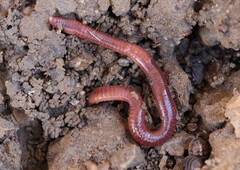 Eisenia andreie0
- Outcome
- toxic effectse0
Not reportedDirection
Organisms pictured · Representative pictures of the matched species, not figures from the paper.

Verbatim
e0“No toxic effects were observed in E. andrei (earthworms)”
Claim · model-written summary
The authors conclude that L. alba waste could be incorporated into sustainable soil management such as composting and vermicomposting.
- Taxon
- L. alba
 Lippia albae0
- Outcome
- incorporation of L. alba waste into sustainable soil management strategiese0
Organisms pictured · Representative pictures of the matched species, not figures from the paper.

Verbatim
e0“The study supports the potential incorporation of L. alba waste into sustainable soil management strategies, such as composting and vermicomposting”