Abstract
The genus Hordeum (Poaceae), of the tribe Triticeae, comprises approximately 32 species with substantial potential for barley improvement. Hordeum vulgare is an economically important cereal widely cultivated across diverse environments, from the Arctic to desert and humid regions. In this study, we analyzed 67 individuals from 11 populations representing five Iranian Hordeum species using inter‐simple sequence repeats (ISSR) and start codon targeted (SCoT) molecular markers. We evaluated the discriminatory power of these markers and identified diagnostic micromorphological traits of the abaxial leaf blade. Genetic variation and affinities among Iranian Hordeum species were assessed using molecular markers combined with micromorphology. Neighbor‐net and UPGMA analyses revealed close evolutionary relationships among Hordeum marinum , Hordeum bulbosum , and Hordeum murinum . Micromorphological examination of the abaxial leaf surface showed significant interspecific variation in both qualitative and quantitative traits. Additionally, H. bulbosum exhibited close affinities with Hordeum vulgare subsp. spontaneum and, to a lesser extent, with Hordeum brevisubulatum . While most Hordeum research has focused on biological traits, salinity tolerance, and disease resistance, breeding efforts are limited by small grain size and scarce genetic information on wild taxa. Our findings provide valuable insights for the collection, conservation, and genetic management of Hordeum germplasm, contributing to future breeding and improvement programs. Overall, this study highlights the utility of integrating molecular and micromorphological data to guide the conservation and targeted improvement of barley and related species.
Abstract from the paper’s OpenAlex record; open copy licensed cc-by. Read at the source ↗
The text the model read, with the source record’s inline markup (italics, sub- and superscripts) rendered and its character entities decoded; quote offsets refer to the raw text.
Claims 4
Claim · model-written summary
Hordeum marinum, Hordeum bulbosum and Hordeum murinum have close evolutionary relationships.
- Taxon
- Hordeum marinum
 Hordeum marinume0
- Outcome
- close evolutionary relationshipse0
- Qualifier
- Hordeum bulbosum , and Hordeum murinume0
Organisms pictured · Representative pictures of the matched species, not figures from the paper.

Verbatim
e0“Neighbor‐net and UPGMA analyses revealed close evolutionary relationships among Hordeum marinum , Hordeum bulbosum , and Hordeum murinum”
Claim · model-written summary
Abaxial leaf surface traits varied significantly between species.
- Organ / stage
- abaxial leaf surfacee0
- Outcome
- interspecific variation in both qualitative and quantitative traitse0
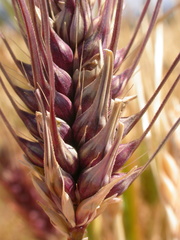 Hordeum
Organisms pictured · Representative pictures of the matched species, not figures from the paper.
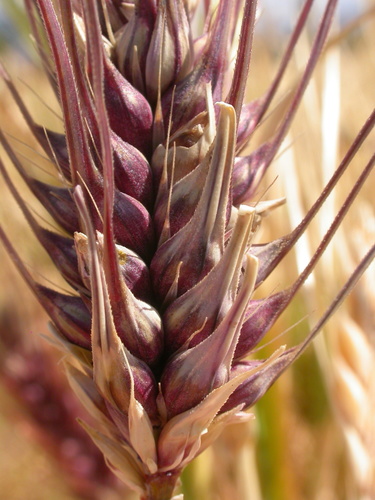
Verbatim
e0“Micromorphological examination of the abaxial leaf surface showed significant interspecific variation in both qualitative and quantitative traits”
t0“Iranian Hordeum species”
Claim · model-written summary
H. bulbosum had close affinities with Hordeum vulgare subsp. spontaneum and weaker affinities with Hordeum brevisubulatum.
- Taxon
- H. bulbosum
 Hordeum bulbosume0
- Outcome
- close affinitiese0
- Qualifier
- with Hordeum vulgare subsp. spontaneum and, to a lesser extent, with Hordeum brevisubulatume0
Organisms pictured · Representative pictures of the matched species, not figures from the paper.

Verbatim
e0“H. bulbosum exhibited close affinities with Hordeum vulgare subsp. spontaneum and, to a lesser extent, with Hordeum brevisubulatum”
Claim · model-written summary
Integrating molecular and micromorphological data is useful for conservation and targeted improvement of barley relatives.
- Taxon
- barley
 Hordeum vulgaree0
- Outcome
- integrating molecular and micromorphological datae0
- Qualifier
- to guide the conservation and targeted improvemente0
Organisms pictured · Representative pictures of the matched species, not figures from the paper.

Verbatim
e0“this study highlights the utility of integrating molecular and micromorphological data to guide the conservation and targeted improvement of barley and related species”