View: List Claim type Research area Organism Taxon as written Decade Paper organism_group: Fungi ✕
Method / resource observed original result positive measured Claim · model-written summary
The optimized enzymatic digestion protocol yielded a high quantity of viable protoplasts of C. camelliae .
viable protoplasts e1 Verbatim
e0 “Colletotrichum camelliae is a highly virulent fungal pathogen responsible for anthracnose in tea plants
✓ located verbatim in the source · abstract, characters 13–116 e1 “The optimized enzymatic digestion protocol yielded a high quantity of viable protoplasts ”
✓ located verbatim in the source · abstract, characters 1013–1101 Other claims from this paper (2) Method / resource observed original result measured Claim · model-written summary
The assay distinguished L412F and L412V mutations using diagnostic bands.
detect the nucleotide alterations e0 Verbatim
e0 “A TETRA-primer amplification refractory mutation system polymerase chain reaction (T-ARMS-PCR) was developed to rapidly detect the nucleotide alterations that lead to L412F and L412V mutations, producing a 702 bp band in all isolates, with additional 470 bp (F) or 252 bp (V) fragments ”
✓ located after whitespace/quote normalisation · abstract, characters 510–795 t0 “Botrytis cinerea
✓ located verbatim in the source · title, characters 14–30 Other claims from this paper (9) Method / resource observed original result measured Claim · model-written summary
The assay detected G408V with MlyI digestion.
confirm the mutation e0 Verbatim
e0 “Isolates harboring only the 702 bp band were further digested with MlyI to confirm the mutation leading to the amino acid substitution G408V mutation (467 bp + 235 bp) ”
✓ located verbatim in the source · abstract, characters 797–964 t0 “Botrytis cinerea
✓ located verbatim in the source · title, characters 14–30 Other claims from this paper (9) Method / resource observed original result measured Claim · model-written summary
Sanger sequencing validated the assay results.
Results were validated e0 Sanger sequencing e0 Verbatim
e0 “Results were validated by Sanger sequencing ”
✓ located verbatim in the source · abstract, characters 966–1009 t0 “Botrytis cinerea
✓ located verbatim in the source · title, characters 14–30 Other claims from this paper (9) Method / resource observed original result basis n/a Claim · model-written summary
ITS, TEF1-α and RPB2 sequences were deposited in GenBank.
sequences were deposited in GenBank e0 PV211189 and PV211190 e0 TEF1-α (PQ867811 and PQ867812), and RPB2 (PV261064 and PV261065) e0 Verbatim
e0 “sequences were deposited in GenBank as for ITS (PV211189 and PV211190), TEF1-α (PQ867811 and PQ867812), and RPB2 (PV261064 and PV261065). ”
✓ located verbatim in the source · abstract, characters 644–781 t0 “Fusarium coffeibaccae
✓ located verbatim in the source · title, characters 59–80 Other claims from this paper (5) Method / resource observed original result measured Claim · model-written summary
The standard PCR assay had 91.79% sensitivity for C. theobromae detection.
Not reported Direction
Verbatim
e0 “C. theobromae was detected in symptomatic samples using a standard PCR assay, with a sensitivity of 91.79% and a specificity of 95.24%
✓ located verbatim in the source · abstract, characters 630–764 Other claims from this paper (7) Method / resource observed original result measured Claim · model-written summary
The standard PCR assay had 95.24% specificity for C. theobromae detection.
Not reported Direction
Verbatim
e0 “C. theobromae was detected in symptomatic samples using a standard PCR assay, with a sensitivity of 91.79% and a specificity of 95.24%
✓ located verbatim in the source · abstract, characters 630–764 Other claims from this paper (7) Method / resource observed original result basis n/a Claim · model-written summary
WC-02 sequences were deposited in GenBank for ITS, TUB and RPB2.
PZ185680 (ITS), PZ200895(TUB) and PZ200894(RPB2) e0 Verbatim
e0 “Sequences of isolate WC-02 were deposited in GenBank as PZ185680 (ITS), PZ200895(TUB) and PZ200894(RPB2). ”
✓ located verbatim in the source · abstract, characters 1463–1568 e1 “Thus, the fungus was identified as Epicoccum sorghinum based on both morphological and molecular data. ”
✓ located verbatim in the source · abstract, characters 2068–2170 Other claims from this paper (13) Method / resource observed original result measured Claim · model-written summary
Molecular characterization confirmed the pathogen as S. rolfsii .
confirmed the pathogen as S. rolfsii e0 Verbatim
e0 “Molecular characterisation confirmed the pathogen as S. rolfsii and antagonists as B. subtilis showing 98.8–99.0% nucleotide identity with reference sequences. ”
✓ located verbatim in the source · abstract, characters 420–579 t0 “tomato collar rot ”
✓ located verbatim in the source · title, characters 41–58 Other claims from this paper (12) Method / resource observed original result positive measured Claim · model-written summary
Methods were developed for effective transient gene silencing in both conidial and mycelial cells of P. fijiensis .
conidial and mycelial cells e0 effective transient gene silencing e0 Not reported Comparator
Verbatim
e0 “we developed methods for effective transient gene silencing in both conidial and mycelial cells of P. fijiensis ”
✓ located verbatim in the source · abstract, characters 458–569 Other claims from this paper (4) Lexical search (BM25). All words must match; if nothing does, any word. Organism names also match every spelling of the same organism. No semantic search yet.
 Botrytis cinerea
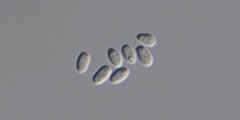 Epicoccum sorghinum
 Agroathelia rolfsii
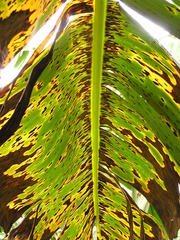 Pseudocercospora fijiensis