Claim · model-written summary
L. hirsutum idioblast density showed a greater opposite age trend.
- Taxon
- L. hirsutum
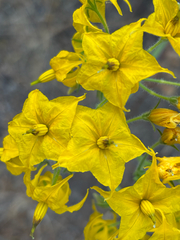 Solanum habrochaitese0
- Organ / stage
- plant agee0
- Outcome
- idioblast densitye0
- Direction
- oppositee0
Verbatim
e0“There was also a small decrease of idioblast density with increasing plant age for L. esculentum , while a greater and opposite variation took place in L. hirsutum.”
Title
G.L.D. Leite; M. Picanço; R.N.C. Guedes; et al. Entomologia Experimentalis et Applicata 1999. doi:10.1046/j.1570-7458.1999.00493.x
Other claims from this paper (15)
- Association Increasing NK was inversely associated with trichome and idioblast density in L. esculentum.
- Association Increasing NK was inversely associated only with idioblast density in L. hirsutum.
- Association Trichome density increased with canopy height and age in both tomato species.
- Association L. hirsutum idioblast density increased with canopy height to a mid-canopy maximum.
- Association L. esculentum idioblast density decreased slightly with canopy height.
- Association L. esculentum idioblast density decreased slightly with age.
- Observation L. esculentum leaf trichomes were mainly non-glandular at 90%.
- Observation L. hirsutum trichomes were mainly glandular at 97%.
- Observation Main glandular trichomes of L. hirsutum produced 2-TD and 2-UD.
- Association Leaf 2-TD and 2-UD content rose with trichome density.
- Association Higher 2-TD concentration lowered aphid survival and longevity.
- Association Higher idioblast density lowered aphid survival and longevity.
- Observation L. hirsutum had much higher 2-TD levels than L. esculentum.
- Observation L. hirsutum had much higher idioblast density than L. esculentum.
- Recommendation L. hirsutum was proposed as a promising aphid resistance source for tomato breeding.