Abstract
Abstract The effects of different levels of fertilization with nitrogen and potassium (NK), height within the canopy and plant age of Lycopersicon hirsutum f. glabratum (PI 134417) C. H. Mull and L. esculentum on the density of foliar cristalliferous idioblasts and trichomes, and on the levels of 2‐ tridecanone (2‐TD) and 2‐undecanone (2‐UD) and their influence on the resistance to Myzus persicae (Sulzer) were investigated. NK levels were inversely related to densities of trichomes and cristalliferous idioblasts in L. esculentum , but only to densities of cristalliferous idioblasts in L. hirsutum . Trichome density increased with increasing height within the canopy and with plant age in L. esculentum and L. hirsutum . Density of cristalliferous idioblasts in L. hirsutum increased with canopy height reaching a maximum at mid‐height within the canopy in opposition to L. esculentum in which a small decrease in density with height within the canopy was found. There was also a small decrease of idioblast density with increasing plant age for L. esculentum , while a greater and opposite variation took place in L. hirsutum. L. esculentum has mainly non‐ glandular leaf trichomes (90%), while L. hirsutum has mainly glandular trichomes (97%). The main glandular trichomes of L. hirsutum are producers of 2‐TD and 2‐UD, whose leaf content increases with increase of trichome density. A negative effect of 2‐TD concentration and cristalliferous idioblast density on the survival and longevity of M. persicae was observed. Since L. hirsutum presented much higher levels of 2‐TD and cristalliferous idioblast density than L. esculentum, L. hirsutum seems a promising source of resistance to M. persicae for tomato breeding programs.
Abstract from the paper’s OpenAlex record, shown for indexing and research. Copyright remains with the authors or the publisher. Read at the source ↗
The text the model read, with the source record’s inline markup (italics, sub- and superscripts) rendered and its character entities decoded; quote offsets refer to the raw text.
Claims 16
Claim · model-written summary
Increasing NK was inversely associated with trichome and idioblast density in L. esculentum.
- Taxon
- L. esculentum
 Solanum lycopersicume0
- Treatment
- NK levelse0
- Outcome
- densities of trichomes and cristalliferous idioblastse0
- Direction
- inversely relatede0
Organisms pictured · Representative pictures of the matched species, not figures from the paper.

Verbatim
e0“NK levels were inversely related to densities of trichomes and cristalliferous idioblasts in L. esculentum”
Claim · model-written summary
Increasing NK was inversely associated only with idioblast density in L. hirsutum.
- Taxon
- L. hirsutum
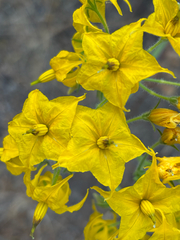 Solanum habrochaitese0
- Treatment
- NK levelse0
- Outcome
- densities of cristalliferous idioblastse0
- Direction
- inversely relatede0
Organisms pictured · Representative pictures of the matched species, not figures from the paper.
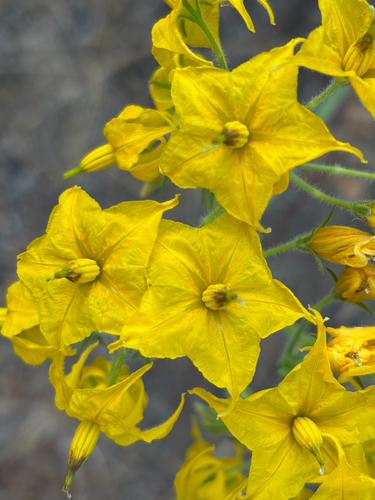
Verbatim
e0“NK levels were inversely related to densities of trichomes and cristalliferous idioblasts in L. esculentum , but only to densities of cristalliferous idioblasts in L. hirsutum .”
Claim · model-written summary
Trichome density increased with canopy height and age in both tomato species.
- Taxon
- L. esculentum and L. hirsutumSolanum lycopersicumSolanum habrochaitese0
- Organ / stage
- height within the canopye0
- Outcome
- Trichome densitye0
- Direction
- increasede0
- Qualifier
- plant agee0
Organisms pictured · Representative pictures of the matched species, not figures from the paper.
Verbatim
e0“Trichome density increased with increasing height within the canopy and with plant age in L. esculentum and L. hirsutum .”
Claim · model-written summary
L. hirsutum idioblast density increased with canopy height to a mid-canopy maximum.
- Taxon
- L. hirsutumSolanum habrochaitese0
- Organ / stage
- canopy heighte0
- Outcome
- Density of cristalliferous idioblastse0
- Direction
- increasede0
- Qualifier
- mid‐height within the canopye0
Organisms pictured · Representative pictures of the matched species, not figures from the paper.
Verbatim
e0“Density of cristalliferous idioblasts in L. hirsutum increased with canopy height reaching a maximum at mid‐height within the canopy”
Claim · model-written summary
L. esculentum idioblast density decreased slightly with canopy height.
- Taxon
- L. esculentumSolanum lycopersicume0
- Organ / stage
- height within the canopye0
- Outcome
- densitye0
- Direction
- decreasee0
Organisms pictured · Representative pictures of the matched species, not figures from the paper.
Verbatim
e0“in opposition to L. esculentum in which a small decrease in density with height within the canopy was found.”
Claim · model-written summary
L. esculentum idioblast density decreased slightly with age.
- Taxon
- L. esculentumSolanum lycopersicume0
- Organ / stage
- plant agee0
- Outcome
- idioblast densitye0
- Direction
- decreasee0
Organisms pictured · Representative pictures of the matched species, not figures from the paper.
Verbatim
e0“There was also a small decrease of idioblast density with increasing plant age for L. esculentum”
Claim · model-written summary
L. hirsutum idioblast density showed a greater opposite age trend.
- Taxon
- L. hirsutumSolanum habrochaitese0
- Organ / stage
- plant agee0
- Outcome
- idioblast densitye0
- Direction
- oppositee0
Organisms pictured · Representative pictures of the matched species, not figures from the paper.
Verbatim
e0“There was also a small decrease of idioblast density with increasing plant age for L. esculentum , while a greater and opposite variation took place in L. hirsutum.”
Claim · model-written summary
L. esculentum leaf trichomes were mainly non-glandular at 90%.
- Taxon
- L. esculentumSolanum lycopersicume0
- Organ / stage
- leafe0
- Outcome
- non‐ glandular leaf trichomese0
- Value
- 90%e0
Organisms pictured · Representative pictures of the matched species, not figures from the paper.
Verbatim
e0“L. esculentum has mainly non‐ glandular leaf trichomes (90%)”
Claim · model-written summary
L. hirsutum trichomes were mainly glandular at 97%.
- Taxon
- L. hirsutumSolanum habrochaitese0
- Outcome
- glandular trichomese0
- Value
- 97%e0
Organisms pictured · Representative pictures of the matched species, not figures from the paper.
Verbatim
e0“L. hirsutum has mainly glandular trichomes (97%).”
Claim · model-written summary
Main glandular trichomes of L. hirsutum produced 2-TD and 2-UD.
- Taxon
- L. hirsutumSolanum habrochaitese0
- Organ / stage
- glandular trichomese0
- Outcome
- 2‐TD and 2‐UDe0
Not reportedDirection
Organisms pictured · Representative pictures of the matched species, not figures from the paper.
Verbatim
e0“The main glandular trichomes of L. hirsutum are producers of 2‐TD and 2‐UD”
Claim · model-written summary
Leaf 2-TD and 2-UD content rose with trichome density.
- Taxon
- L. hirsutumSolanum habrochaitese0
- Organ / stage
- trichomee0
- Outcome
- leaf contente0
- Direction
- increasese0
- Qualifier
- trichome densitye0
Organisms pictured · Representative pictures of the matched species, not figures from the paper.
Verbatim
e0“The main glandular trichomes of L. hirsutum are producers of 2‐TD and 2‐UD, whose leaf content increases with increase of trichome density.”
t0“Lycopersicon hirsutum”
Claim · model-written summary
Higher 2-TD concentration lowered aphid survival and longevity.
- Taxon
- Lycopersicon hirsutumSolanum habrochaitest0
- Interactor
- M. persicae
 Myzus persicaee0pest
- Compound
- 2‐TDe0
- Outcome
- survival and longevity of M. persicaee0
- Direction
- negative effecte0
Organisms pictured · Representative pictures of the matched species, not figures from the paper.

Verbatim
e0“A negative effect of 2‐TD concentration and cristalliferous idioblast density on the survival and longevity of M. persicae was observed.”
t0“Lycopersicon hirsutum”
Claim · model-written summary
Higher idioblast density lowered aphid survival and longevity.
- Taxon
- Lycopersicon hirsutumSolanum habrochaitest0
- Organ / stage
- cristalliferous idioblaste0
- Interactor
- M. persicaeMyzus persicaee0pest
- Outcome
- survival and longevity of M. persicaee0
- Direction
- negative effecte0
Organisms pictured · Representative pictures of the matched species, not figures from the paper.
Verbatim
e0“A negative effect of 2‐TD concentration and cristalliferous idioblast density on the survival and longevity of M. persicae was observed.”
t0“Lycopersicon hirsutum”
Claim · model-written summary
L. hirsutum had much higher 2-TD levels than L. esculentum.
- Taxon
- L. hirsutumSolanum habrochaitese0
- Outcome
- levels of 2‐TDe0
- Direction
- much highere0
- Comparator
- L. esculentume0
Organisms pictured · Representative pictures of the matched species, not figures from the paper.
Verbatim
e0“L. hirsutum presented much higher levels of 2‐TD and cristalliferous idioblast density than L. esculentum”
Claim · model-written summary
L. hirsutum had much higher idioblast density than L. esculentum.
- Taxon
- L. hirsutumSolanum habrochaitese0
- Outcome
- cristalliferous idioblast densitye0
- Direction
- much highere0
- Comparator
- L. esculentume0
Organisms pictured · Representative pictures of the matched species, not figures from the paper.
Verbatim
e0“L. hirsutum presented much higher levels of 2‐TD and cristalliferous idioblast density than L. esculentum”
Claim · model-written summary
L. hirsutum was proposed as a promising aphid resistance source for tomato breeding.
- Taxon
- L. hirsutumSolanum habrochaitese0
- Interactor
- M. persicaeMyzus persicaee0pest
- Outcome
- promising source of resistance to M. persicaee0
Organisms pictured · Representative pictures of the matched species, not figures from the paper.
Verbatim
e0“L. hirsutum seems a promising source of resistance to M. persicae for tomato breeding programs.”