Claim · model-written summary
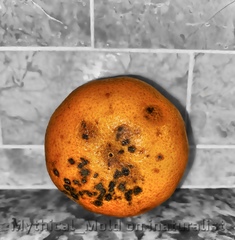
In pathogenicity tests, navel orange had the highest Alternaria citri infection among the citrus fruits tested.
- Taxon
- navel orange
 Citrus sinensise0
- Organ / stage
- mature citrus fruitse1
- Interactor
- A. citri
 Alternaria citrie1pathogen
- Outcome
- infectione0
- Direction
- highere0
- Setting
- Abo-Swear districte0
Verbatim
e0“The pathogen recorded the higher infection in navel orange (Length and Width) at Abo-Swear district, followed by summer orange, grapefruits, blood orange, balady orange, succary orange, murrcot, and mandarin”
e1“Pathogenicity tests with A. citri were tested on mature citrus fruits”
Title
Management of Black Rot Disease of Navel Orange
Asmaa Abbas; Heba Abd El Nabi; Manal Eid Journal of Applied Plant Protection 2023. doi:10.21608/japp.2023.336318
Other claims from this paper (8)
- Observation Alternaria citri disease occurred in every inspected citrus orchard in the three districts in both seasons.
- Observation Natural infection in citrus cultivations ranged from 1% to 11% over the two years.
- Observation Abo-swear citrus orchards had the highest disease incidence, reaching 11% in 2017.
- Observation Lime fruit had the lowest fruit rot among the citrus fruits tested.
- Observation Pear fruit had the highest A. citri fruit rot in the host-range assessment.
- Intervention effect Rizolex 50% WP most strongly inhibited A. citri linear growth at 100 ppm among the fungicides tested.
- Observation B. subtilis contact with Alternaria citri was followed by abnormal conidial spore shape.
- Mechanism The authors suggest lytic enzymes may disrupt Alternaria citri cells during antagonism.
 Citrus
 Pyrus communis
 Ficus hirta
 Vicia faba