Claim · model-written summary
Killex and S. minor rarely differed significantly in dandelion population dynamics.
- Taxon
- turft0
- Treatment
- Killex™e0
- Interactor
- dandelion
 Taraxacum officinalee0weede1
- Outcome
- dandelion population dynamicse0
- Direction
- did not favour either treatmente0
- Comparator
- S. minore0
Not reportedMaterialGeneCompoundOrgan / stageSecond interactorSecond interactor roleSettingValueQualifier
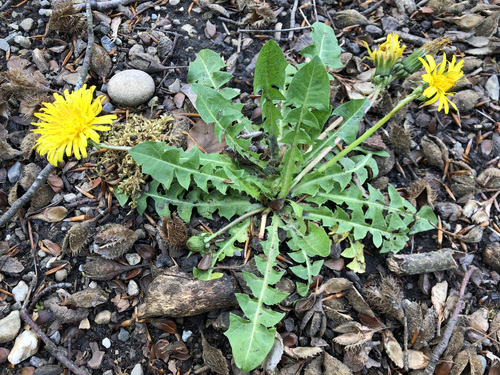
Organisms pictured · Representative pictures of the matched species, not figures from the paper.
Verbatim
e0“Significant differences between the Killex™ and S. minor treatments on dandelion population dynamics were rarely present and did not favour either treatment.”
t0“turf”
e1“weed population dynamics”
Title
Impact of mowing and weed control on broadleaf weed population dynamics in turf
Mohammed Abu-Dieyeh; Alan Watson Journal of Plant Interactions 2005. doi:10.1080/17429140601015226
Other claims from this paper (10)
- Intervention effect Mowing did not reduce dandelion population density.
- Intervention effect Mowing did not reduce broadleaf weed ground cover.
- Intervention effect In year two, mowing significantly reduced white clover density.
- Intervention effect In year two, mowing significantly increased broadleaf plantain density, especially at 3–5 cm.
- Intervention effect S. minor and Killex equally suppressed four broadleaf weed species in year two except at close mowing height.
- Intervention effect Common mallow increased in herbicide treated plots.
- Intervention effect Yellow woodsorrel, yellow toadflax and lambsquarters increased in close-mown and Killex plots.
- Intervention effect S. minor did not damage turfgrass.
- Intervention effect Killex reduced turf quality in 25% of plots.
- Intervention effect S. minor with regular medium-height mowing effectively controlled broadleaf weeds in Kentucky bluegrass turf.