Claim · model-written summary
Flower extract chelated ferrous ions with IC50 of 152.89ìg/ml.
- Taxon
- Anaphalis lawii
 Anaphalis lawiit0
- Outcome
- IC50 valuee0
- Value
- 152.89ìg/mle0
- Qualifier
- FEe0
Not reportedMaterialGeneCompoundOrgan / stageInteractorInteractor roleSecond interactorSecond interactor roleTreatmentComparatorSettingDirection
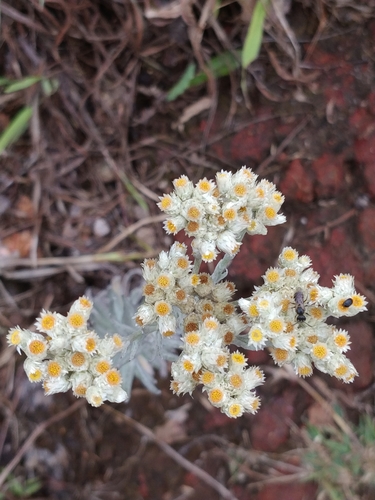
Organisms pictured · Representative pictures of the matched species, not figures from the paper.
Verbatim
e0“In metal chelating assay, both LE and FE caused chelation of ferrous ion with IC50 value of 180.98 and 152.89ìg/ml respectively.”
t0“Anaphalis lawii”
Title
Antimicrobial and Antioxidant activity of Anaphalis lawii (Hook.f.) Gamble
KTR Prashith; KN Rakesh; N Dileep; et al. Science Technology and Arts Research Journal 2013. doi:10.4314/star.v1i3.98794
Other claims from this paper (10)
- Observation Both leaf and flower extracts inhibited bacteria and fungi in a concentration-dependent manner.
- Observation Gram-positive bacteria were more susceptible to the extracts than Gram-negative bacteria.
- Observation Cryptococcus neoformans was more susceptible to extracts than Candida albicans.
- Observation Leaf extract scavenged DPPH radicals dose dependently with IC50 of 6.01ìg/ml.
- Observation Flower extract scavenged DPPH radicals dose dependently with IC50 of 5.20ìg/ml.
- Association Increasing extract concentrations increased absorbance in the ferric reducing assay, indicating reducing potential.
- Observation Leaf extract chelated ferrous ions with IC50 of 180.98ìg/ml.
- Observation Both extracts contained flavonoids, saponins and tannins.
- Observation Flower extract had higher total phenolic and flavonoid contents than leaf extract.
- Mechanism Flower extract showed stronger antioxidant and antimicrobial activity than leaf extract, potentially related to its phenolic and flavonoid contents.