Claim · model-written summary
The authors conclude that diterpenoid 10 from E. sinense is a promising candidate for an eco-friendly attract-kill microsphere system to control nematodes.
- Taxon
- E. sinense
 Erythroxylum sinensee0
- Outcome
- promising candidate for an eco-friendly "attract-kill" microsphere system to control nematodese0
Not reportedMaterialGeneCompoundOrgan / stageInteractorInteractor roleSecond interactorSecond interactor roleTreatmentComparatorSettingDirectionValueQualifier
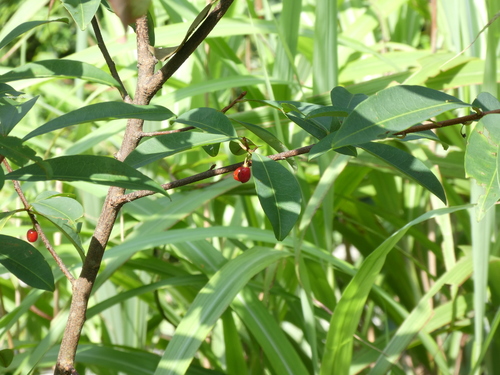
Organisms pictured · Representative pictures of the matched species, not figures from the paper.
Verbatim
e0“diterpenoid 10 from E. sinense represents a promising candidate for an eco-friendly "attract-kill" microsphere system to control nematodes”
Title
Han Zhang; Yu‐Lian Lv; Jing Yang; et al. Chemistry & Biodiversity 2026. doi:10.1002/cbdv.71159