Claim · model-written summary
Aggressive C. sativus isolates released more xylanase than weakly aggressive isolates.
- Taxon
- Cochliobolus sativus
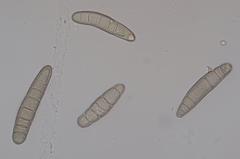 Bipolaris sorokinianat0
- Outcome
- xylanasee0
- Direction
- moree0
- Comparator
- weakly aggressive isolatese0
Not reportedMaterialGeneCompoundOrgan / stageInteractorInteractor roleSecond interactorSecond interactor roleTreatmentSettingValueQualifier
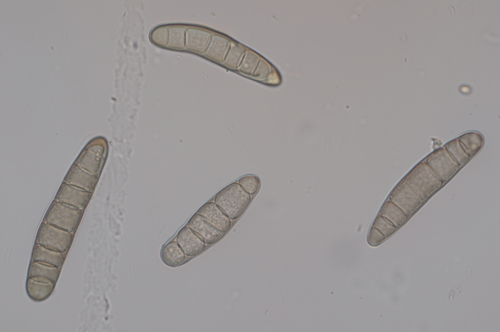
Organisms pictured · Representative pictures of the matched species, not figures from the paper.
Verbatim
e0“Aggressive isolates released more xylanase of weakly aggressive isolates.”
t0“Cochliobolus sativus”
Title
Correlative Analysis of Cochliobolus sativus Pathogenicity and in vitro Xylanase Activity
Yasser Bakri; Mohammed Jawhar; Mohammed Imad Eddin Arabi Journal of Phytopathology 2009. doi:10.1111/j.1439-0434.2009.01628.x
Other claims from this paper (4)
- Association Fungal xylanase per unit mass correlated significantly with aggressiveness on barley cultivar Arabi Abiad (r = 0.84).
- Association Fungal xylanase per unit mass correlated significantly with aggressiveness on barley cultivar Bowman (r = 0.50).
- Association Xylanase production was not correlated with isolate origin.
- Mechanism The authors infer that xylanase production influences C. sativus aggressiveness toward barley seedlings.