Claim · model-written summary
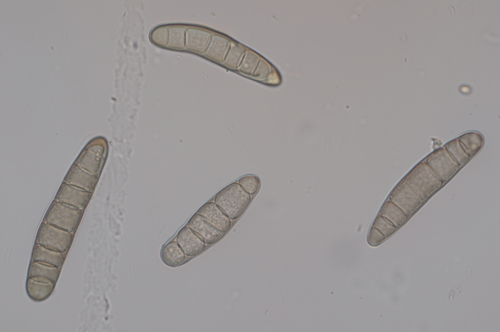
The strains antagonized B. sorokiniana.
- Taxon
- B. sorokiniana
 Bipolaris sorokinianae0
- Interactor
- rhizobiae1biocontrol_agent
- Outcome
- pronounced antagonistic activitye0
Verbatim
e0“The strains also exhibited pronounced antagonistic activity against F. graminearum, B. sorokiniana, and Xanthomonas campestris.”
e1“All the test rhizobia strains demonstrated various stimulating properties.”
Title
Yuliya Serazetdinova; Ekaterina Borodina; Natalya Fotina; et al. Foods and raw materials 2025. doi:10.21603/2308-4057-2026-1-669
Other claims from this paper (12)
- Observation All tested rhizobial strains produced phytohormones, fixed nitrogen and solubilized phosphates.
- Observation All tested rhizobial strains solubilized zinc and synthesized ACC deaminase.
- Observation The strains antagonized F. graminearum.
- Observation The strains antagonized Xanthomonas campestris.
- Intervention effect E. meliloti 441 B-219 treatment increased wheat shoot and root length.
- Intervention effect R. tropici B-216 treatment increased wheat shoot and root length.
- Intervention effect E. meliloti 441 B-219 treatment increased chlorophyll and carotenoid contents in some wheat varieties.
- Intervention effect R. tropici B-216 treatment increased chlorophyll and carotenoid contents in some wheat varieties.
- Intervention effect R. tropici positively affected shoot and root weight in all wheat varieties.
- Intervention effect E. mexicanus B-4064 positively affected only germination in some wheat varieties.
- Intervention effect None of the tested strains significantly affected wheat nitrogen content.
- Recommendation The authors conclude that tested rhizobia have potential to stimulate wheat growth without significantly increasing nitrogen availability.
 Triticum aestivum