Claim · model-written summary
Host-specificity tests found Leptocysta sexnebulosa unsuitable for release.
- Taxon
- Chromolaena odorata
 Chromolaena odoratae1
- Interactor
- Leptocysta sexnebulosa
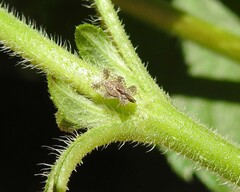 Leptocysta sexnebulosae0biocontrol_agent
- Outcome
- not suitable for releasee0
Not reportedMaterialGeneCompoundOrgan / stageSecond interactorSecond interactor roleTreatmentComparatorSettingDirectionValueQualifier
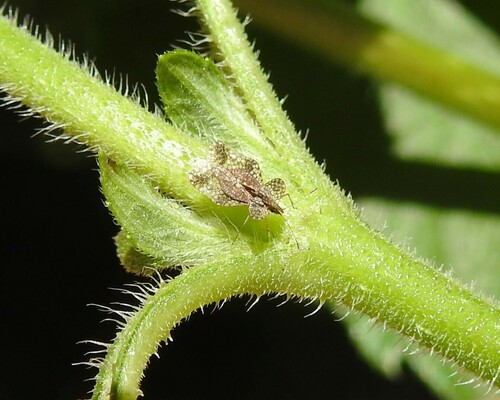
Organisms pictured · Representative pictures of the matched species, not figures from the paper.

Verbatim
e0“Host-specificity tests on the sap-sucking bug, Leptocysta sexnebulosa, indicated that this candidate was not suitable for release.”
e1“against Chromolaena odorata”
Title
L. W. Strathie; C. Zachariades http://www.ehs.cdu.edu.au/chromolaena/proceedings/fith/pdf/DevelopmentsSouthAfrica.pdf 2002
Other claims from this paper (11)
- Observation Host-specificity testing was completed for Actinote thalia pyrrha.
- Observation Host-specificity testing of Lixus aemulus was nearly complete and encouraging.
- Observation Host-specificity testing of Calycomyza sp. was nearly complete and encouraging.
- Observation The host range of A. thalia thalia was investigated.
- Method / resource Rearing techniques and biology were determined for Conotrachelus reticulatus.
- Method / resource Rearing techniques and biology were determined for Longitarsus horni.
- Observation Breeding Melanagromyza eupatoriella failed in several attempts.
- Recommendation Conotrachelus reticulatus was substituted for Melanagromyza eupatoriella because of a similar functional niche.
- Recommendation Polymorphomyia basilica may substitute for Cecidochares connexa, which seems incompatible with the South African C. odorata biotype.
- Observation Breeding Adaina sp. nov. was difficult.
- Observation Breeding Mescinia sp. nr parvula was difficult.