Claim · model-written summary
Bipolaris sorokiniana was the predominant pathogen causing common root and crown rot of wheat in the study.
- Taxon
- Wheat
 Triticum aestivumt0
- Interactor
- Bipolaris sorokiniana
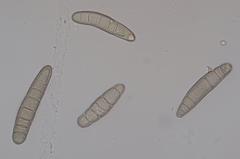 Bipolaris sorokinianae1pathogen
- Outcome
- common root and crown rote1
Not reportedMaterialGeneCompoundOrgan / stageSecond interactorSecond interactor roleTreatmentComparatorSettingDirectionValueQualifier
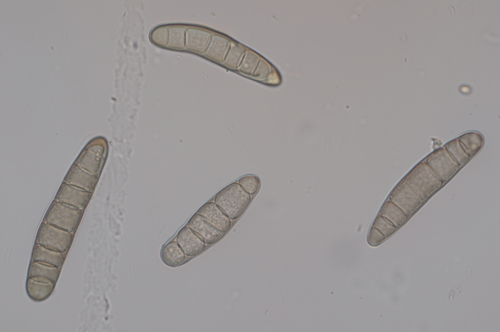
Organisms pictured · Representative pictures of the matched species, not figures from the paper.

Verbatim
t0“Wheat crown and root rotting fungi”
e1“the predominant pathogens implicated in causing common root and crown rot in this study was Bipolaris sorokiniana”
Title
Wheat crown and root rotting fungi in Moghan area, Northwest of Iran
Hajieghrari Behzad AFRICAN JOURNAL OF BIOTECHNOLOGY 2009. doi:10.5897/ajb09.1087
Other claims from this paper (7)
- Observation Fusarium culmorum, Fusarium Pseudograminearum and Gaeumannomyces/Phiallophora complex were the most widely distributed species in the Moghan wheat belt.
- Observation Fusarium solani, Fusarium crookwellence and Fusarium clamidosporum are wheat root associated Fusarium species.
- Observation Fusarium proliferatum, Fusarium poa and Fusarium udum are wheat root associated Fusarium species.
- Observation Fusarium babinda is a wheat root associated Fusarium species.
- Observation Bipolaris sorokiniana, Fusarium culmorum and Fusarium graminearum are active pathogens of wheat root tissue.
- Observation Fusarium crookwellence, Fusarium udum and Gaeumannomyces/Phiallophora complex are active pathogens of wheat root tissue.
- Observation Other isolated fungi are saprophytes that destroy root tissue without causing injury to wheat.