Claim · model-written summary
Bipolaris sorokiniana, Fusarium culmorum and Fusarium graminearum are active pathogens of wheat root tissue.
- Taxon
- Wheat
 Triticum aestivumt0
- Interactor
- B. sorokiniana
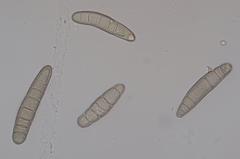 Bipolaris sorokinianae7pathogen
- Second interactor
- F. culmorum
 Fusarium culmorume7pathogen
- Outcome
- active pathogense7
- Qualifier
- F. graminearume7
Not reportedMaterialGeneCompoundOrgan / stageTreatmentComparatorSettingDirectionValue
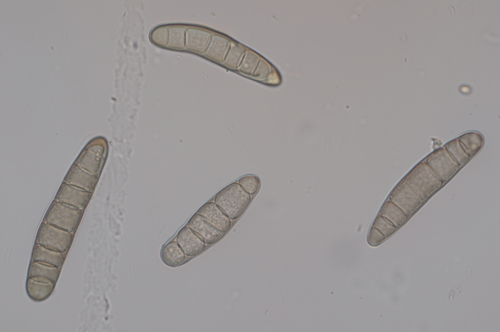
Organisms pictured · Representative pictures of the matched species, not figures from the paper.


Verbatim
t0“Wheat crown and root rotting fungi”
e7“B. sorokiniana, F. culmorum, F. graminearum, F. crookwellence, F. udum and Gaeumannomyces/Phiallophora complex are active pathogens”
Title
Wheat crown and root rotting fungi in Moghan area, Northwest of Iran
Hajieghrari Behzad AFRICAN JOURNAL OF BIOTECHNOLOGY 2009. doi:10.5897/ajb09.1087
Other claims from this paper (7)
- Observation Bipolaris sorokiniana was the predominant pathogen causing common root and crown rot of wheat in the study.
- Observation Fusarium culmorum, Fusarium Pseudograminearum and Gaeumannomyces/Phiallophora complex were the most widely distributed species in the Moghan wheat belt.
- Observation Fusarium solani, Fusarium crookwellence and Fusarium clamidosporum are wheat root associated Fusarium species.
- Observation Fusarium proliferatum, Fusarium poa and Fusarium udum are wheat root associated Fusarium species.
- Observation Fusarium babinda is a wheat root associated Fusarium species.
- Observation Fusarium crookwellence, Fusarium udum and Gaeumannomyces/Phiallophora complex are active pathogens of wheat root tissue.
- Observation Other isolated fungi are saprophytes that destroy root tissue without causing injury to wheat.