Claim · model-written summary
The two F1 hybrids resembled their reciprocal hybrids in most characteristics.
- Taxon
- C. pepo, C. moschata and C. maxima
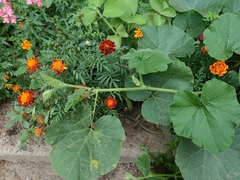 Cucurbita maxima
 Cucurbita moschata
 Cucurbita pepot0
- Outcome
- characteristics of these two F1 hybrids are similare0
- Comparator
- their reciprocal hybridse0
Not reportedMaterialGeneCompoundOrgan / stageInteractorInteractor roleSecond interactorSecond interactor roleTreatmentSettingDirectionValueQualifier
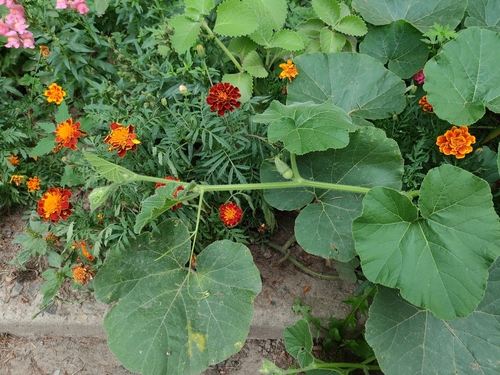
Organisms pictured · Representative pictures of the matched species, not figures from the paper.


Verbatim
e0“All characteristics of these two F1 hybrids are similar to those of their reciprocal hybrids except for a peculiar fact.”
t0“C. pepo, C. moschata and C. maxima”
Title
Hiroshi HAYASE Ikushugaku zasshi 1963. doi:10.1270/jsbbs1951.13.159
Other claims from this paper (9)
- Observation Usual 7 a.m. open flower pollination with Nishikikanro as pollen parent did not yield F1 hybrids.
- Intervention effect Storing preanthesis staminate flowers at 10°C enabled the difficult species crosses.
- Observation Two blossom end fruit shapes appeared from the same C. maxima × C. pepo fruit.
- Observation Connecticut Field showed high cross compatibility.
- Observation Nishikikanro showed low compatibility under usual open flower pollination.
- Observation Early 4 a.m. pollination produced C. pepo × C. moschata hybrids.
- Observation Preanthesis bud pollination produced C. pepo × C. maxima hybrids.
- Observation Pollination using stored pollen produced C. maxima × C. pepo hybrids.
- Observation Pollination using stored pollen produced C. moschata × C. papo hybrids.