Claim · model-written summary
Nitraria tangutorum showed consistently higher NSC and component concentrations in both organs than the other species.
- Taxon
- Nitraria tangutorum
 Nitraria tangutorume0
- Organ / stage
- both organse3
- Outcome
- NSC and component concentrationse3
- Direction
- highere3
- Comparator
- the other speciese3
Not reportedMaterialGeneCompoundInteractorInteractor roleSecond interactorSecond interactor roleTreatmentSettingValueQualifier
Organisms pictured · Representative pictures of the matched species, not figures from the paper.
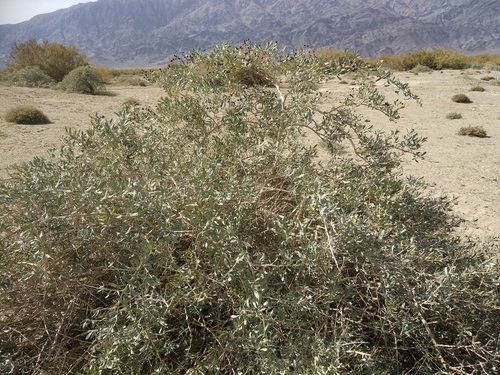
Verbatim
e0“three typical desert shrubs, including Haloxylon ammodendron, Nitraria tangutorum, and Reaumuria songarica, were investigated in the Zhundong open-pit coal mining area of Xinjiang, China”
e3“Furthermore, N. tangutorum consistently displayed higher NSC and component concentrations in both organs compared to the other species, while leaves universally contained higher concentrations than branches”
Title
Xiaotian Su; Benfeng Yin; Yongxin Zang; et al. BMC Plant Biology 2026. doi:10.1186/s12870-026-08238-x
Other claims from this paper (8)
- Association Leaves universally contained higher NSC and component concentrations than branches.
- Association NSC variability was generally higher in branches than in leaves for NSC, SS and ST.
- Association Reaumuria songarica exhibited the lowest overall variability.
- Association NSC variation in Haloxylon ammodendron was identified with heavy metals (Cr) as the primary environmental predictor.
- Association NSC variation in Nitraria tangutorum was identified with soil pH and nitrogen as the primary environmental predictors.
- Association NSC variation in Reaumuria songarica was identified with water and nutrient availability as the primary environmental predictor.
- Association Branch NSC was mainly associated with heavy metals.
- Association Leaf NSC was more closely associated with water and nitrogen and was particularly sensitive to nitrogen availability.