Claim · model-written summary
SCoT generated 79 loci.
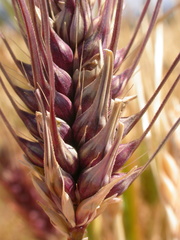 Hordeum
Not reportedMaterialGeneCompoundOrgan / stageInteractorInteractor roleSecond interactorSecond interactor roleTreatmentComparatorSettingDirection
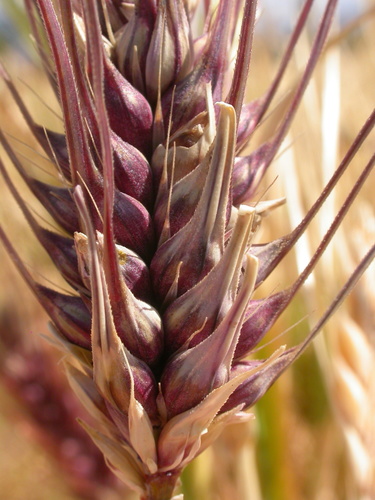
Organisms pictured · Representative pictures of the matched species, not figures from the paper.
Verbatim
e0“50 Hordeum genotypes”
e2“SCoT generated 79 loci, including 64 polymorphic loci”
Title
Using SCoT and SRAP Markers to Assess Genetic Diversity in Wild and Cultivated Hordeum Genotypes
Elena-Laura Contescu; Alina Gabriela Turcu; Florin Gabriel Anton Romanian Agricultural Research 2026. doi:10.59665/rar4326
Other claims from this paper (15)
- Observation Across both marker systems, 160 loci were scored.
- Observation Across both marker systems, 138 loci were polymorphic.
- Observation SCoT produced 64 polymorphic loci.
- Observation SRAP generated 81 loci.
- Observation SRAP produced 77 polymorphic loci.
- Observation SCoT polymorphism per primer ranged from 75% to 100%.
- Observation SCoT PIC values were between 0.12 and 0.26.
- Observation SRAP polymorphism per combination ranged from 85.7% to 100%.
- Observation SRAP PIC values were between 0.22 and 0.33.
- Observation UPGMA clustering of the combined matrix separated cultivated controls from wild accessions.
- Observation UPGMA also identified a distinct Hb4X subgroup within H. bulbosum.
- Observation PCA supported the same genetic structure as the clustering.
- Method / resource The high cophenetic correlation confirmed strong agreement between the dendrogram and the original dissimilarity matrix.
- Method / resource Amplification profiles were clear and reproducible.
- Method / resource The combined SCoT and SRAP approach provided a robust and practical framework for germplasm structuring and parent selection.