Claim · model-written summary
Highest density gave greatest arsenic uptake of 209.53 mg/m2.
- Taxon
- Juncus pauciflorus
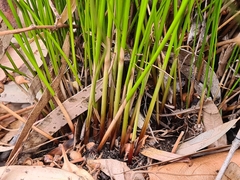 Juncus paucifloruse0
- Treatment
- higher density (44 plants/m2)e0
- Outcome
- total As uptakee0
- Direction
- greateste0
- Value
- 209.53 mg/m2e0
Not reportedMaterialGeneCompoundOrgan / stageInteractorInteractor roleSecond interactorSecond interactor roleComparatorSettingQualifier
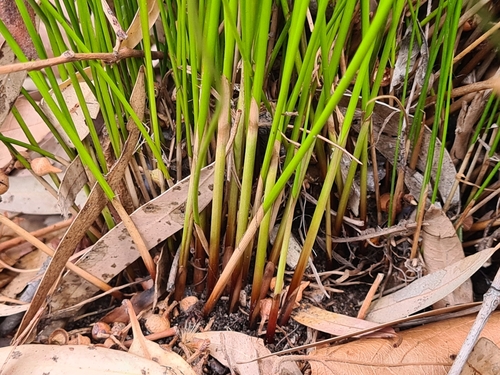
Organisms pictured · Representative pictures of the matched species, not figures from the paper.
Verbatim
e0“Juncus pauciflorus at a higher density (44 plants/m2) promoted the greatest biomass and total As uptake, 70.22 g/m2 and 209.53 mg/m2, respectively”
Title
Feizia Huslina; Leadin S. Khudur; Julie A. Besedin; et al. Sustainability 2026. doi:10.3390/su18021098
Other claims from this paper (8)
- Intervention effect Highest density gave greatest biomass of 70.22 g/m2.
- Association Plant density affected root-shoot arsenic partitioning.
- Intervention effect Higher density increased shoot arsenic uptake.
- Observation Root-to-shoot transfer factors remained above one across treatments.
- Intervention effect Planting density reduced soil arsenic to 8000–9500 mg/kg from 13,032 mg/kg.
- Observation Bacterial 16S and nifH gene abundance remained stable across treatments.
- Observation The highest-density soil had maximum total nitrogen at day 33.
- Observation Dense planting favored phytostabilisation whereas lower density favored phytoextraction.