Claim · model-written summary
Petunia-derived O. longipes heavily infected tobacco cv. Xanthi.
- Taxon
- tobacco
 Nicotiana tabacume0
- Material
- Xanthie0
- Interactor
- O. longipes
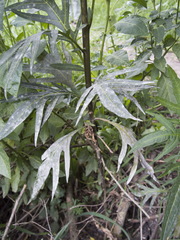 Golovinomyces longipese0pathogen
- Outcome
- heavily infectede0
Not reportedGeneCompoundOrgan / stageSecond interactorSecond interactor roleTreatmentComparatorSettingDirectionValueQualifier
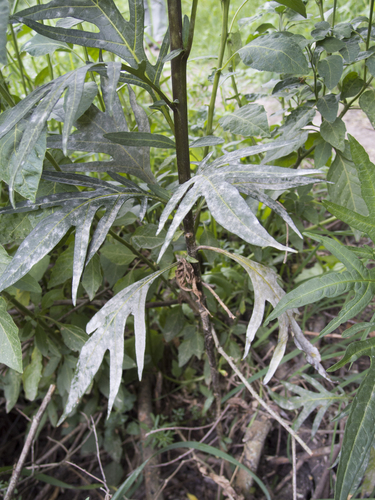
Organisms pictured · Representative pictures of the matched species, not figures from the paper.

Verbatim
e0“O. longipes from petunia heavily infected tobacco cv. Xanthi”
Title
Levente Kiss; Tünde Jankovics; Gábor M. Kovács; et al. Plant Disease 2008. doi:10.1094/pdis-92-5-0818
Other claims from this paper (7)
- Observation Oidium longipes caused rapidly spreading disease on greenhouse petunia in New Jersey.
- Observation Oidium longipes was found on petunia in Hungary and Austria.
- Observation Tested tomato and eggplant cultivars were moderately susceptible to O. longipes.
- Observation Field surveys in 2006 and 2007 did not find O. longipes outside New Jersey in the United States.
- Observation Powdery mildew on petunias from New York and Indiana was caused by Podosphaera xanthii.
- Observation Most examined European petunias with powdery mildew carried P. xanthii or Golovinomyces orontii.
- Observation One petunia plant or leaf could carry O. longipes, O. neolycopersici, G. orontii, and P. xanthii concurrently.