Claim · model-written summary
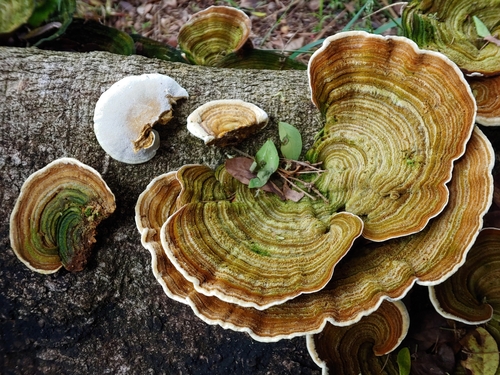
Sequence analysis identified FW 2B homology with Trametes polyzona.
- Taxon
- Trametes polyzona
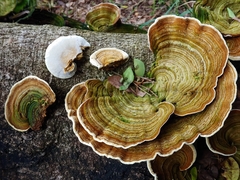 Trametes polyzonae0
- Material
- FW 2Be0
- Outcome
- homologye0
Not reportedGeneCompoundOrgan / stageInteractorInteractor roleSecond interactorSecond interactor roleTreatmentComparatorSettingDirectionValueQualifier
Organisms pictured · Representative pictures of the matched species, not figures from the paper.
Verbatim
e0“Sequence analysis revealed homology of BS 1A with Pseudochrobactrum sp., BK 1 with Bacillus cereus, and FW 2B with Trametes polyzona.”
Title
Desti Dian Amalina; Sudadi; Ningrum Meliyani Pratama; et al. International Journal of Design & Nature and Ecodynamics 2023. doi:10.18280/ijdne.180622
Other claims from this paper (9)
- Observation Selected isolates showed nitrogen fixation, phosphorus and potassium solubilization capabilities.
- Observation Selected isolates showed IAA production and antagonism against pathogens.
- Observation Sequence analysis identified BS 1A homology with Pseudochrobactrum sp.
- Observation Sequence analysis identified BK 1 homology with Bacillus cereus.
- Intervention effect B. cereus application significantly elevated melon biomass and nutrient acquisition.
- Intervention effect Pseudochrobactrum sp. application significantly elevated melon biomass and nutrient acquisition.
- Intervention effect T. polyzona application significantly elevated melon biomass and nutrient acquisition.
- Intervention effect B. cereus had the most pronounced melon growth-promoting effect, rivalling chemical fertilization.
- Recommendation The authors conclude that selected soil microorganisms could act as biostimulants to increase melon productivity.