Claim · model-written summary
Isolates of T. hamatum significantly reduced tomato Fusarium wilt by 30 to 65% compared with disease controls, but less consistently than the nonpathogenic Fusarium isolates.
- Taxon
- tomato
 Solanum lycopersicume0
- Treatment
- T. hamatume3
- Second interactor
- T. hamatum
 Trichoderma hamatume3biocontrol_agent
- Outcome
- Fusarium wilte3
- Direction
- reducede3
- Value
- 30 to 65% reductione3
- Qualifier
- not as consistently effectivee3
- Comparator
- disease controlse3
 Fusarium
Not reportedMaterialGeneCompoundOrgan / stageSetting
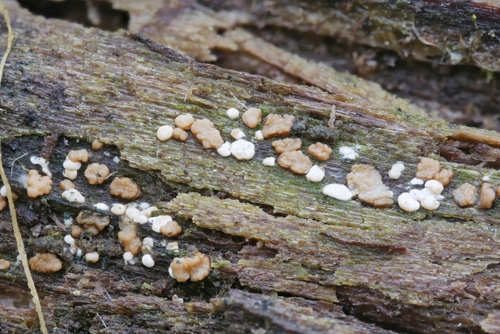
Organisms pictured · Representative pictures of the matched species, not figures from the paper.


Verbatim
e0“were tested for their efficacy in controlling Fusarium wilt of tomato”
e3“Other organisms, including isolates of G. virens, T. hamatum, P. fluorescens, and B. cepacia, also significantly reduced Fusarium wilt compared to disease controls (30 to 65% reduction), but were not as consistently effective as the nonpathogenic Fusarium isolates”
Title
Efficacy of Various Fungal and Bacterial Biocontrol Organisms for Control of Fusarium Wilt of Tomato
Robert P. Larkin; Deborah R. Fravel Plant Disease 1998. doi:10.1094/pdis.1998.82.9.1022
Other claims from this paper (11)
- Intervention effect Nonpathogenic F. oxysporum and F. solani isolates gave 50 to 80% reduction of tomato Fusarium wilt incidence in repeated tests.
- Intervention effect Isolates of G. virens significantly reduced tomato Fusarium wilt by 30 to 65% compared with disease controls, but less consistently than the nonpathogenic Fusarium isolates.
- Intervention effect Isolates of P. fluorescens significantly reduced tomato Fusarium wilt by 30 to 65% compared with disease controls, but less consistently than the nonpathogenic Fusarium isolates.
- Intervention effect Isolates of B. cepacia significantly reduced tomato Fusarium wilt by 30 to 65% compared with disease controls, but less consistently than the nonpathogenic Fusarium isolates.
- Intervention effect The commercial product SoilGard, containing G. virens, reduced tomato disease by 62 to 68%.
- Intervention effect The commercial product RootShield, containing T. harzianum, reduced tomato disease by 62 to 68%.
- Intervention effect Combinations of antagonists reduced tomato Fusarium wilt.
- Intervention effect Combinations of antagonists gave no significantly better control of tomato Fusarium wilt than nonpathogenic Fusarium antagonists alone.
- Intervention effect Several fungal and bacterial isolates from tomato roots and rhizosphere significantly reduced Fusarium wilt.
- Intervention effect Several fungal and bacterial isolates from tomato roots and rhizosphere were no more effective against Fusarium wilt than other previously identified biocontrol strains.
- Intervention effect Isolates of F. oxysporum and F. solani were equally effective against Fusarium wilt of watermelon and muskmelon.