Claim · model-written summary
Encapsulated Bryum rubens protonemata eventually grew faster than controls.
- Taxon
- B. rubens
 Ptychostomum rubense1
- Treatment
- encapsulated protonematae0
- Outcome
- growth ratee1
- Direction
- exceedinge0
- Comparator
- controlse0
Not reportedMaterialGeneCompoundOrgan / stageInteractorInteractor roleSecond interactorSecond interactor roleSettingValueQualifier
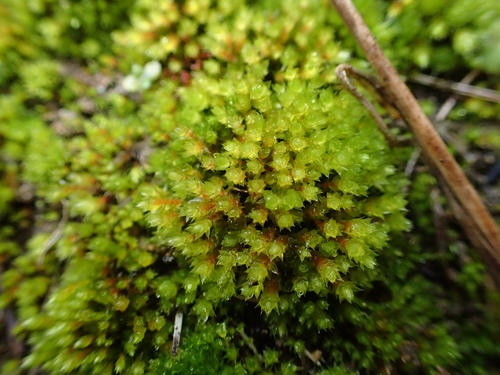
Organisms pictured · Representative pictures of the matched species, not figures from the paper.
Verbatim
e0“encapsulated protonemata eventually exceeding controls”
e1“growth rate of B. rubens”
Title
Some Mosses Survive Cryopreservation without Prior Pretreatment
Jane Burch The Bryologist 2003. doi:10.1639/0007-2745(2003)106[0270:smscwp]2.0.co;2
Other claims from this paper (8)
- Intervention effect Bryum rubens survived desiccation at 100% in both encapsulated and nonencapsulated samples.
- Intervention effect Ditrichum cornubicum survived desiccation at 40% in both sample types.
- Intervention effect After freezing, Bryum rubens survival was 90–100% across sample types.
- Intervention effect After freezing, Ditrichum cornubicum survival was 30% in nonencapsulated and 20% in encapsulated samples.
- Intervention effect Cyclodictyon laetevirens did not survive dehydration or freezing.
- Intervention effect Cryopreservation reduced the growth rate of Ditrichum cornubicum.
- Intervention effect Cryopreservation reduced Bryum rubens growth rate temporarily.
- Recommendation Natural desiccation tolerance was judged sufficient for some mosses to survive cryopreservation without pretreatment.