Claim · model-written summary
Trichoderma atroviride showed reprogramming of membrane transport and primary metabolism.
- Taxon
- Trichoderma atroviride
 Trichoderma atroviridee0
- Interactor
- Arabidopsis thaliana
 Arabidopsis thalianae0host
- Outcome
- reprogramming of membrane transport and primary metabolisme1
Not reportedMaterialGeneCompoundOrgan / stageSecond interactorSecond interactor roleTreatmentComparatorSettingDirectionValueQualifier
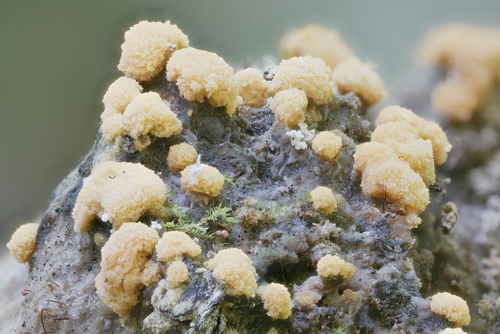
Organisms pictured · Representative pictures of the matched species, not figures from the paper.

Verbatim
e0“the interaction between Arabidopsis thaliana and the growth-promoting fungus Trichoderma atroviride”
e1“fungal reprogramming of membrane transport and primary metabolism”
Title
Evelyn Sánchez; Lorena Melet; José D. Fernández; et al. Plants 2026. doi:10.3390/plants15040533
Other claims from this paper (7)
- Observation At 72 h post-inoculation, widespread transcriptional changes occurred in both Arabidopsis thaliana and Trichoderma atroviride.
- Observation Arabidopsis showed host activation of hypoxia, stress and root development-related pathways.
- Observation Plant regulatory subnetworks contained ERF-, WRKY-, NAC- and DOF-centered modules linking hypoxia responses with developmental remodeling.
- Mechanism Putative fungal orthologs of developmental and stress-related TFs, such as CrzA, RME1, NsdC, PacC and RPN4, formed a regulatory core coordinating fungal transport and metabolic adjustment.
- Observation Arabidopsis sRNA changes were limited.
- Observation T. atroviride showed a strong induction of 20-22 nt sRNAs.
- Observation T. atroviride sRNAs included a small set of high-confidence sRNA-mRNA interactions targeting host genes involved in root function and immunity.