Claim · model-written summary
Outer cell layers had larger cells and spaces, some occluded by glycoprotein-containing material.
- Taxon
- Aeschynomene fluminensis
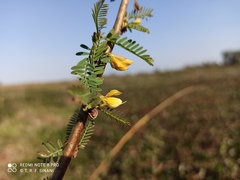 Aeschynomene fluminensist0
- Organ / stage
- Cell layerse0
- Outcome
- larger cells and intercellular spacese0
Not reportedMaterialGeneCompoundInteractorInteractor roleSecond interactorSecond interactor roleTreatmentComparatorSettingDirectionValueQualifier
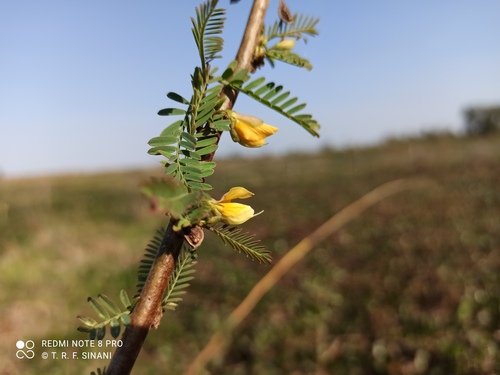
Organisms pictured · Representative pictures of the matched species, not figures from the paper.
Verbatim
e0“Cell layers external to these consisted of larger cells and intercellular spaces, with some spaces being occluded with an electron-dense material that contained a glycoprotein recognized by the monoclonal antibodies MAC236 and MAC265”
t0“Aeschynomene fluminensis”
Title
Stem and root nodules on the tropical wetland legume Aeschynomene fluminensis
M. F. LOUREIRO; E. K. JAMES; J. I. SPRENT; et al. New Phytologist 1995. doi:10.1111/j.1469-8137.1995.tb04330.x
Other claims from this paper (19)
- Intervention effect Flooding decreased root nodule number from 124 to 51 per plant.
- Intervention effect Flooding with stem nodulation increased shoot dry weight regardless of rhizobial isolate.
- Intervention effect Flooding with stem nodulation decreased root dry weight regardless of rhizobial isolate.
- Observation Stem nodules attach through an aerenchymatous collar.
- Observation Large stem air spaces are continuous with nodule aerenchyma and outer cortex.
- Observation Aerenchyma and spongy tissue connect flooded and non-flooded root nodules to root cortex spaces.
- Observation Stem and root nodules were ovoid and aeschynomenoid, with infected tissue lacking interstitial uninfected cells.
- Observation Root nodules resembled stem nodules structurally, but stem nodules were generally larger.
- Intervention effect Flooded root nodules were approximately twice as large as non-flooded root nodules.
- Observation Infected root and stem nodule cells contained one or two rod-shaped bacteroids per peribacteroid unit and prominent organelles.
- Observation Infection threads occurred in root nodules but not stem nodules.
- Observation Stem and root nodule cortices had an apparent oxygen diffusion barrier of small interlocking cells.
- Observation Glycoprotein occlusion abundance appeared similar across nodule types and treatments.
- Observation Stem nodules had intracellular glycoprotein vesicles adjacent to cell walls.
- Observation Nodule exteriors had flattened-cell epidermis with occasional lenticels.
- Observation Amyloplasts were common in lower stem and hypocotyl nodules but fewer in root nodules.
- Observation Upper stem nodules had chloroplasts throughout the cortex compared with deeper submerged stem nodules.
- Observation Root nodules lacked chloroplasts.
- Observation Undifferentiated plastids occurred mainly in lower stem nodules.