Claim · model-written summary
Nanosilicon at 5–50 mg/l inhibited the growth of Fusarium avenaceum and Bipolaris sorokiniana more than selenium nanoparticles did.
- Taxon
- wheat and corn
 Triticum aestivum
 Zea mays subsp. mayse6
- Treatment
- Nanosilicon at a concentration of 5–50 mg/le1
- Interactor
- Fusarium avenaceum
 Fusarium avenaceume1pathogen
- Second interactor
- Bipolaris sorokiniana
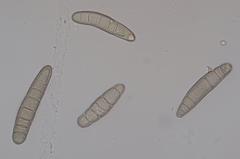 Bipolaris sorokinianae1pathogen
- Outcome
- growth of pathogenic fungie1
- Direction
- inhibitede1
- Qualifier
- to a greater extente1
- Comparator
- selenium nanoparticlese1
Not reportedMaterialGeneCompoundOrgan / stageSettingValue
Organisms pictured · Representative pictures of the matched species, not figures from the paper.


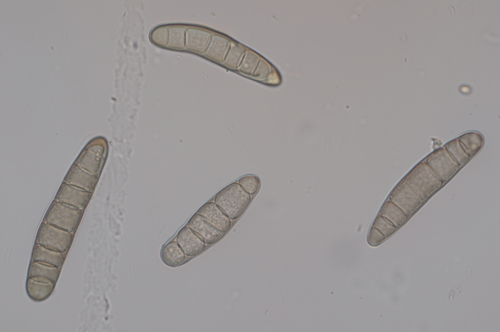
Verbatim
e1“Nanosilicon at a concentration of 5–50 mg/l inhibited the growth of pathogenic fungi Fusarium avenaceum and Bipolaris sorokiniana to a greater extent than selenium nanoparticles and was more effective than sodium silicofluoride”
e6“The influence of nanoparticles on wheat and corn seed germination and seedling growth was also studied”
Title
A. S. Kurnushko; T. A. Skuratovich; Yu. N. Bekish; et al. Proceedings of the National Academy of Sciences of Belarus Biological Series 2023. doi:10.29235/1029-8940-2023-68-4-332-344
Other claims from this paper (4)
- Intervention effect Selenium and silicon nanoparticles inhibited the growth of Fusarium avenaceum and Bipolaris sorokiniana.
- Intervention effect Fusarium avenaceum was more resistant to nanoselenium and sodium selenite than Bipolaris sorokiniana.
- Intervention effect Nanoparticles had practically no effect on seed germination and on the growth of wheat and corn seedlings.
- Intervention effect Sodium selenite and sodium silicofluoride at the same concentrations decreased seed germination energy and shoot and root dry weight of wheat and corn seedlings.