Claim · model-written summary
ZmYS1 transported phytosiderophore-bound zinc, copper and nickel into oocytes.
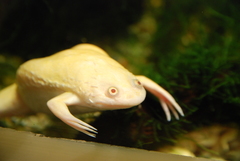 Xenopus
Not reportedMaterialCompoundOrgan / stageInteractorInteractor roleSecond interactorSecond interactor roleTreatmentComparatorSettingDirectionValue
Organisms pictured · Representative pictures of the matched species, not figures from the paper.

Verbatim
e0“transported various phytosiderophore-bound metals into oocytes, including zinc, copper, nickel, and, at a lower rate, also manganese and cadmium.”
e1“in Xenopus oocytes, where ZmYS1-dependent Fe-phytosiderophore transport”
Title
Gabriel Schaaf; Uwe Ludewig; Bülent E. Erenoglu; et al. Journal of Biological Chemistry 2004. doi:10.1074/jbc.m311799200
Other claims from this paper (9)
- Intervention effect Maize root Fe-phytosiderophore uptake was greater at acidic pH.
- Intervention effect Maize Fe-phytosiderophore uptake was sensitive to CCCP.
- Intervention effect Heterologous ZmYS1 Fe-phytosiderophore transport was stimulated at acidic pH.
- Intervention effect Heterologous ZmYS1 transport was sensitive to CCCP.
- Mechanism Transport depends on proton cotransport and membrane potential, permitting transport at alkaline pH.
- Intervention effect ZmYS1 complemented the zinc uptake-defective zap1 yeast growth defect.
- Observation ZmYS1 transported phytosiderophore-bound manganese and cadmium at a lower rate.
- Observation ZmYS1 also transported nicotianamine complexes of Ni(II), Fe(II) and Fe(III).
- Mechanism The biochemical properties suggest a novel YS1 role in plant heavy metal homeostasis.