Abstract
The effect of tea plant Camellia sinensis induced by exogenous methyl jasmonate (MJA) on lipoxygenase (LOX), polyphenol oxidase (PPO) and proteinase inhibitor (PI) activity in the leaves of tea plants, as well as the growth and midgut proteinase activity of the geometrid Ectropis obliqua larvae were studied. MJA significantly induced LOX, PPO and PI activity in leaves of tea plants. When geometrid larvae have fed on leaves of tea plants treated with MJA, the activities of the high alkaline trypsin-like enzyme and chymotrypsin-like enzyme in their midgut were significantly inhibited, but the activities of the low alkaline trypsin-like enzyme in their midgut were unaffected, leading to imbalance between different types of proteinase activity in the midgut of the larvae and in turn, the growth were inhibited. These chains of response may be an important mechanism of the direct resistance induced by MJA-treatment of tea plant on geometrid larvae.
Abstract from the paper’s OpenAlex record, shown for indexing and research. Copyright remains with the authors or the publisher.
The text the model read, with the source record’s inline markup (italics, sub- and superscripts) rendered and its character entities decoded; quote offsets refer to the raw text.
Claims 5
Claim · model-written summary
MJA significantly induced LOX, PPO and PI activities in tea leaves.
- Taxon
- tea plant Camellia sinensis
 Camellia sinensise1
- Organ / stage
- leavese0
- Treatment
- MJAe0
- Outcome
- LOX, PPO and PI activitye0
- Direction
- inducede0
Not reportedComparator
Organisms pictured · Representative pictures of the matched species, not figures from the paper.

Verbatim
e0“MJA significantly induced LOX, PPO and PI activity in leaves of tea plants.”
e1“tea plant Camellia sinensis induced by exogenous methyl jasmonate (MJA)”
Claim · model-written summary
Larvae feeding on MJA-treated tea leaves had significantly inhibited high alkaline trypsin-like and chymotrypsin-like midgut enzyme activities.
- Taxon
- tea plantse0
- Treatment
- treated with MJAe0
- Interactor
- geometrid Ectropis obliqua
 Ectropis obliquae1herbivore
- Outcome
- activities of the high alkaline trypsin-like enzyme and chymotrypsin-like enzyme in their midgute0
- Direction
- inhibitede0
Not reportedComparator
Organisms pictured · Representative pictures of the matched species, not figures from the paper.
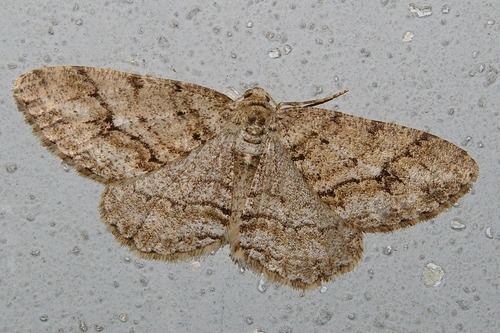
Verbatim
e0“When geometrid larvae have fed on leaves of tea plants treated with MJA, the activities of the high alkaline trypsin-like enzyme and chymotrypsin-like enzyme in their midgut were significantly inhibited”
e1“geometrid Ectropis obliqua larvae”
Claim · model-written summary
The larvae’s low alkaline trypsin-like midgut enzyme activity was unaffected.
- Taxon
- tea plantse1
- Treatment
- treated with MJAe1
- Interactor
- geometrid Ectropis obliquaEctropis obliquae2herbivore
- Outcome
- activities of the low alkaline trypsin-like enzyme in their midgute0
- Direction
- unaffectede0
Not reportedComparator
Organisms pictured · Representative pictures of the matched species, not figures from the paper.
Verbatim
e0“but the activities of the low alkaline trypsin-like enzyme in their midgut were unaffected”
e1“When geometrid larvae have fed on leaves of tea plants treated with MJA”
e2“geometrid Ectropis obliqua larvae”
Claim · model-written summary
Larval growth was inhibited after feeding on MJA-treated tea leaves.
- Taxon
- tea plantse1
- Treatment
- treated with MJAe1
- Interactor
- geometrid Ectropis obliquaEctropis obliquae2herbivore
- Outcome
- growthe0
- Direction
- inhibitede0
Not reportedComparator
Organisms pictured · Representative pictures of the matched species, not figures from the paper.
Verbatim
e0“the growth were inhibited”
e1“When geometrid larvae have fed on leaves of tea plants treated with MJA”
e2“geometrid Ectropis obliqua larvae”
Claim · model-written summary
The authors propose that these enzyme responses contribute to induced tea resistance against geometrid larvae.
- Taxon
- tea plante0
- Interactor
- geometrid Ectropis obliquaEctropis obliquae1herbivore
- Outcome
- direct resistancee0
- Qualifier
- These chains of response may be an important mechanisme0
Organisms pictured · Representative pictures of the matched species, not figures from the paper.
Verbatim
e0“These chains of response may be an important mechanism of the direct resistance induced by MJA-treatment of tea plant on geometrid larvae.”
e1“geometrid Ectropis obliqua larvae”
The same questions in other papers
(-)-methyl jasmonate · physiology: antioxidant enzymes · Camellia sinensis (black tea)Results agree
2 papers in the same direction as this paper
- positive
- positive
Claims are grouped by organism, treatment and what was measured or targeted. A paper counts as positive when any of its claims in the group is positive.