Abstract
The inoculation of Bacillus thuringiensis applied as cells in suspension or encapsulated in combination or not with an arbuscular mycorrhizal (AM) fungus Glomus occultum was examined in a microcosm system on Trifolium repens plants. Succinate dehydrogenase (SDH) and alkaline phosphatase (ALP-ase) fungal activities, as index of active fungal metabolism, were determined in single and dual inoculated plants. The efficiency of G. occultum in increasing plant growth, nutrient content and nodulation was maximum when co-inoculated with the bacterium particularly in the encapsulated form. The percentage increases in growth and nutrition in AM plants co-inoculated with the encapsulated bacterium were 199 (shoot), 170 (N) and 199 (P) compared with plants inoculated with G. occultum only. Dual inoculation with these locally isolated microorganisms enhanced plant capacity for nutrient uptake. The mycorrhizal responses were correlated with the number of nodules and the amount of root cortex that became mycorrhizal. The bacterium, independent of the form of application, increased the extent of fungal myceliurn showing ALP-ase activity. The impact of B. thuringiensis was greater on the ALP-ase activity in the mycelium than in the arbuscules. This led to the hypothesis that the highest nodulation induced by the bacterium would interact with ALP-ase arbuscular activity. The increased metabolic mycelial ALP-ase activity as affected by B. thuringiensis, improved N and P content in shoots of co-inoculated plants. Furthermore, B. thuringiensis increased the inoculum potential of G. occultum from 129% (suspension) to ·147% (encapsulated). Cell encapsulation was the treatment that particularly improved the efficiency of the bacterial inoculum when associated with the mycorrhizal fungus. Thus, encapsulation can be considered as a good form for bacterial inoculum application.
Abstract from the paper’s OpenAlex record, shown for indexing and research. Copyright remains with the authors or the publisher. Read at the source ↗
The text the model read, with the source record’s inline markup (italics, sub- and superscripts) rendered and its character entities decoded; quote offsets refer to the raw text.
Claims 12
Claim · model-written summary
Co-inoculation with the bacterium, particularly encapsulated, gave the maximum increase in plant growth, nutrient content and nodulation.
- Taxon
- Trifolium repens
 Trifolium repense0
- Treatment
- co-inoculated with the bacteriume1
- Interactor
- G. occultumParaglomus occultume1symbiont
- Outcome
- plant growth, nutrient content and nodulatione1
- Direction
- maximume1
Not reportedComparator
Organisms pictured · Representative pictures of the matched species, not figures from the paper.

Verbatim
e0“an arbuscular mycorrhizal (AM) fungus Glomus occultum was examined in a microcosm system on Trifolium repens plants”
e1“The efficiency of G. occultum in increasing plant growth, nutrient content and nodulation was maximum when co-inoculated with the bacterium particularly in the encapsulated form”
Claim · model-written summary
Encapsulated bacterium co-inoculated with G. occultum increased shoot growth by 199% relative to G. occultum alone.
- Taxon
- Trifolium repensTrifolium repense0
- Treatment
- co-inoculated with the encapsulated bacteriume2
- Interactor
- G. occultumParaglomus occultume2symbiont
- Outcome
- growthe2
- Direction
- increasese2
- Value
- 199e2
- Qualifier
- shoote2
- Comparator
- plants inoculated with G. occultum onlye2
Organisms pictured · Representative pictures of the matched species, not figures from the paper.
Verbatim
e0“an arbuscular mycorrhizal (AM) fungus Glomus occultum was examined in a microcosm system on Trifolium repens plants”
e2“The percentage increases in growth and nutrition in AM plants co-inoculated with the encapsulated bacterium were 199 (shoot), 170 (N) and 199 (P) compared with plants inoculated with G. occultum only”
Claim · model-written summary
Encapsulated bacterium co-inoculated with G. occultum increased shoot N content by 170% relative to G. occultum alone.
- Taxon
- Trifolium repensTrifolium repense0
- Treatment
- co-inoculated with the encapsulated bacteriume2
- Interactor
- G. occultumParaglomus occultume2symbiont
- Outcome
- nutritione2
- Direction
- increasese2
- Value
- 170e2
- Qualifier
- Ne2
- Comparator
- plants inoculated with G. occultum onlye2
Organisms pictured · Representative pictures of the matched species, not figures from the paper.
Verbatim
e0“an arbuscular mycorrhizal (AM) fungus Glomus occultum was examined in a microcosm system on Trifolium repens plants”
e2“The percentage increases in growth and nutrition in AM plants co-inoculated with the encapsulated bacterium were 199 (shoot), 170 (N) and 199 (P) compared with plants inoculated with G. occultum only”
Claim · model-written summary
Encapsulated bacterium co-inoculated with G. occultum increased shoot P content by 199% relative to G. occultum alone.
- Taxon
- Trifolium repensTrifolium repense0
- Treatment
- co-inoculated with the encapsulated bacteriume2
- Interactor
- G. occultumParaglomus occultume2symbiont
- Outcome
- nutritione2
- Direction
- increasese2
- Value
- 199e2
- Qualifier
- Pe2
- Comparator
- plants inoculated with G. occultum onlye2
Organisms pictured · Representative pictures of the matched species, not figures from the paper.
Verbatim
e0“an arbuscular mycorrhizal (AM) fungus Glomus occultum was examined in a microcosm system on Trifolium repens plants”
e2“The percentage increases in growth and nutrition in AM plants co-inoculated with the encapsulated bacterium were 199 (shoot), 170 (N) and 199 (P) compared with plants inoculated with G. occultum only”
Claim · model-written summary
Dual inoculation with the locally isolated microorganisms enhanced nutrient uptake capacity of the plant.
- Taxon
- Trifolium repensTrifolium repense0
- Treatment
- Dual inoculation with these locally isolated microorganismse3
- Outcome
- plant capacity for nutrient uptakee3
- Direction
- enhancede3
Not reportedComparator
Organisms pictured · Representative pictures of the matched species, not figures from the paper.
Verbatim
e0“an arbuscular mycorrhizal (AM) fungus Glomus occultum was examined in a microcosm system on Trifolium repens plants”
e3“Dual inoculation with these locally isolated microorganisms enhanced plant capacity for nutrient uptake”
Claim · model-written summary
Mycorrhizal responses were correlated with the number of nodules and the amount of root cortex that became mycorrhizal.
- Taxon
- Trifolium repensTrifolium repense0
- Organ / stage
- root cortexe4
- Outcome
- mycorrhizal responsese4
Not reportedDirection
Organisms pictured · Representative pictures of the matched species, not figures from the paper.
Verbatim
e0“an arbuscular mycorrhizal (AM) fungus Glomus occultum was examined in a microcosm system on Trifolium repens plants”
e4“The mycorrhizal responses were correlated with the number of nodules and the amount of root cortex that became mycorrhizal”
Claim · model-written summary
The bacterium increased the extent of fungal mycelium showing ALP-ase activity in G. occultum.
- Taxon
- Trifolium repensTrifolium repense0
- Treatment
- The bacteriume5
- Interactor
- Glomus occultumParaglomus occultume0symbiont
- Outcome
- extent of fungal myceliurn showing ALP-ase activitye5
- Direction
- increasede5
Not reportedComparator
Organisms pictured · Representative pictures of the matched species, not figures from the paper.
Verbatim
e0“an arbuscular mycorrhizal (AM) fungus Glomus occultum was examined in a microcosm system on Trifolium repens plants”
e5“The bacterium, independent of the form of application, increased the extent of fungal myceliurn showing ALP-ase activity”
Claim · model-written summary
Bacillus thuringiensis had a greater impact on ALP-ase activity in the mycelium of G. occultum than in the arbuscules.
- Taxon
- Trifolium repensTrifolium repense0
- Treatment
- B. thuringiensise6
- Interactor
- Glomus occultumParaglomus occultume0symbiont
- Second interactor
- B. thuringiensis
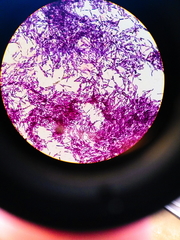 Bacillus thuringiensise6symbiont
- Outcome
- ALP-ase activity in the myceliume6
- Direction
- greatere6
- Comparator
- arbusculese6
Organisms pictured · Representative pictures of the matched species, not figures from the paper.
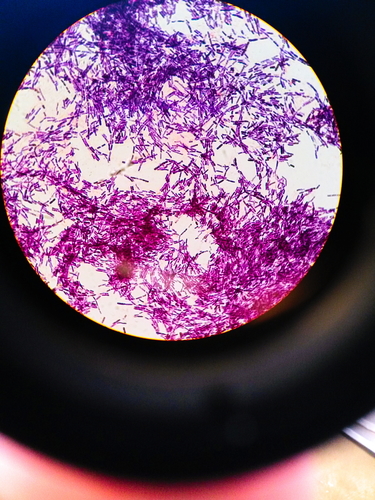
Verbatim
e0“an arbuscular mycorrhizal (AM) fungus Glomus occultum was examined in a microcosm system on Trifolium repens plants”
e6“The impact of B. thuringiensis was greater on the ALP-ase activity in the mycelium than in the arbuscules”
Claim · model-written summary
Bacillus thuringiensis improved N and P content in shoots of co-inoculated plants, with increased mycelial ALP-ase activity.
- Taxon
- Trifolium repensTrifolium repense0
- Organ / stage
- shootse7
- Treatment
- B. thuringiensise7
- Outcome
- N and P contente7
- Direction
- improvede7
- Qualifier
- increased metabolic mycelial ALP-ase activitye7
Not reportedComparator
Organisms pictured · Representative pictures of the matched species, not figures from the paper.
Verbatim
e0“an arbuscular mycorrhizal (AM) fungus Glomus occultum was examined in a microcosm system on Trifolium repens plants”
e7“The increased metabolic mycelial ALP-ase activity as affected by B. thuringiensis, improved N and P content in shoots of co-inoculated plants”
Claim · model-written summary
Bacillus thuringiensis increased the inoculum potential of G. occultum from 129% with suspended inoculum to 147% with encapsulated inoculum.
- Taxon
- Trifolium repensTrifolium repense0
- Treatment
- B. thuringiensise1
- Interactor
- G. occultumParaglomus occultume1symbiont
- Outcome
- inoculum potential of G. occultume1
- Direction
- increasede1
- Value
- 129%e1
- Qualifier
- 147% (encapsulated)e1
Not reportedComparator
Organisms pictured · Representative pictures of the matched species, not figures from the paper.
Verbatim
e0“an arbuscular mycorrhizal (AM) fungus Glomus occultum was examined in a microcosm system on Trifolium repens plants”
e1“Furthermore, B. thuringiensis increased the inoculum potential of G. occultum from 129% (suspension) to ·147% (encapsulated)”
Claim · model-written summary
Encapsulation can be considered a good form for bacterial inoculum application.
- Taxon
- Trifolium repensTrifolium repense0
- Treatment
- encapsulatione1
- Outcome
- good form for bacterial inoculum applicatione1
Organisms pictured · Representative pictures of the matched species, not figures from the paper.
Verbatim
e0“an arbuscular mycorrhizal (AM) fungus Glomus occultum was examined in a microcosm system on Trifolium repens plants”
e1“Thus, encapsulation can be considered as a good form for bacterial inoculum application”
Claim · model-written summary
Cell encapsulation particularly improved the efficiency of the bacterial inoculum when associated with the mycorrhizal fungus.
- Taxon
- Trifolium repensTrifolium repense0
- Treatment
- Cell encapsulatione1
- Outcome
- efficiency of the bacterial inoculume1
- Direction
- improvede1
- Qualifier
- when associated with the mycorrhizal funguse1
Not reportedComparator
Organisms pictured · Representative pictures of the matched species, not figures from the paper.
Verbatim
e0“an arbuscular mycorrhizal (AM) fungus Glomus occultum was examined in a microcosm system on Trifolium repens plants”
e1“Cell encapsulation was the treatment that particularly improved the efficiency of the bacterial inoculum when associated with the mycorrhizal fungus”
The same questions in other papers
inoculation · nutrient: content · Trifolium repens (white clover)Results agree
10 papers in the same direction as this paper
- positive
- positive
- positive
7 papers more in this group
See all 11 papers →Claims are grouped by organism, treatment and what was measured or targeted. A paper counts as positive when any of its claims in the group is positive.