Abstract
Summary Comparisons are made of the anatomy of the mature parts of roots of the grasses Lolium perenne , Dactylis glomerata , Glyceria fluitans , and Alopecurus pratensis . Noteworthy features include a well‐marked exodermis and a subjacent layer of sclerenchyma in Glyceria ; the greater lignification of the Dactylis root as compared with Lolium ; the greater total cross‐sectional area of metaxylem vessels in Dactylis compared with the other three species; and the degree of development of lysigenous lacunae, which was least in Dactylis and greatest in Glyceria and Alopecurus . Structural similarities are noted between the roots of Glyceria and Oryza (rice). The structure of the cortex, particularly the development of lysigenous lacunae, is discussed in relation to habitat of the plant, aeration of the root, and absorption of water and nutrients. The anatomy of mature parts of roots of the legumes Trifolium repens , T. pratense , and Lotus uliginosus , and of the mature Lotus nodule are briefly described. T. repens and T. pratense had considerable secondary growth, a periderm developed in the pericycle, and the cortex and endodermis were sloughed off. Lotus had less secondary growth and retained its cortex for longer.
Abstract from the paper’s OpenAlex record, shown for indexing and research. Copyright remains with the authors or the publisher. Read at the source ↗
The text the model read, with the source record’s inline markup (italics, sub- and superscripts) rendered and its character entities decoded; quote offsets refer to the raw text.
Claims 8
Claim · model-written summary
Glyceria roots had a well-marked exodermis and subjacent sclerenchyma.
- Outcome
- well‐marked exodermis and a subjacent layer of sclerenchymae0
Organisms pictured · Representative pictures of the matched species, not figures from the paper.

Verbatim
e0“a well‐marked exodermis and a subjacent layer of sclerenchyma in Glyceria”
Claim · model-written summary
Dactylis roots were more lignified than Lolium roots.
 Dactylis
Organisms pictured · Representative pictures of the matched species, not figures from the paper.

Verbatim
e0“the greater lignification of the Dactylis root as compared with Lolium”
Claim · model-written summary
Dactylis had a greater total metaxylem-vessel cross-sectional area than the other three grass species.
- Outcome
- total cross‐sectional area of metaxylem vesselse0
- Direction
- greatere0
- Comparator
- the other three speciese0
Organisms pictured · Representative pictures of the matched species, not figures from the paper.
Verbatim
e0“the greater total cross‐sectional area of metaxylem vessels in Dactylis compared with the other three species”
Claim · model-written summary
Lysigenous lacunae were least developed in Dactylis.
Organisms pictured · Representative pictures of the matched species, not figures from the paper.
Verbatim
e0“the degree of development of lysigenous lacunae, which was least in Dactylis and greatest in Glyceria and Alopecurus”
Claim · model-written summary
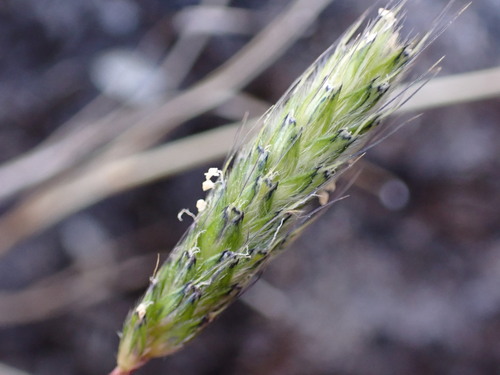
Lysigenous lacunae were most developed in Glyceria and Alopecurus.
- Taxon
- Glyceria and Alopecurus
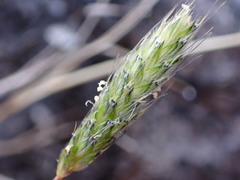 Alopecurus
 Glyceriae0
- Outcome
- degree of development of lysigenous lacunaee0
- Direction
- greateste0
Organisms pictured · Representative pictures of the matched species, not figures from the paper.
Verbatim
e0“the degree of development of lysigenous lacunae, which was least in Dactylis and greatest in Glyceria and Alopecurus”
Claim · model-written summary
Glyceria and Oryza roots showed structural similarities.
Organisms pictured · Representative pictures of the matched species, not figures from the paper.
Verbatim
e0“Structural similarities are noted between the roots of Glyceria and Oryza (rice).”
Claim · model-written summary
Trifolium repens and T. pratense showed secondary growth and pericycle periderm, with cortex and endodermis shed.
- Taxon
- T. repens and T. pratense
 Trifolium repens
 Trifolium pratensee0
- Outcome
- considerable secondary growth, a periderm developed in the pericycle, and the cortex and endodermis were sloughed offe0
Organisms pictured · Representative pictures of the matched species, not figures from the paper.


Verbatim
e0“T. repens and T. pratense had considerable secondary growth, a periderm developed in the pericycle, and the cortex and endodermis were sloughed off.”
Claim · model-written summary
Lotus showed less secondary growth and retained its cortex longer.
 Lotus
Organisms pictured · Representative pictures of the matched species, not figures from the paper.

Verbatim
e0“Lotus had less secondary growth and retained its cortex for longer.”