Abstract
Brown spot (BS), caused by the fungus Bipolaris oryzae, is one of the most important diseases contracted by rice. We investigated the effect of magnesium (Mg) on the development of BS, caused by Bipolaris oryzae, and the effects of disease development on the photosynthetic performance of rice (Oryza sativa L.) plants (cv. Metica-1) grown in nutrient solutions containing 0.25 or 4.0 mM of Mg. Assessments of BS severity, leaf Mg and pigment concentrations (total chlorophylls and carotenoids), were carried out at 120 h after inoculation, in addition to gas exchange parameters,. Higher leaf concentration of Mg was observed in plants supplied with 4.0 mM Mg than in those supplied with 0.25 mM. The increase in leaf Mg was accompanied by a decrease in BS severity, higher concentration of total chlorophyll and better photosynthetic performance. Plants supplied with 4.0 mM Mg had higher average values for carbon assimilation, stomatal conductance and internal leaf CO2 concentration when compared with plants supplied with 0.25 mM Mg. Conversely, the concentration of carotenoids was lower in plants supplied with the higher Mg rate. These results suggest that Mg suppresses disease severity and preserves photosynthetic performance by allowing for better stomatal conductance and, consequently, greater availability of CO2 at the carboxylation sites.
Abstract from the paper’s OpenAlex record; open copy licensed cc-by. Read at the source ↗
The text the model read, with the source record’s inline markup (italics, sub- and superscripts) rendered and its character entities decoded; quote offsets refer to the raw text.
Claims 7
Claim · model-written summary
Plants supplied with 4.0 mM Mg had higher leaf Mg concentration than plants supplied with 0.25 mM Mg.
- Taxon
- Oryza sativa L.
 Oryza sativae1
- Material
- Metica-1e1
- Treatment
- 4.0 mM of Mge1
- Outcome
- leaf concentration of Mge2
- Direction
- Highere2
- Comparator
- 0.25 mMe2
- Setting
- nutrient solutionse1
Organisms pictured · Representative pictures of the matched species, not figures from the paper.

Verbatim
e1“rice (Oryza sativa L.) plants (cv. Metica-1) grown in nutrient solutions containing 0.25 or 4.0 mM of Mg”
e2“Higher leaf concentration of Mg was observed in plants supplied with 4.0 mM Mg than in those supplied with 0.25 mM”
Claim · model-written summary
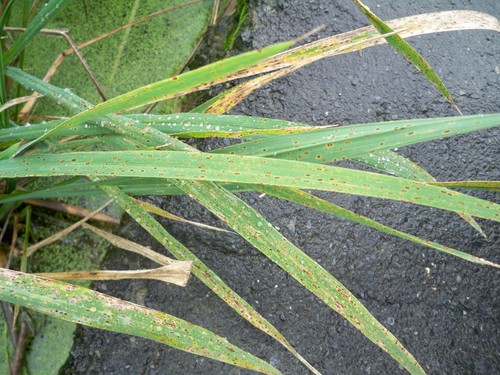
Increased leaf Mg was associated with lower brown spot severity caused by Bipolaris oryzae.
- Taxon
- Oryza sativa L.Oryza sativae1
- Interactor
- Bipolaris oryzae
 Bipolaris oryzaee0pathogen
- Compound
- leaf Mge3
- Outcome
- BS severitye3
- Direction
- decreasee3
Organisms pictured · Representative pictures of the matched species, not figures from the paper.
Verbatim
e0“Brown spot (BS), caused by the fungus Bipolaris oryzae”
e1“rice (Oryza sativa L.) plants (cv. Metica-1) grown in nutrient solutions containing 0.25 or 4.0 mM of Mg”
e3“The increase in leaf Mg was accompanied by a decrease in BS severity, higher concentration of total chlorophyll and better photosynthetic performance”
Claim · model-written summary
Increased leaf Mg was associated with higher total chlorophyll concentration in rice.
- Taxon
- Oryza sativa L.Oryza sativae1
- Compound
- leaf Mge3
- Outcome
- total chlorophylle3
- Direction
- highere3
Organisms pictured · Representative pictures of the matched species, not figures from the paper.
Verbatim
e1“rice (Oryza sativa L.) plants (cv. Metica-1) grown in nutrient solutions containing 0.25 or 4.0 mM of Mg”
e3“The increase in leaf Mg was accompanied by a decrease in BS severity, higher concentration of total chlorophyll and better photosynthetic performance”
Claim · model-written summary
Increased leaf Mg was associated with better photosynthetic performance in rice.
- Taxon
- Oryza sativa L.Oryza sativae1
- Compound
- leaf Mge3
- Outcome
- photosynthetic performancee3
- Direction
- bettere3
Organisms pictured · Representative pictures of the matched species, not figures from the paper.
Verbatim
e1“rice (Oryza sativa L.) plants (cv. Metica-1) grown in nutrient solutions containing 0.25 or 4.0 mM of Mg”
e3“The increase in leaf Mg was accompanied by a decrease in BS severity, higher concentration of total chlorophyll and better photosynthetic performance”
Claim · model-written summary
Plants supplied with 4.0 mM Mg had higher carbon assimilation, stomatal conductance and internal leaf CO2 concentration than plants supplied with 0.25 mM Mg.
- Taxon
- Oryza sativa L.Oryza sativae1
- Treatment
- 4.0 mM Mge4
- Outcome
- carbon assimilation, stomatal conductance and internal leaf CO2 concentratione4
- Direction
- highere4
- Comparator
- 0.25 mM Mge4
Organisms pictured · Representative pictures of the matched species, not figures from the paper.
Verbatim
e1“rice (Oryza sativa L.) plants (cv. Metica-1) grown in nutrient solutions containing 0.25 or 4.0 mM of Mg”
e4“Plants supplied with 4.0 mM Mg had higher average values for carbon assimilation, stomatal conductance and internal leaf CO2 concentration when compared with plants supplied with 0.25 mM Mg”
Claim · model-written summary
Higher Mg supply lowered the concentration of carotenoids in rice.
- Taxon
- Oryza sativa L.Oryza sativae1
- Treatment
- higher Mg ratee5
- Outcome
- concentration of carotenoidse5
- Direction
- lowere5
- Comparator
- 0.25 mM Mge4
Organisms pictured · Representative pictures of the matched species, not figures from the paper.
Verbatim
e1“rice (Oryza sativa L.) plants (cv. Metica-1) grown in nutrient solutions containing 0.25 or 4.0 mM of Mg”
e4“Plants supplied with 4.0 mM Mg had higher average values for carbon assimilation, stomatal conductance and internal leaf CO2 concentration when compared with plants supplied with 0.25 mM Mg”
e5“the concentration of carotenoids was lower in plants supplied with the higher Mg rate”
Claim · model-written summary
Mg suppresses brown spot severity in rice by allowing better stomatal conductance and greater CO2 availability at the carboxylation sites.
- Taxon
- Oryza sativa L.Oryza sativae1
- Compound
- Mge6
- Outcome
- disease severitye6
- Qualifier
- by allowing for better stomatal conductancee6
Organisms pictured · Representative pictures of the matched species, not figures from the paper.
Verbatim
e1“rice (Oryza sativa L.) plants (cv. Metica-1) grown in nutrient solutions containing 0.25 or 4.0 mM of Mg”
e6“These results suggest that Mg suppresses disease severity and preserves photosynthetic performance by allowing for better stomatal conductance and, consequently, greater availability of CO2 at the carboxylation sites”
The same questions in other papers
magnesium atom · physiology: photosynthesis · Oryza sativa (rice)Positive and negative results
4 papers in the same direction as this paper · 2 in the opposite direction
- no effect
- negative
- positive
3 papers more in this group
See all 7 papers →Claims are grouped by organism, treatment and what was measured or targeted. A paper counts as positive when any of its claims in the group is positive.