Abstract
Twenty rhizobacterial cultures including Pseudomonas fluorescens, Enterobacter agglomerans and Bacillus sp. were tested under in vitro and in vivo conditions to evaluate their efficacy in inhibiting Pythium myriotylum and reducing the incidence of soft rot disease in ginger (Zingiber officinale). Under in vitro conditions, 19 of the tested rhizobacterial cultures significantly inhibited P. myriotylum. Evaluation of these cultures under in vivo conditions indicated that seven of the isolates were effective in suppressing the pathogen. Five of the isolates when inoculated along with Glomus sp. (vesicular arbuscular mycorrhizae) also enhanced root development without disease incidence.
Abstract from the paper’s OpenAlex record, shown for indexing and research. Copyright remains with the authors or the publisher. Read at the source ↗
The text the model read, with the source record’s inline markup (italics, sub- and superscripts) rendered and its character entities decoded; quote offsets refer to the raw text.
Claims 4
Claim · model-written summary
Nineteen rhizobacterial cultures significantly inhibited P. myriotylum in vitro.
- Taxon
- ginger
 Zingiber officinalet0
- Interactor
- P. myriotylumPythium myriotylume0pathogen
- Outcome
- inhibited P. myriotylume0
- Value
- 19e0
- Setting
- in vitro conditionse0
Organisms pictured · Representative pictures of the matched species, not figures from the paper.
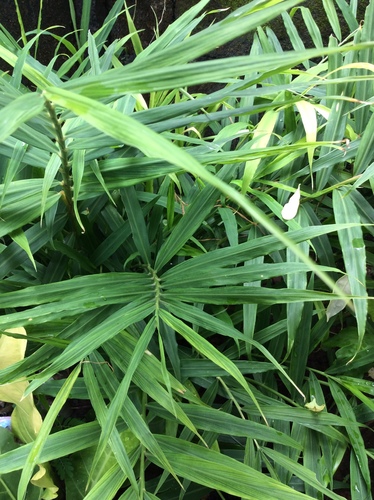
Verbatim
e0“Under in vitro conditions, 19 of the tested rhizobacterial cultures significantly inhibited P. myriotylum.”
t0“ginger”
Claim · model-written summary
Seven isolates suppressed the pathogen in vivo.
- Taxon
- gingerZingiber officinalet0
- Outcome
- suppressing the pathogene0
- Value
- sevene0
- Setting
- in vivo conditionse0
Organisms pictured · Representative pictures of the matched species, not figures from the paper.
Verbatim
e0“Evaluation of these cultures under in vivo conditions indicated that seven of the isolates were effective in suppressing the pathogen.”
t0“ginger”
Claim · model-written summary
Five isolates combined with Glomus sp. enhanced ginger root development without disease incidence.
- Taxon
- gingerZingiber officinalet0
- Treatment
- inoculated along with Glomus sp.e0
- Outcome
- root developmente0
- Direction
- enhancede0
- Value
- Fivee0
 Glomus
Not reportedComparator
Organisms pictured · Representative pictures of the matched species, not figures from the paper.

Verbatim
e0“Five of the isolates when inoculated along with Glomus sp. (vesicular arbuscular mycorrhizae) also enhanced root development without disease incidence.”
t0“ginger”
Claim · model-written summary
Five isolates combined with Glomus sp. yielded no disease incidence.
- Taxon
- gingerZingiber officinalet0
- Outcome
- without disease incidencee0
- Value
- Fivee0
Organisms pictured · Representative pictures of the matched species, not figures from the paper.
Verbatim
e0“Five of the isolates when inoculated along with Glomus sp. (vesicular arbuscular mycorrhizae) also enhanced root development without disease incidence.”
t0“ginger”
The same questions in other papers
inoculation · growth · Zingiber officinale (ginger)Positive and negative results
3 papers in the same direction as this paper · 1 in the opposite direction
- no effect
- positive
- positive
1 paper more in this group
See all 5 papers →Claims are grouped by organism, treatment and what was measured or targeted. A paper counts as positive when any of its claims in the group is positive.